Download Mendeley
Strategic Fluorination to Achieve a Potent, Selective, Metabolically Stable, and Orally Bioavailable Inhibitor of CSNK2.
Ong, H.W., Yang, X., Smith, J.L., Taft-Benz, S., Howell, S., Dickmander, R.J., Havener, T.M., Sanders, M.K., Brown, J.W., Counago, R.M., Chang, E., Kramer, A., Moorman, N.J., Heise, M., Axtman, A.D., Drewry, D.H., Willson, T.M.(2024) Molecules 29
- PubMed: 39275006 Search on PubMedSearch on PubMed Central
- DOI: https://doi.org/10.3390/molecules29174158
- Primary Citation Related Structures:
9FYF - PubMed Abstract:
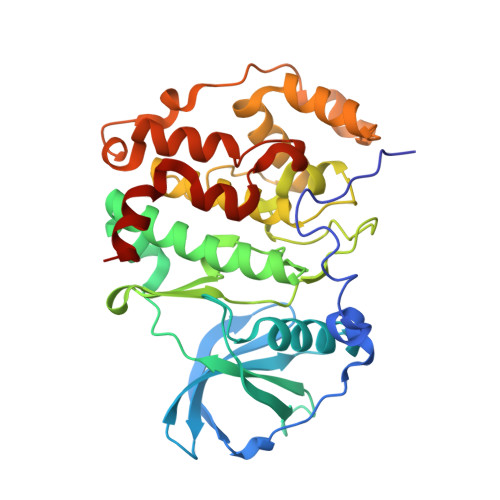
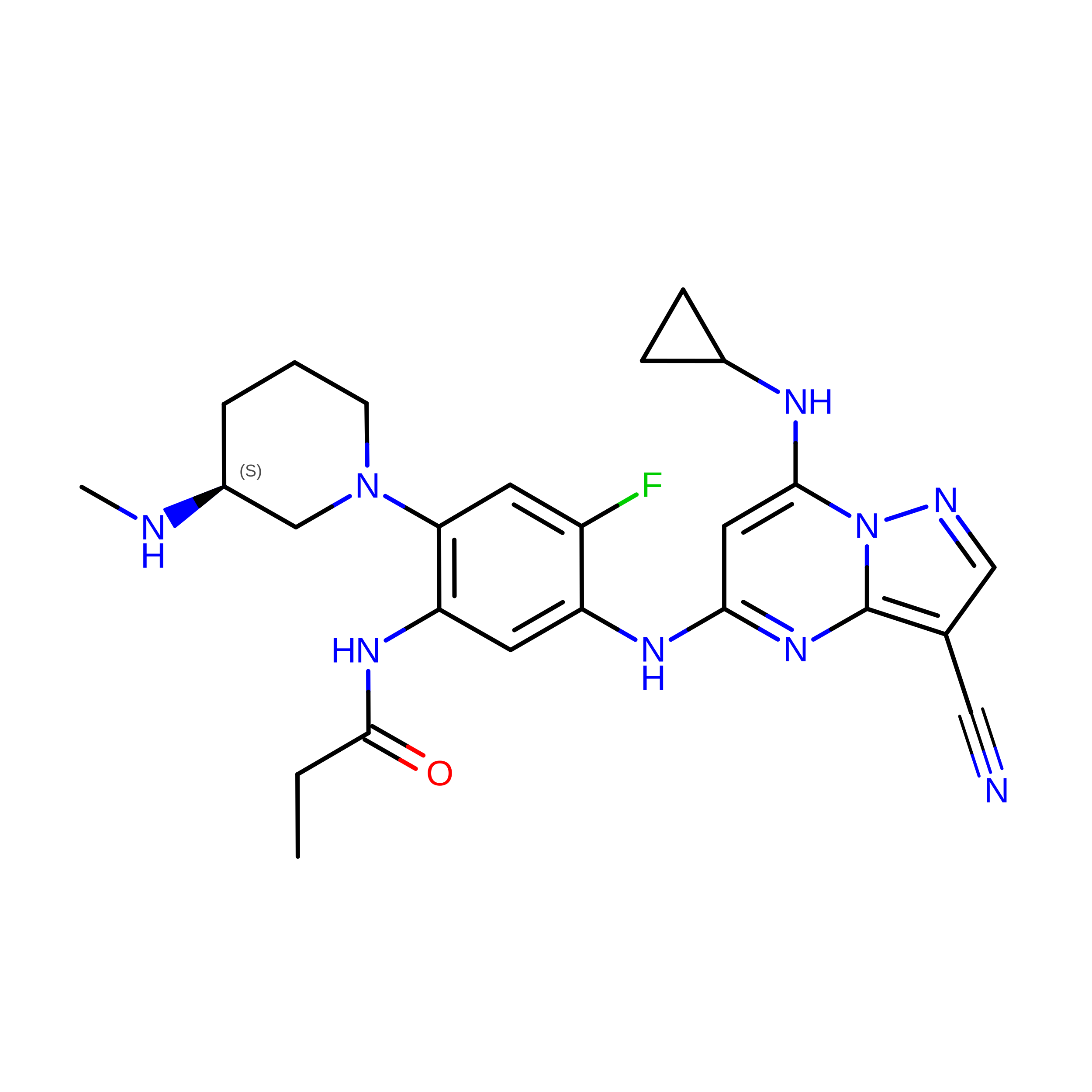
The host kinase casein kinase 2 (CSNK2) has been proposed to be an antiviral target against β-coronaviral infection. To pharmacologically validate CSNK2 as a drug target in vivo, potent and selective CSNK2 inhibitors with good pharmacokinetic properties are required. Inhibitors based on the pyrazolo[1,5- a ]pyrimidine scaffold possess outstanding potency and selectivity for CSNK2, but bioavailability and metabolic stability are often challenging. By strategically installing a fluorine atom on an electron-rich phenyl ring of a previously characterized inhibitor 1 , we discovered compound 2 as a promising lead compound with improved in vivo metabolic stability. Compound 2 maintained excellent cellular potency against CSNK2, submicromolar antiviral potency, and favorable solubility, and was remarkably selective for CSNK2 when screened against 192 kinases across the human kinome. We additionally present a co-crystal structure to support its on-target binding mode. In vivo, compound 2 was orally bioavailable, and demonstrated modest and transient inhibition of CSNK2, although antiviral activity was not observed, possibly attributed to its lack of prolonged CSNK2 inhibition.
- Rapidly Emerging Antiviral Drug Development Initiative (READDI), Chapel Hill, NC 27599, USA.
Organizational Affiliation: