Download Mendeley
Unusual O-H Activation-Initiated C-C Bond Cleavage Reaction by a Nonheme Fe Enzyme in Antifungal Nucleoside Biosynthesis.
Du, Y., Dong, J., Draelos, M.M., Collazo-Perez, L.N., Majer, S.H., Boal, A.K., Yokoyama, K.(2025) J Am Chem Soc 147: 30163-30177
- PubMed: 40787846 Search on PubMedSearch on PubMed Central
- DOI: https://doi.org/10.1021/jacs.5c08400
- Primary Citation Related Structures:
9EI6, 9EI7 - PubMed Abstract:
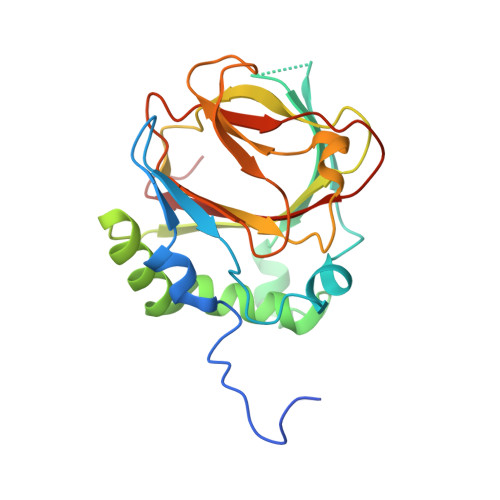
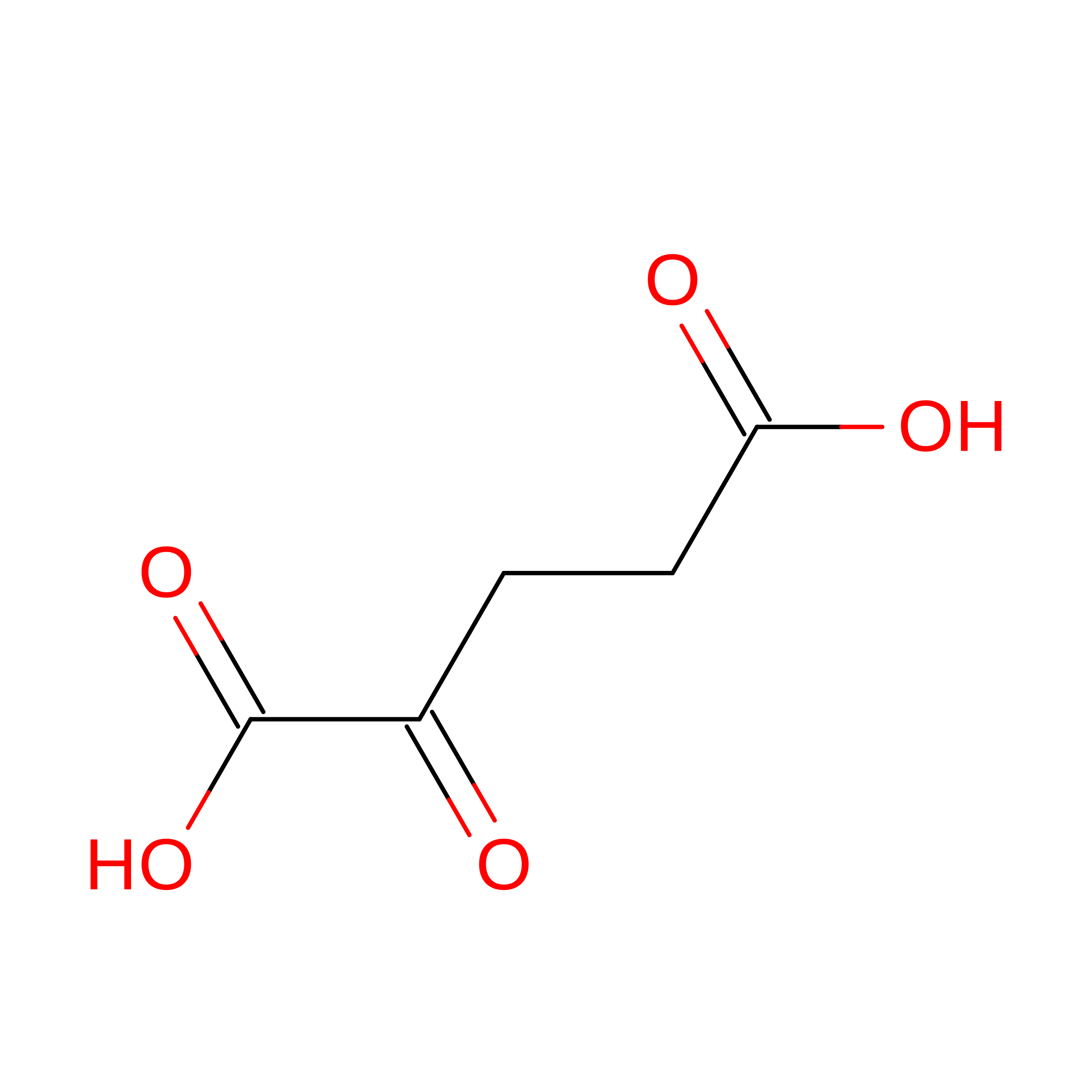
Fe(II)- and α-ketoglutarate (α-KG)-dependent enzymes catalyze diverse reactions, generally initiated by Fe IV =O mediated cleavage of C-H bonds with bond dissociation energies (BDE) of up to ∼100 kcal/mol. Here, we report the discovery of a novel reaction initiated by a significantly more challenging O-H bond cleavage (>100 kcal/mol). This activity was identified in PolD, an enzyme that regulates the sugar size in antifungal nucleoside biosynthesis by catalyzing the transformation of a bicyclic eight-carbon sugar substrate, 5'-amino-6'-hydroxy-octosyl acid 2'-phosphate (AHOAP), into a monocyclic six-carbon product, aminohexuronic acid 2'-phosphate (AHAP). Our studies demonstrate that PolD catalyzes a two-step reaction, in which AHOAP is first oxidized to 5'-amino-6'-keto-octosyl acid 2'-phosphate (AKOAP) via typical C-H activation, followed by a unique C-C bond cleavage on AKOAP to AHAP initiated by O-H activation. X-ray crystal structures of PolD and its homologue, PasI, the latter solved in complex with AHOAP, succinate, and vanadyl, a structural mimic of the Fe IV -oxo intermediate, reveal a substrate binding mode that is consistent with both C-H and O-H homolysis. A comparison of the three enzymes, PasI, PolD, and MalI, all of which exhibit distinct C-C bond cleavage activities, suggests that precise substrate positioning to bring the target OH group of AKOAP close to the Fe IV -oxo intermediate is critical for hydrogen atom transfer from this functional group. These results indicate a novel reactivity of the Fe IV ═O intermediate in Fe/α-KG enzymes, thereby expanding the reaction scope of this enzyme superfamily. The results also reveal the molecular mechanism of the divergent biosynthesis of antifungal nucleosides.
- Department of Biochemistry, Duke University School of Medicine, Durham, North Carolina 27710, United States.
Organizational Affiliation: