






9DUR | pdb_00009dur

Cryo-EM Structure of CRBN:dHTC1:ENL YEATS


Experimental Data Snapshot

  • Method: ELECTRON MICROSCOPY
  • Resolution: 2.90 Å
  • Aggregation State: PARTICLE 
  • Reconstruction Method: SINGLE PARTICLE 

Starting Models: experimental
View more details

wwPDB Validation   3D Report Full Report


This is version 1.0 of the entry. See complete history


Literature

High-throughput diversification of protein-ligand surfaces to discover chemical inducers of proximity.

Shaum, J.B.Munoz I Ordono, M.Steen, E.A.Wenge, D.V.Cheong, H.Hunkeler, M.Bilotta, E.M.Rutter, Z.Barta, P.A.Thornhill, A.M.Milosevich, N.Hargis, L.M.Janowski, J.Bishop, T.R.Carter, T.R.da Camara, B.Hinterndorfer, M.Dada, L.He, W.J.Offensperger, F.Furihata, H.Schweber, S.R.Hatton, C.Wen, Y.Cravatt, B.F.Engle, K.M.Donovan, K.A.Melillo, B.Kitamura, S.Ciulli, A.Armstrong, S.A.Fischer, E.S.Winter, G.E.Erb, M.A.

(2025) bioRxiv 

  • DOI: https://doi.org/10.1101/2024.09.30.615685
  • Primary Citation of Related Structures:  
    9DUR, 9GY3

  • PubMed Abstract: 

    Chemical inducers of proximity (CIPs) stabilize biomolecular interactions, often causing an emergent rewiring of cellular biochemistry. While rational design strategies can expedite the discovery of heterobifunctional CIPs, monovalent, molecular glue-like CIPs have relied predominantly on serendipity. Envisioning a prospective approach to discover molecular glues for a pre-selected target, we hypothesized that pre-existing ligands could be systematically decorated with chemical modifications to empirically discover protein-ligand surfaces that are tuned to cooperatively engage another protein interface. Here, we used sulfur(VI)-fluoride exchange (SuFEx)-based high-throughput chemistry (HTC) to install 3,163 structurally diverse chemical building blocks onto ENL and BRD4 ligands and then screened the crude products for degrader activity. This revealed dHTC1, a potent, selective, and stereochemistry-dependent degrader of ENL. It recruits CRL4 CRBN to ENL through an extended interface of protein-protein and protein-ligand contacts, but only after pre-forming the ENL:dHTC1 complex. We also characterized two structurally distinct BRD4 degraders, including dHTC3, a molecular glue that selectively dimerizes the first bromodomain of BRD4 to SCF FBXO3 , an E3 ligase not previously accessible for chemical rewiring. Altogether, this study introduces HTC as a facile tool to discover new CIPs and actionable cellular effectors of proximity pharmacology.

Macromolecules
Find similar proteins by:  (by identity cutoff)  |  3D Structure
Entity ID: 1
MoleculeChains Sequence LengthOrganismDetailsImage
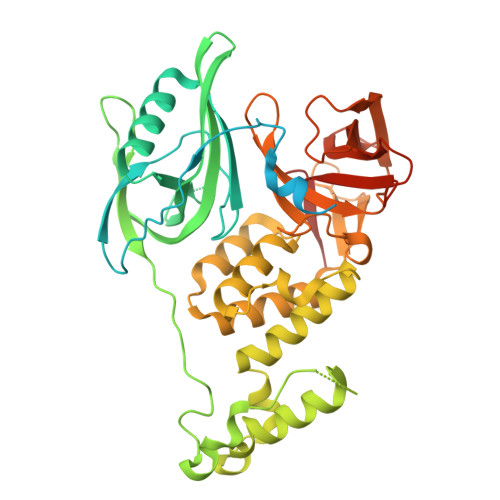
Protein cereblonA [auth B]485Homo sapiensMutation(s): 0 
Gene Names: CRBN
UniProt & NIH Common Fund Data Resources
Find proteins for Q96SW2 (Homo sapiens)
Explore Q96SW2 
Go to UniProtKB:  Q96SW2
PHAROS:  Q96SW2
GTEx:  ENSG00000113851 
Entity Groups  
Sequence Clusters30% Identity50% Identity70% Identity90% Identity95% Identity100% Identity
UniProt GroupQ96SW2
Sequence Annotations
Expand
  • Reference Sequence
Find similar proteins by:  (by identity cutoff)  |  3D Structure
Entity ID: 2
MoleculeChains Sequence LengthOrganismDetailsImage
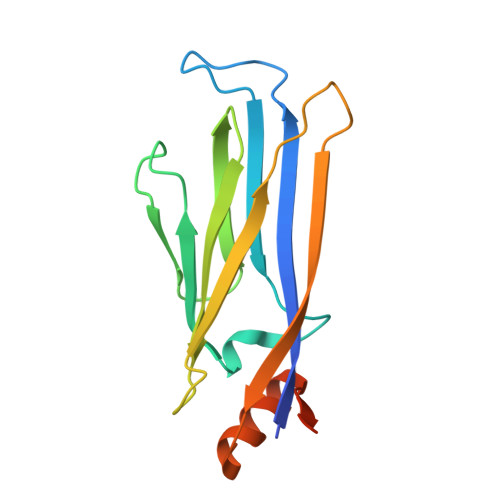
Protein ENLB [auth C]154Homo sapiensMutation(s): 0 
Gene Names: MLLT1ENLLTG19YEATS1
UniProt & NIH Common Fund Data Resources
Find proteins for Q03111 (Homo sapiens)
Explore Q03111 
Go to UniProtKB:  Q03111
PHAROS:  Q03111
GTEx:  ENSG00000130382 
Entity Groups  
Sequence Clusters30% Identity50% Identity70% Identity90% Identity95% Identity100% Identity
UniProt GroupQ03111
Sequence Annotations
Expand
  • Reference Sequence
Small Molecules
Ligands 2 Unique
IDChains Name / Formula / InChI Key2D Diagram3D Interactions
A1IQT (Subject of Investigation/LOI)
Query on A1IQT

Download Ideal Coordinates CCD File 
D [auth C]2-[3-[2-[4-[[(5~{S})-1,3-bis(oxidanylidene)-2,7-diazaspiro[4.4]nonan-7-yl]sulfonylamino]piperidin-1-yl]ethylcarbamoyl]phenyl]-~{N}-cyclobutyl-imidazo[1,2-a]pyridine-6-carboxamide
C33 H40 N8 O6 S
OCUSWIZQDIUKKB-XIFFEERXSA-N
ZN
Query on ZN

Download Ideal Coordinates CCD File 
C [auth B]ZINC ION
Zn
PTFCDOFLOPIGGS-UHFFFAOYSA-N
Experimental Data & Validation

Experimental Data

  • Method: ELECTRON MICROSCOPY
  • Resolution: 2.90 Å
  • Aggregation State: PARTICLE 
  • Reconstruction Method: SINGLE PARTICLE 
EM Software:
TaskSoftware PackageVersion
RECONSTRUCTIONcryoSPARC4.5.3
MODEL REFINEMENTPHENIX1.19.2-4158

Structure Validation

View Full Validation Report


Entry History & Funding Information

Deposition Data


Funding OrganizationLocationGrant Number
National Institutes of Health/National Cancer Institute (NIH/NCI)United StatesR01CA214608

Revision History  (Full details and data files)

  • Version 1.0: 2025-11-19
    Type: Initial release






