9D61 | pdb_00009d61

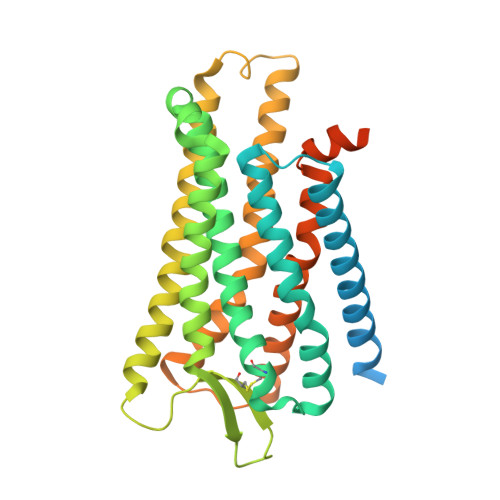
Kappa opioid receptor:Galphai protein in complex with inverse agonist JDTic , no scFv16


Experimental Data Snapshot

  • Method: ELECTRON MICROSCOPY
  • Resolution: 3.58 Å
  • Aggregation State: PARTICLE 
  • Reconstruction Method: SINGLE PARTICLE 

wwPDB Validation 3D Report Full Report

Validation slider image for 9D61

This is version 1.3 of the entry. See complete history

Literature

Molecular mechanisms of inverse agonism via kappa-opioid receptor-G protein complexes.

Tyson, A.S.Khan, S.Motiwala, Z.Han, G.W.Zhang, Z.Ranjbar, M.Styrpejko, D.Ramos-Gonzalez, N.Woo, S.Villers, K.Landaker, D.Kenakin, T.Shenvi, R.Majumdar, S.Gati, C.

(2025) Nat Chem Biol 21: 1046-1057

  • DOI: https://doi.org/10.1038/s41589-024-01812-0
  • Primary Citation Related Structures: 
    8VVE, 8VVF, 8VVG, 9D61

  • PubMed Abstract: 

    Opioid receptors, a subfamily of G protein-coupled receptors (GPCRs), are key therapeutic targets. In the canonical GPCR activation model, agonist binding is required for receptor-G protein complex formation, while antagonists prevent G protein coupling. However, many GPCRs exhibit basal activity, allowing G protein association without an agonist. The pharmacological impact of agonist-free receptor-G protein complexes is poorly understood. Here we present biochemical evidence that certain κ-opioid receptor (KOR) inverse agonists can act via KOR-G i protein complexes. To investigate this phenomenon, we determined cryo-EM structures of KOR-G i protein complexes with three inverse agonists: JDTic, norBNI and GB18, corresponding to structures of inverse agonist-bound GPCR-G protein complexes. Remarkably, the orthosteric binding pocket resembles the G protein-free 'inactive' receptor conformation, while the receptor remains coupled to the G protein. In summary, our work challenges the canonical model of receptor antagonism and offers crucial insights into GPCR pharmacology.


  • Organizational Affiliation
    • The Bridge Institute, Michelson Center for Convergent Biosciences, University of Southern California, Los Angeles, CA, USA.

Macromolecule Content 

  • Total Structure Weight: 128.84 kDa 
  • Atom Count: 6,895 
  • Modeled Residue Count: 903 
  • Deposited Residue Count: 1,145 
  • Unique protein chains: 4

Macromolecules

Find similar proteins by:|  3D Structure
Entity ID: 1
MoleculeChains  Sequence LengthOrganismDetailsImage
Kappa-type opioid receptor380Homo sapiensMutation(s): 0 
Gene Names: OPRK1OPRK
Membrane Entity: Yes 
UniProt & NIH Common Fund Data Resources
Find proteins for P41145 (Homo sapiens)
Explore P41145 
Go to UniProtKB:  P41145
PHAROS:  P41145
GTEx:  ENSG00000082556 
Entity Groups
Sequence Clusters30% Identity50% Identity70% Identity90% Identity95% Identity100% Identity
UniProt GroupP41145
Sequence Annotations
Expand
Reference Sequence
Find similar proteins by:|  3D Structure
Entity ID: 2
MoleculeChains  Sequence LengthOrganismDetailsImage
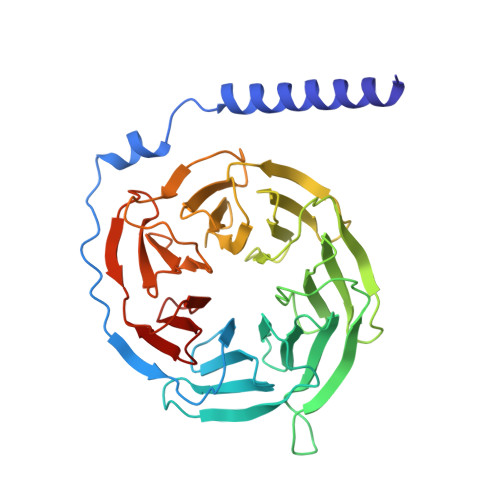
Guanine nucleotide-binding protein G(I)/G(S)/G(T) subunit beta-1B [auth C]340Homo sapiensMutation(s): 0 
Gene Names: GNB1
UniProt & NIH Common Fund Data Resources
Find proteins for P62873 (Homo sapiens)
Explore P62873 
Go to UniProtKB:  P62873
PHAROS:  P62873
GTEx:  ENSG00000078369 
Entity Groups
Sequence Clusters30% Identity50% Identity70% Identity90% Identity95% Identity100% Identity
UniProt GroupP62873
Sequence Annotations
Expand
Reference Sequence
Find similar proteins by:|  3D Structure
Entity ID: 3
MoleculeChains  Sequence LengthOrganismDetailsImage
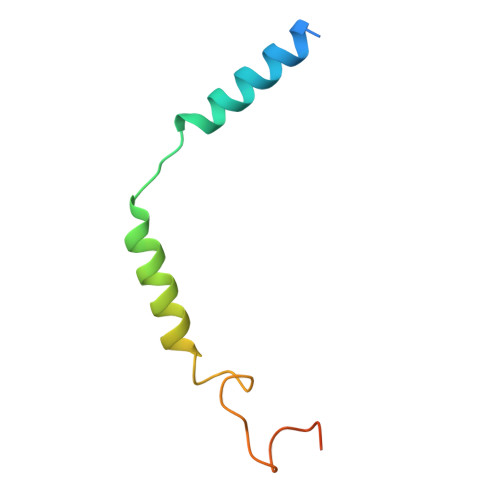
Guanine nucleotide-binding protein G(I)/G(S)/G(O) subunit gamma-2C [auth D]71Homo sapiensMutation(s): 0 
Gene Names: GNG2
Membrane Entity: Yes 
UniProt & NIH Common Fund Data Resources
Find proteins for P59768 (Homo sapiens)
Explore P59768 
Go to UniProtKB:  P59768
PHAROS:  P59768
GTEx:  ENSG00000186469 
Entity Groups
Sequence Clusters30% Identity50% Identity70% Identity90% Identity95% Identity100% Identity
UniProt GroupP59768
Sequence Annotations
Expand
Reference Sequence
Find similar proteins by:|  3D Structure
Entity ID: 4
MoleculeChains  Sequence LengthOrganismDetailsImage
Guanine nucleotide-binding protein G(i) subunit alpha-1D [auth B]354Homo sapiensMutation(s): 0 
Gene Names: GNAI1
EC: 3.6.5
Membrane Entity: Yes 
UniProt & NIH Common Fund Data Resources
Find proteins for P63096 (Homo sapiens)
Explore P63096 
Go to UniProtKB:  P63096
PHAROS:  P63096
GTEx:  ENSG00000127955 
Entity Groups
Sequence Clusters30% Identity50% Identity70% Identity90% Identity95% Identity100% Identity
UniProt GroupP63096
Sequence Annotations
Expand
Reference Sequence

Small Molecules

Ligands 1 Unique
IDChains Name / Formula / InChI Key2D Diagram3D Interactions
JDC
(Subject of Investigation/LOI)

Query on JDC


Download:Ideal Coordinates CCD File
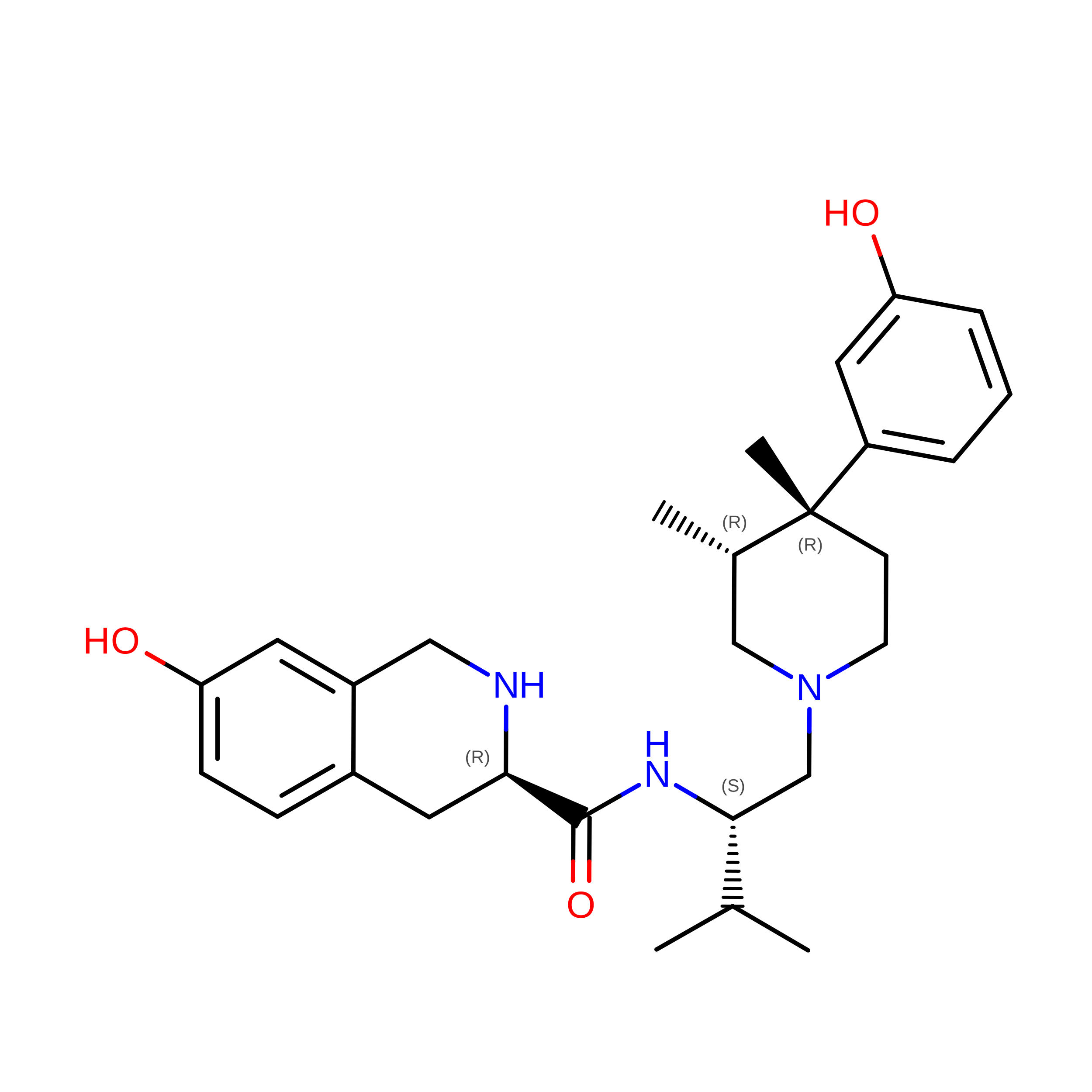
E [auth A](3R)-7-hydroxy-N-{(2S)-1-[(3R,4R)-4-(3-hydroxyphenyl)-3,4-dimethylpiperidin-1-yl]-3-methylbutan-2-yl}-1,2,3,4-tetrahydroisoquinoline-3-carboxamide
C28 H39 N3 O3
ZLVXBBHTMQJRSX-VMGNSXQWSA-N

Experimental Data & Validation

Experimental Data

  • Method: ELECTRON MICROSCOPY
  • Resolution: 3.58 Å
  • Aggregation State: PARTICLE 
  • Reconstruction Method: SINGLE PARTICLE 
EM Software:
TaskSoftware PackageVersion
MODEL REFINEMENTPHENIX
RECONSTRUCTIONcryoSPARCv4.3.1

Structure Validation

View Full Validation Report


Entry History 

& Funding Information

Deposition Data


Funding OrganizationLocationGrant Number
National Institutes of Health/National Institute of General Medical Sciences (NIH/NIGMS)United StatesGM144965
National Institutes of Health/National Center for Complementary and Integrative Health (NIH/NCCIH)United StatesAT012075

Revision History  (Full details and data files)

  • Version 1.0: 2025-01-15
    Type: Initial release
  • Version 1.1: 2025-01-22
    Changes: Data collection, Database references
  • Version 1.2: 2025-05-21
    Changes: Data collection
  • Version 1.3: 2025-07-09
    Changes: Data collection, Database references