Download Mendeley
MESH1 functions as a metazoan PAPS phosphatase to regulate sulfation.
Lin, C.C., Rose, J., Zhang, A., Mirando, A.J., Mestre, A.A., Ding, C.C., Liao, Y., Chen, S.Y., Setayeshpour, Y., Wu, J., Li, Z., Yan, D., Hilton, M.J., Zhou, P., Chi, J.T.(2026) Nat Chem Biol
- PubMed: 41963701 Search on PubMedSearch on PubMed Central
- DOI: https://doi.org/10.1038/s41589-026-02190-5
- Primary Citation Related Structures:
9CHY - PubMed Abstract:
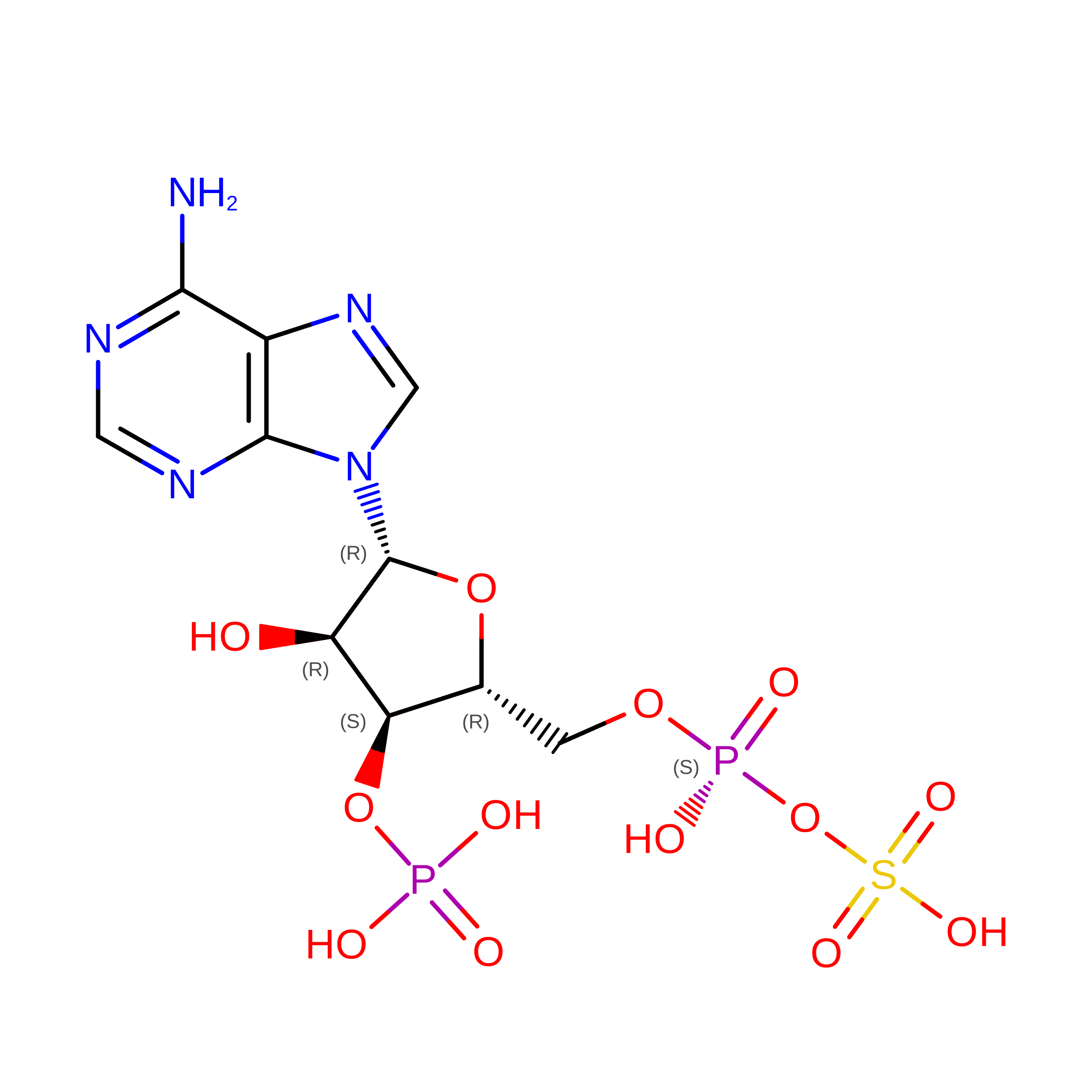
Biological sulfation reactions require 3'-phosphoadenosine-5'-phosphosulfate (PAPS) as the universal sulfate donor. While the biosynthetic pathway of PAPS has been well characterized, the phosphatase degrading PAPS remains unidentified. Here, we discover MESH1 as a PAPS phosphatase that hydrolyzes PAPS into adenosine-5'-phosphosulfate and phosphate. Our crystallographic analysis of the MESH1-PAPS complex confirms PAPS as a bona fide substrate of MESH1. We further show that MESH1 localizes to Golgi, where sulfotransferases consume PAPS to produce sulfated glycosaminoglycan (sGAG). We show that MESH1 (also known as HDDC3) knockdown enhances sGAG production in a chondrogenic cell line. Furthermore, in brachymorphic mice, Mesh1 knockout significantly elevates sGAG levels in joint cartilage and improves bone density. In Caenorhabditis elegans lacking bpnt-1, neurotoxic PAP accumulation is alleviated by MESH1 overexpression, reducing upstream PAPS levels. Our biochemical, structural and functional findings establish MESH1 as a key PAPS phosphatase and highlights its potential as a therapeutic target in disorders characterized by sulfation deficiency.
- Department of Molecular Genetics and Microbiology, Duke University School of Medicine, Durham, NC, USA.
Organizational Affiliation: