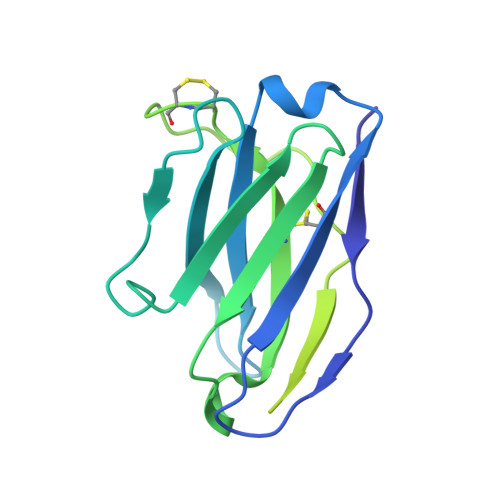
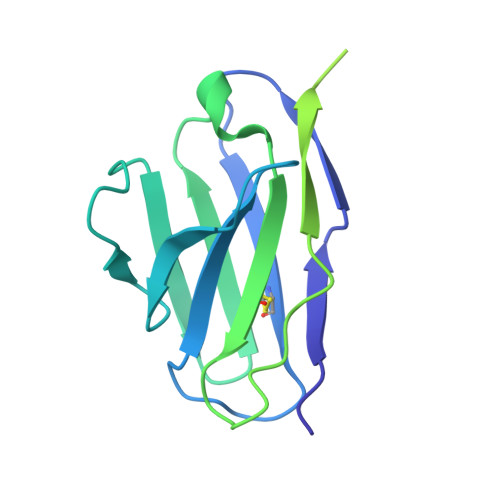
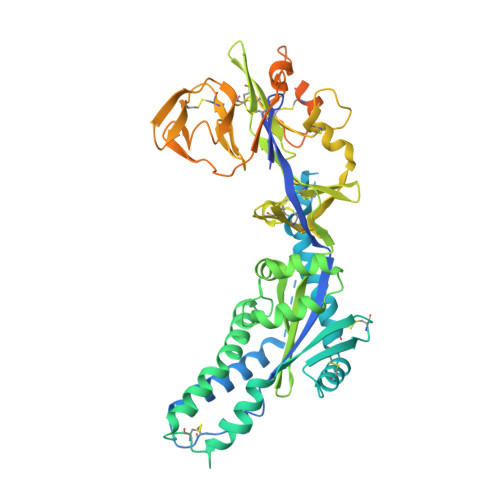
Human respiratory syncytial virus (RSV) and human metapneumovirus (hMPV) are frequent drivers of morbidity and mortality in susceptible populations. The primary target of neutralizing antibodies is the fusion (F) glycoprotein on the surface of the RSV and hMPV virion. As a result of the structural conservation between RSV and hMPV F, three antigenic regions are known to induce cross-neutralizing responses: sites III, IV, and V. Leveraging LIBRA-seq, we identify five RSV/hMPV cross-reactive human antibodies. One antibody, RM 5-1, potently neutralizes all tested viruses from the major subgroups of RSV and hMPV and provides protection against RSV and hMPV in a mouse challenge model. Structural analysis reveals that RM 5-1 utilizes an uncommon genetic signature to bind an epitope that spans sites Ø, II, and V. These findings highlight the molecular and structural elements influencing RSV and hMPV cross-reactivity as well as the potential of antibody RM 5-1 for translational development.
Organizational Affiliation:
Vanderbilt Center for Antibody Therapeutics, Vanderbilt University Medical Center, Nashville, TN 37232, USA; Department of Pathology, Microbiology and Immunology, Vanderbilt University Medical Center, Nashville, TN 37232, USA.
Department of Molecular Biosciences, The University of Texas at Austin, Austin, TX 78712, USA.
Department of Zoonotic Diseases, Faculty of Veterinary Medicine, Zagazig University, Zagazig 44511, Egypt; Department of Biomedical Sciences, College of Medicine, Florida State University, Tallahassee, FL 32306, USA.
Department of Infectious Diseases, College of Veterinary Medicine, University of Georgia, Athens, GA 30602, USA; Center for Vaccines and Immunology, College of Veterinary Medicine, University of Georgia, Athens, GA 30602, USA.
Vanderbilt Center for Antibody Therapeutics, Vanderbilt University Medical Center, Nashville, TN 37232, USA.
Department of Pathology, Microbiology and Immunology, Vanderbilt University Medical Center, Nashville, TN 37232, USA.
Vanderbilt Center for Antibody Therapeutics, Vanderbilt University Medical Center, Nashville, TN 37232, USA; Department of Pediatrics, Vanderbilt University Medical Center, Nashville, TN 37232, USA.
Vanderbilt Center for Antibody Therapeutics, Vanderbilt University Medical Center, Nashville, TN 37232, USA; Department of Pathology, Microbiology and Immunology, Vanderbilt University Medical Center, Nashville, TN 37232, USA; Department of Pediatrics, Vanderbilt University Medical Center, Nashville, TN 37232, USA.
Department of Pathology, Microbiology and Immunology, Vanderbilt University Medical Center, Nashville, TN 37232, USA; Division of Rheumatology and Immunology, Department of Medicine, Vanderbilt University Medical Center, Nashville, TN, USA; Vanderbilt Center for Immunobiology, Vanderbilt University Medical Center, Nashville, TN 37232, USA; Vanderbilt Institute for Infection, Immunology and Inflammation, Vanderbilt University Medical Center, Nashville, TN 37232, USA.
Department of Biomedical Sciences, College of Medicine, Florida State University, Tallahassee, FL 32306, USA; Department of Infectious Diseases, College of Veterinary Medicine, University of Georgia, Athens, GA 30602, USA; Center for Vaccines and Immunology, College of Veterinary Medicine, University of Georgia, Athens, GA 30602, USA.
Vanderbilt Center for Antibody Therapeutics, Vanderbilt University Medical Center, Nashville, TN 37232, USA; Department of Pathology, Microbiology and Immunology, Vanderbilt University Medical Center, Nashville, TN 37232, USA; Vanderbilt Institute for Infection, Immunology and Inflammation, Vanderbilt University Medical Center, Nashville, TN 37232, USA; Department of Computer Science, Vanderbilt University, Nashville, TN 37232, USA; Center for Structural Biology, Vanderbilt University, Nashville, TN 37232, USA; Program in Computational Microbiology and Immunology, Vanderbilt University Medical Center, Nashville, TN 37232, USA. Electronic address: ivelin.georgiev@vanderbilt.edu.








 Download Mendeley