9BVP | pdb_00009bvp

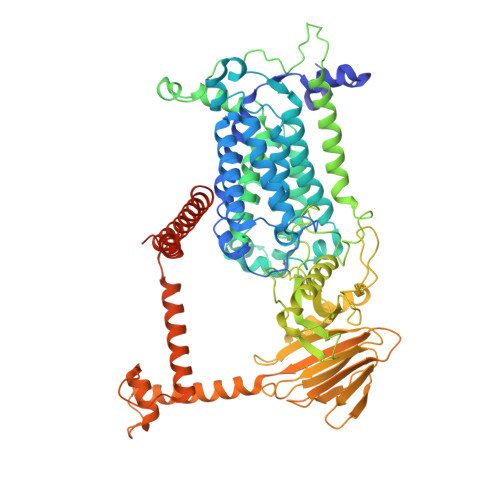
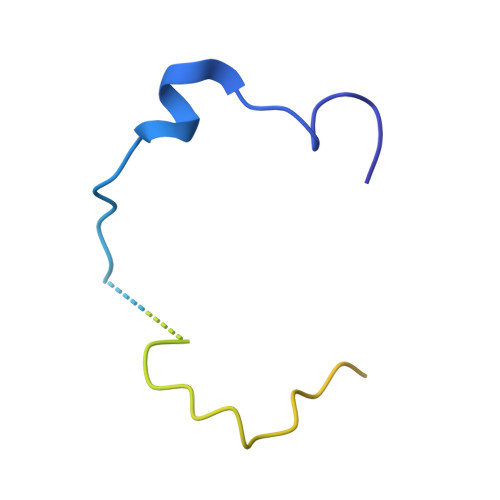
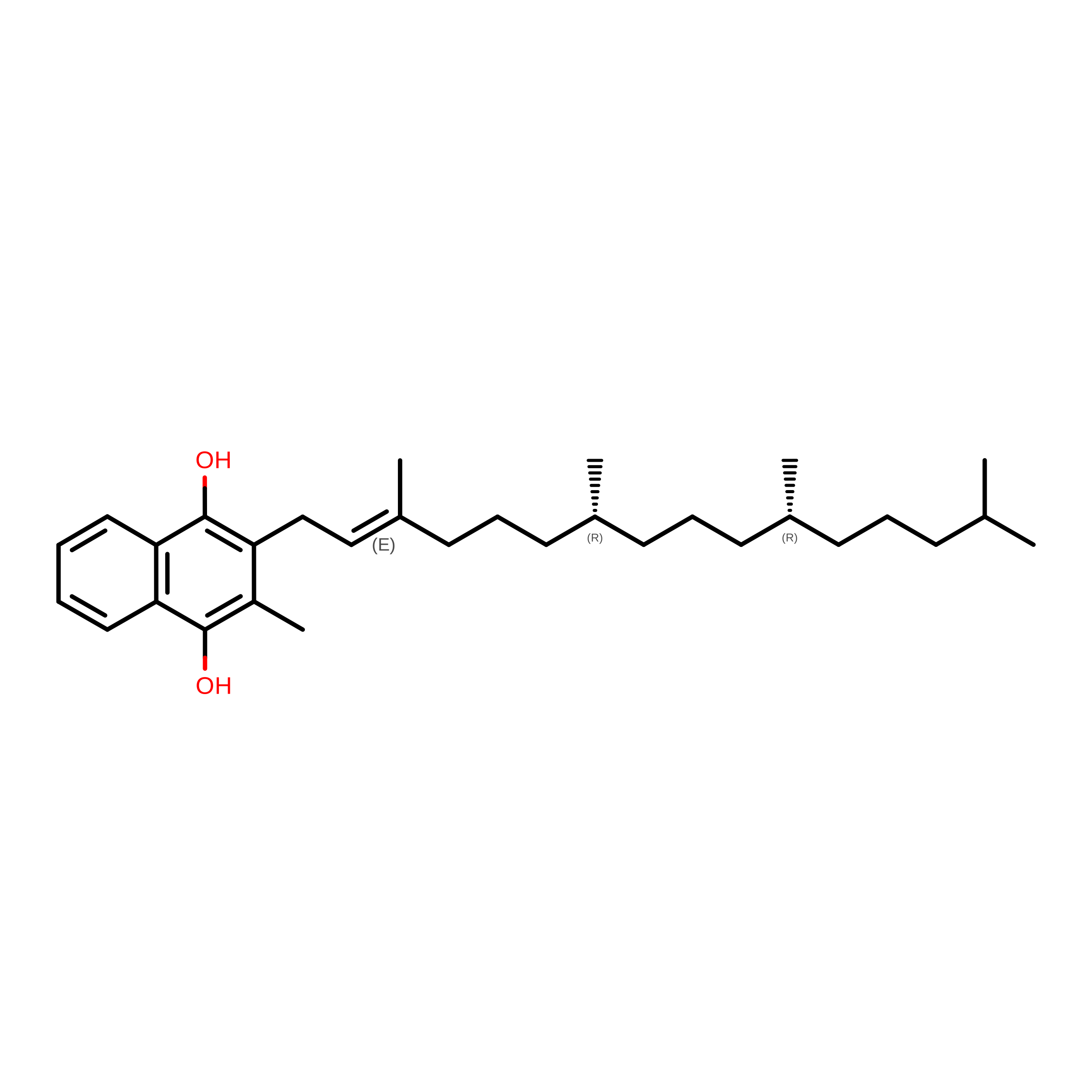
Vitamin K-dependent gamma-carboxylase with TMG2 propeptide and glutamate-rich region and with vitamin K hydroquinone

  • Classification: MEMBRANE PROTEIN,LYASE/SUBSTRATE
  • Organism(s): Homo sapiens
  • Expression System: Homo sapiens
  • Mutation(s): No 
  • Membrane Protein: Yes  mpstruc

  • Deposited: 2024-05-20 Released: 2025-01-22 
  • Deposition Author(s): Li, W., Liu, B., Cao, Q.
  • Funding Organization(s): National Institutes of Health/National Heart, Lung, and Blood Institute (NIH/NHLBI), American Heart Association, W. M. Keck Foundation, Childrens Discovery Institute of Washington University and St. Louis Childrens Hospital, National Institutes of Health/National Institute Of Allergy and Infectious Diseases (NIH/NIAID), National Institutes of Health/National Institute of General Medical Sciences (NIH/NIGMS)

Experimental Data Snapshot

  • Method: ELECTRON MICROSCOPY
  • Resolution: 3.30 Å
  • Aggregation State: PARTICLE 
  • Reconstruction Method: SINGLE PARTICLE 

wwPDB Validation   3D Report Full Report


This is version 1.3 of the entry. See complete history


Literature

Molecular basis of vitamin-K-driven gamma-carboxylation at the membrane interface.

Cao, Q.Ammerman, A.Saimi, M.Lin, Z.Shen, G.Chen, H.Sun, J.Chai, M.Liu, S.Hsu, F.F.Krezel, A.M.Gross, M.L.Xu, J.Garcia, B.A.Liu, B.Li, W.

(2025) Nature 639: 816-824

  • DOI: https://doi.org/10.1038/s41586-025-08648-1
  • Primary Citation of Related Structures:  
    9BVK, 9BVL, 9BVM, 9BVO, 9BVP, 9BVQ, 9BVR

  • PubMed Abstract: 

    The γ-carboxylation of glutamate residues enables Ca 2+ -mediated membrane assembly of protein complexes that support broad physiological functions, including haemostasis, calcium homeostasis, immune response and endocrine regulation 1-4 . Modulating γ-carboxylation levels provides prevalent treatments for haemorrhagic and thromboembolic diseases 5 . This unique post-translational modification requires vitamin K hydroquinone (KH 2 ) to drive highly demanding reactions 6 catalysed by the membrane-integrated γ-carboxylase (VKGC). Here, to decipher the underlying mechanisms, we determined cryo-electron microscopy structures of human VKGC in unbound form, with KH 2 and four haemostatic and non-haemostatic proteins possessing propeptides and glutamate-rich domains in different carboxylation states. VKGC recognizes substrate proteins through knob-and-hole interactions with propeptides, thereby bringing tethered glutamate-containing segments for processive carboxylation within a large chamber that provides steric control. Propeptide binding also triggers a global conformational change to signal VKGC activation. Through sequential deprotonation and KH 2 epoxidation, VKGC generates a free hydroxide ion as an exceptionally strong base that is required to deprotonate the γ-carbon of glutamate for CO 2 addition. The diffusion of this superbase-protected and guided by a sealed hydrophobic tunnel-elegantly resolves the challenge of coupling KH 2 epoxidation to γ-carboxylation across the membrane interface. These structural insights and extensive functional experiments advance membrane enzymology and propel the development of treatments for γ-carboxylation disorders.


  • Organizational Affiliation
    • Department of Biochemistry and Molecular Biophysics, Washington University School of Medicine, St Louis, MO, USA.

Macromolecules
Find similar proteins by:  (by identity cutoff)  |  3D Structure
Entity ID: 1
MoleculeChains Sequence LengthOrganismDetailsImage
Vitamin K-dependent gamma-carboxylase733Homo sapiensMutation(s): 0 
Gene Names: GGCXGC
EC: 4.1.1.90
Membrane Entity: Yes 
UniProt & NIH Common Fund Data Resources
Find proteins for P38435 (Homo sapiens)
Explore P38435 
Go to UniProtKB:  P38435
PHAROS:  P38435
GTEx:  ENSG00000115486 
Entity Groups  
Sequence Clusters30% Identity50% Identity70% Identity90% Identity95% Identity100% Identity
UniProt GroupP38435
Glycosylation
Glycosylation Sites: 4Go to GlyGen: P38435-1
Sequence Annotations
Expand
  • Reference Sequence
Find similar proteins by:  (by identity cutoff)  |  3D Structure
Entity ID: 2
MoleculeChains Sequence LengthOrganismDetailsImage
Transmembrane gamma-carboxyglutamic acid protein 2B [auth P]116Homo sapiensMutation(s): 0 
Gene Names: PRRG2PRGP2TMG2
Membrane Entity: Yes 
UniProt & NIH Common Fund Data Resources
Find proteins for O14669 (Homo sapiens)
Explore O14669 
Go to UniProtKB:  O14669
PHAROS:  O14669
GTEx:  ENSG00000126460 
Entity Groups  
Sequence Clusters30% Identity50% Identity70% Identity90% Identity95% Identity100% Identity
UniProt GroupO14669
Sequence Annotations
Expand
  • Reference Sequence
Oligosaccharides

Help

Entity ID: 3
MoleculeChains Length2D Diagram Glycosylation3D Interactions
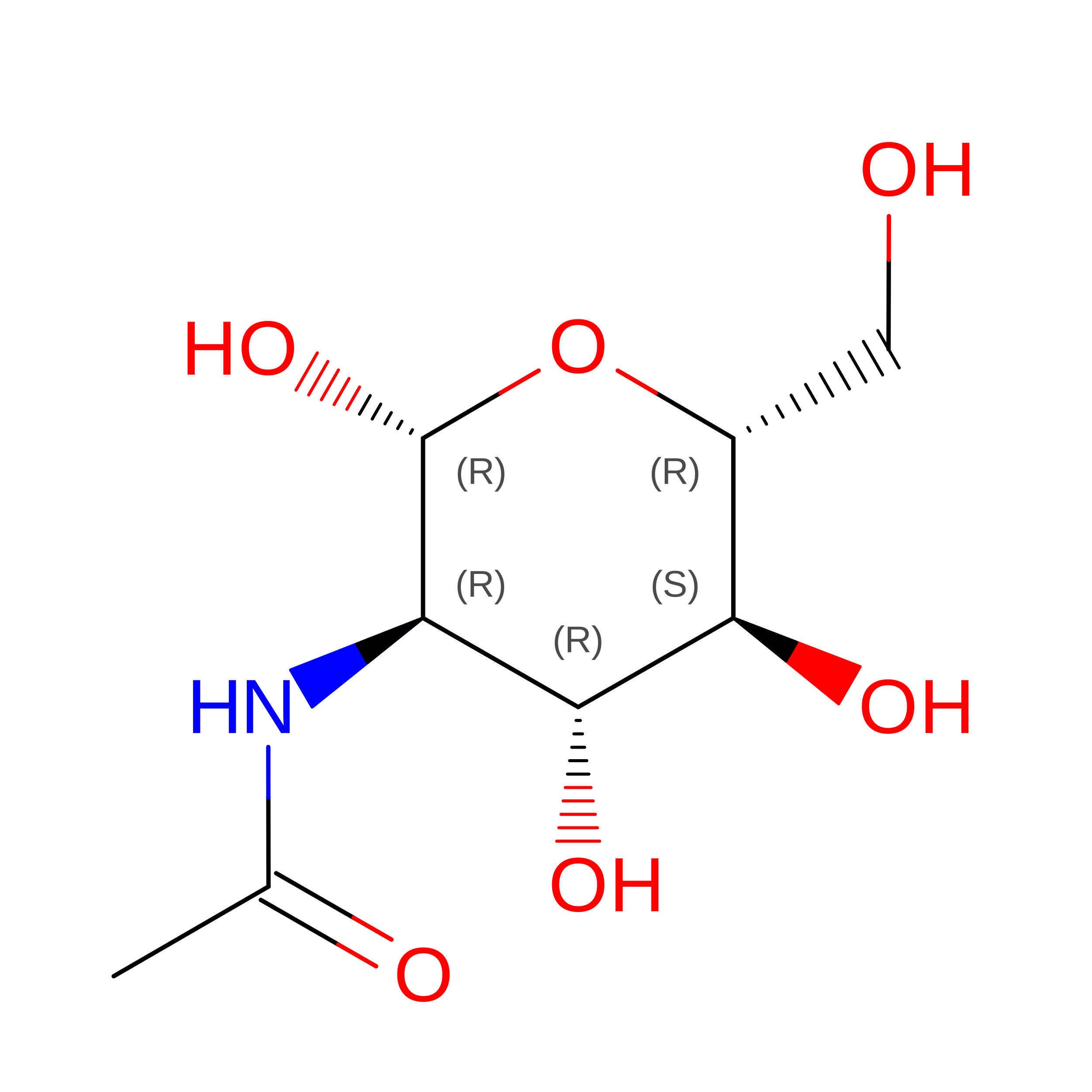
2-acetamido-2-deoxy-beta-D-glucopyranose-(1-4)-2-acetamido-2-deoxy-beta-D-glucopyranoseC [auth B],
D [auth C],
E [auth D]
2N-Glycosylation
Glycosylation Resources
GlyTouCan:  G42666HT
GlyCosmos:  G42666HT
GlyGen:  G42666HT
Experimental Data & Validation

Experimental Data

  • Method: ELECTRON MICROSCOPY
  • Resolution: 3.30 Å
  • Aggregation State: PARTICLE 
  • Reconstruction Method: SINGLE PARTICLE 
EM Software:
TaskSoftware PackageVersion
MODEL REFINEMENTPHENIX1.21.1_5286:

Structure Validation

View Full Validation Report


Entry History & Funding Information

Deposition Data


Funding OrganizationLocationGrant Number
National Institutes of Health/National Heart, Lung, and Blood Institute (NIH/NHLBI)United StatesHL121718
American Heart AssociationUnited StatesEstablished Investigator Award
American Heart AssociationUnited StatesCollaborative Sciences Award
W. M. Keck FoundationUnited StatesForefront of Science Award
Childrens Discovery Institute of Washington University and St. Louis Childrens HospitalUnited StatesMCII 2020-854
National Institutes of Health/National Institute Of Allergy and Infectious Diseases (NIH/NIAID)United StatesAI158500
National Institutes of Health/National Institute of General Medical Sciences (NIH/NIGMS)United StatesGM131008

Revision History  (Full details and data files)

  • Version 1.0: 2025-01-22
    Type: Initial release
  • Version 1.1: 2025-03-12
    Changes: Data collection, Database references
  • Version 1.2: 2025-03-19
    Changes: Data collection
  • Version 1.3: 2025-03-26
    Changes: Data collection, Database references