Download Mendeley
A broadly-neutralizing antibody against Orthoebolavirus glycoprotein that potentiates the breadth and neutralization of other antibodies.
Donnellan, F.R., Rayaprolu, V., Rijal, P., O'Dowd, V., Parvate, A., Callaway, H., Hariharan, C., Parekh, D., Hui, S., Shaffer, K.C.L., Avalos, R.D., Hastie, K.M., Schimanski, L., Muller-Krauter, H., Strecker, T., Balaram, A., Halfmann, P., Saphire, E.O., Lightwood, D.J., Townsend, A.R., Draper, S.J.(2026) Npj Viruses
- PubMed: 42098405 Search on PubMedSearch on PubMed Central
- DOI: https://doi.org/10.1038/s44298-026-00192-7
- Primary Citation Related Structures:
9BOP - PubMed Abstract:
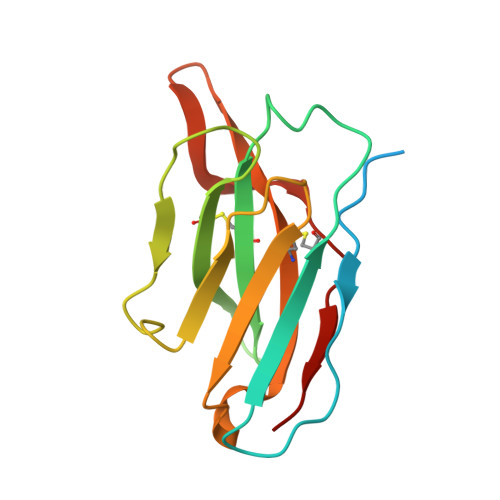
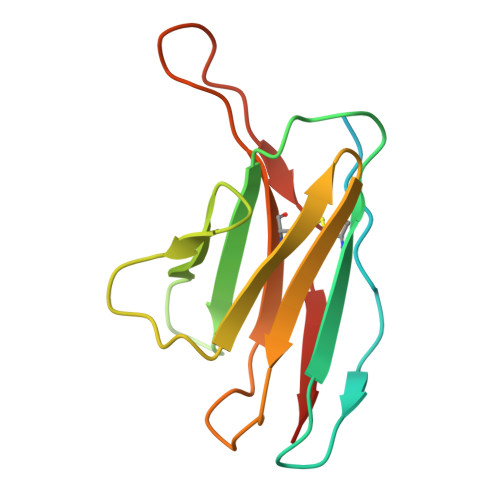
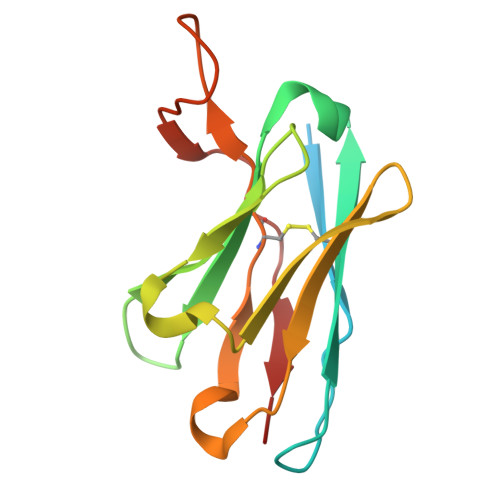
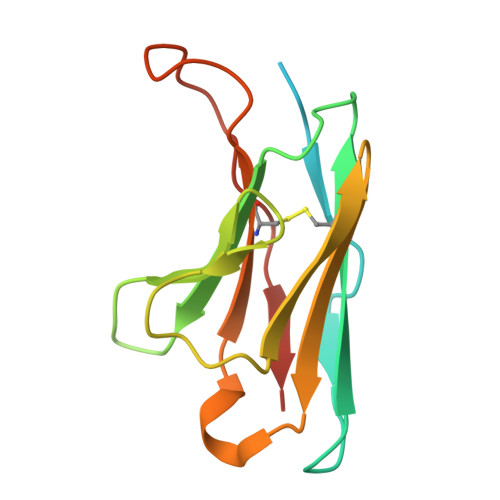
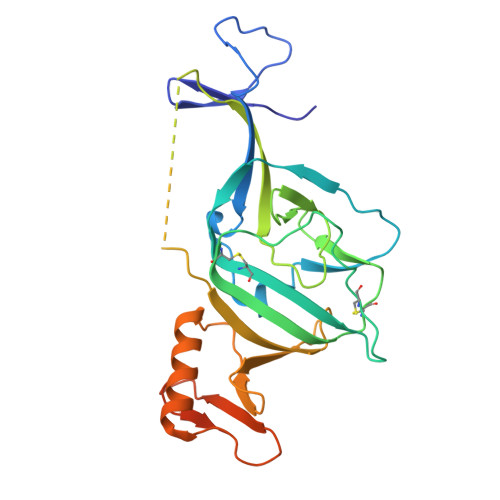
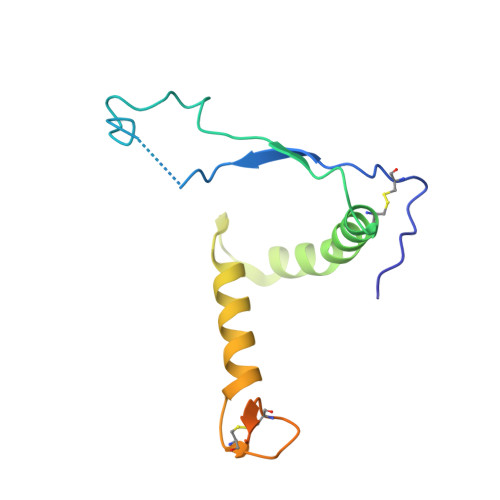
Ebolavirus disease (EVD) is caused by multiple species of orthoebolavirus. Monoclonal antibodies (mAbs) against the virus glycoprotein (GP) are the only class of therapeutic approved for treatment of EVD caused by Orthoebolavirus zairense (Ebola virus, EBOV). Therefore, mAbs targeting multiple orthoebolavirus species may represent the next generation of EVD therapeutics. Broadly reactive anti-GP mAbs were produced; among these, mAbs 11886 and 11883 were broadly neutralizing in vitro. A 3.0 Å cryo-electron microscopy structure of EBOV GP bound to both mAbs shows that 11886 binds a novel epitope bridging the glycan cap (GC), 3 10 pocket and GP2 N-terminus, whereas 11883 binds the receptor binding region (RBR) and GC. In vitro, 11886 synergized with a range of mAbs with epitope specificities spanning the RBR/GC, including 11883. Notably, 11886 increased the breadth of neutralization by partner mAbs against different orthoebolavirus species. These data provide a strategic route to design improved mAb-based next-generation EVD therapeutics.
- Department of Biochemistry, Dorothy Crowfoot Hodgkin Building, University of Oxford, Oxford, UK.
Organizational Affiliation: