Download Mendeley
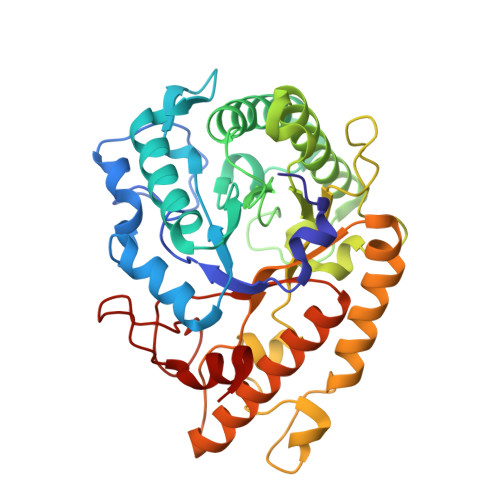
The molecular basis of cereal mixed-linkage beta-glucan utilization by the human gut bacterium Segatella copri.
Golisch, B., Cordeiro, R.L., Fraser, A.S.C., Briggs, J., Stewart, W.A., Van Petegem, F., Brumer, H.(2024) J Biol Chem 300: 107625-107625
- PubMed: 39122003 Search on PubMedSearch on PubMed Central
- DOI: https://doi.org/10.1016/j.jbc.2024.107625
- Primary Citation Related Structures:
9BAL, 9BAM, 9BJX, 9BMK - PubMed Abstract:
Mixed-linkage β(1,3)/β(1,4)-glucan (MLG) is abundant in the human diet through the ingestion of cereal grains and is widely associated with healthful effects on metabolism and cholesterol levels. MLG is also a major source of fermentable glucose for the human gut microbiota (HGM). Bacteria from the family Prevotellaceae are highly represented in the HGM of individuals who eat plant-rich diets, including certain indigenous people and vegetarians in postindustrial societies. Here, we have defined and functionally characterized an exemplar Prevotellaceae MLG polysaccharide utilization locus (MLG-PUL) in the type-strain Segatella copri (syn. Prevotella copri) DSM 18205 through transcriptomic, biochemical, and structural biological approaches. In particular, structure-function analysis of the cell-surface glycan-binding proteins and glycoside hydrolases of the S. copri MLG-PUL revealed the molecular basis for glycan capture and saccharification. Notably, syntenic MLG-PULs from human gut, human oral, and ruminant gut Prevotellaceae are distinguished from their counterparts in Bacteroidaceae by the presence of a β(1,3)-specific endo-glucanase from glycoside hydrolase family 5, subfamily 4 (GH5_4) that initiates MLG backbone cleavage. The definition of a family of homologous MLG-PULs in individual species enabled a survey of nearly 2000 human fecal microbiomes using these genes as molecular markers, which revealed global population-specific distributions of Bacteroidaceae- and Prevotellaceae-mediated MLG utilization. Altogether, the data presented here provide new insight into the molecular basis of β-glucan metabolism in the HGM, as a basis for informing the development of approaches to improve the nutrition and health of humans and other animals.
- Michael Smith Laboratories, University of British Columbia, Vancouver, British Columbia, Canada; Department of Chemistry, University of British Columbia, Vancouver, British Columbia, Canada.
Organizational Affiliation: