9AXA | pdb_00009axa

CryoEM structure of activated CRAF/MEK/14-3-3 complex with NST-628


Experimental Data Snapshot

  • Method: ELECTRON MICROSCOPY
  • Resolution: 4.36 Å
  • Aggregation State: PARTICLE 
  • Reconstruction Method: SINGLE PARTICLE 

wwPDB Validation 3D Report Full Report

Validation slider image for 9AXA

This is version 1.2 of the entry. See complete history. 

Literature

The Pan-RAF-MEK Nondegrading Molecular Glue NST-628 Is a Potent and Brain-Penetrant Inhibitor of the RAS-MAPK Pathway with Activity across Diverse RAS- and RAF-Driven Cancers.

Ryan, M.B., Quade, B., Schenk, N., Fang, Z., Zingg, M., Cohen, S.E., Swalm, B.M., Li, C., Ozen, A., Ye, C., Ritorto, M.S., Huang, X., Dar, A.C., Han, Y., Hoeflich, K.P., Hale, M., Hagel, M.

(2024) Cancer Discov 14: 1190-1205

  • DOI: https://doi.org/10.1158/2159-8290.CD-24-0139
  • Primary Citation Related Structures: 
    9AXA, 9AXC, 9AXH, 9AXM, 9AXX, 9AXY, 9AY7, 9AYA

  • PubMed Abstract: 

    Alterations in the RAS-MAPK signaling cascade are common across multiple solid tumor types and are a driver for many cancers. NST-628 is a potent pan-RAF-MEK molecular glue that prevents the phosphorylation and activation of MEK by RAF, overcoming the limitations of traditional RAS-MAPK inhibitors and leading to deep durable inhibition of the pathway. Cellular, biochemical, and structural analyses of RAF-MEK complexes show that NST-628 engages all isoforms of RAF and prevents the formation of BRAF-CRAF heterodimers, a differentiated mechanism from all current RAF inhibitors. With a potent and durable inhibition of the RAF-MEK signaling complex as well as high intrinsic permeability into the brain, NST-628 demonstrates broad efficacy in cellular and patient-derived tumor models harboring diverse MAPK pathway alterations, including orthotopic intracranial models. Given its functional and pharmacokinetic mechanisms that are differentiated from previous therapies, NST-628 is positioned to make an impact clinically in areas of unmet patient need. Significance: This study introduces NST-628, a molecular glue having differentiated mechanism and drug-like properties. NST-628 treatment leads to broad efficacy with high tolerability and central nervous system activity across multiple RAS- and RAF-driven tumor models. NST-628 has the potential to provide transformative clinical benefits as both monotherapy and vertical combination anchor.


  • Organizational Affiliation: 
    • Nested Therapeutics, Cambridge, Massachusetts.

Macromolecule Content 

  • Total Structure Weight: 273.23 kDa 
  • Atom Count: 12,421 
  • Modeled Residue Count: 1,553 
  • Deposited Residue Count: 2,410 
  • Unique protein chains: 3

Macromolecules

Find similar proteins by:|  3D Structure
Entity ID: 1
MoleculeChains  Sequence LengthOrganismDetailsImage
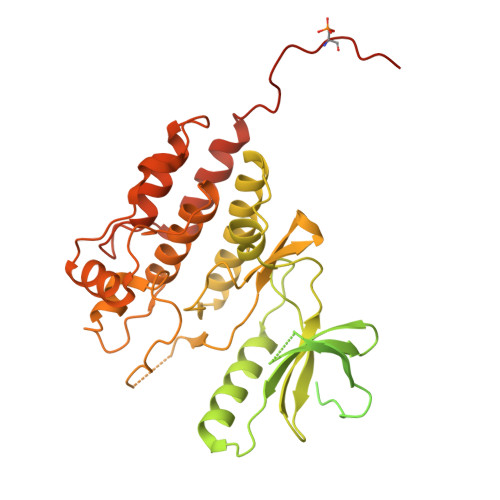
GST26/CRAF chimera
A, C
563Homo sapiensMutation(s): 2 
EC: 2.5.1.18 (PDB Primary Data), 2.7.11.1 (PDB Primary Data)
UniProt & NIH Common Fund Data Resources
Find proteins for P04049 (Homo sapiens)
Explore P04049 
Go to UniProtKB:  P04049
PHAROS:  P04049
GTEx:  ENSG00000132155 
Find proteins for P08515 (Schistosoma japonicum)
Explore P08515 
Go to UniProtKB:  P08515
Entity Groups
Sequence Clusters30% Identity50% Identity70% Identity90% Identity95% Identity100% Identity
UniProt GroupsP04049P08515
Sequence Annotations
Expand
Reference Sequence
Find similar proteins by:|  3D Structure
Entity ID: 2
MoleculeChains  Sequence LengthOrganismDetailsImage
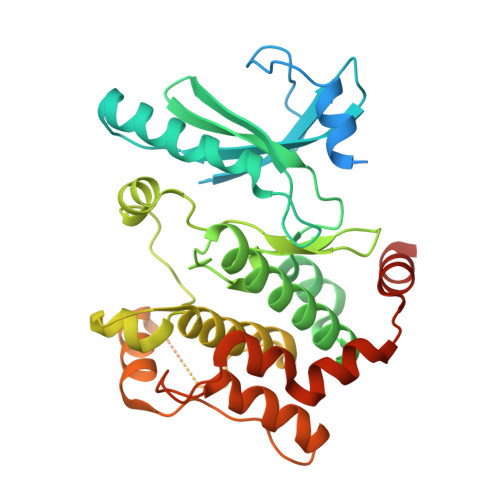
Dual specificity mitogen-activated protein kinase kinase 1
B, D
394Homo sapiensMutation(s): 2 
Gene Names: MAP2K1, MEK1, PRKMK1
EC: 2.7.12.2
UniProt & NIH Common Fund Data Resources
Find proteins for Q02750 (Homo sapiens)
Explore Q02750 
Go to UniProtKB:  Q02750
PHAROS:  Q02750
GTEx:  ENSG00000169032 
Entity Groups
Sequence Clusters30% Identity50% Identity70% Identity90% Identity95% Identity100% Identity
UniProt GroupQ02750
Sequence Annotations
Expand
Reference Sequence
Find similar proteins by:|  3D Structure
Entity ID: 3
MoleculeChains  Sequence LengthOrganismDetailsImage
14-3-3 protein sigma
E, F
248Homo sapiensMutation(s): 0 
Gene Names: SFN, HME1
UniProt & NIH Common Fund Data Resources
Find proteins for P31947 (Homo sapiens)
Explore P31947 
Go to UniProtKB:  P31947
PHAROS:  P31947
GTEx:  ENSG00000175793 
Entity Groups
Sequence Clusters30% Identity50% Identity70% Identity90% Identity95% Identity100% Identity
UniProt GroupP31947
Sequence Annotations
Expand
Reference Sequence

Small Molecules

Ligands 1 Unique
IDChains Name / Formula / InChI Key2D Diagram3D Interactions
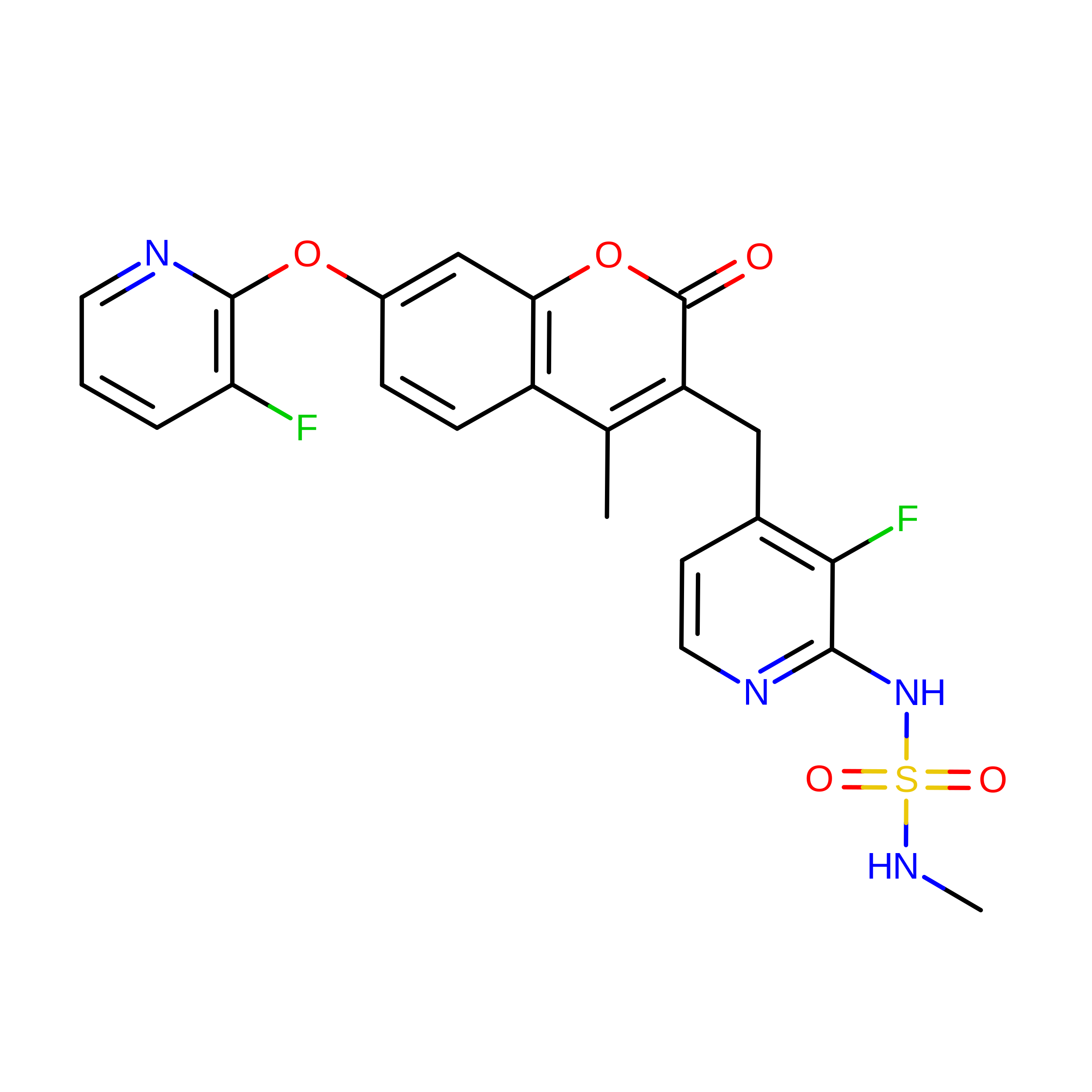
A1AHE
(Subject of Investigation/LOI)

Query on A1AHE


Download:Ideal Coordinates CCD File
G [auth B],
H [auth D]
N-[3-fluoro-4-({7-[(3-fluoropyridin-2-yl)oxy]-4-methyl-2-oxo-2H-1-benzopyran-3-yl}methyl)pyridin-2-yl]-N'-methylsulfuric diamide
C22 H18 F2 N4 O5 S
YQSZJOABXRROQR-UHFFFAOYSA-N
Modified Residues  1 Unique
IDChains TypeFormula2D DiagramParent
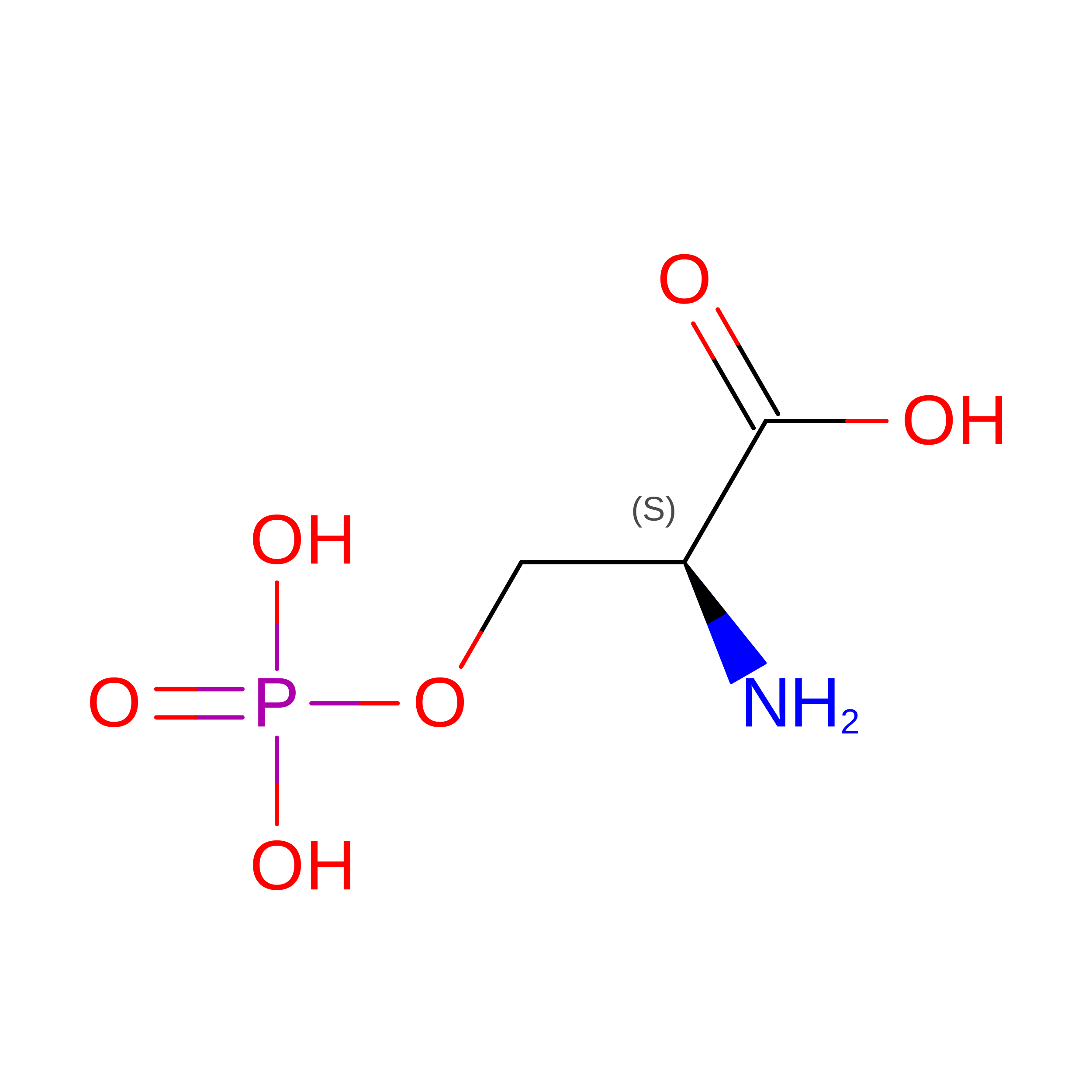
SEP
Query on SEP
A, C
L-PEPTIDE LINKINGC3 H8 N O6 PSER

Experimental Data & Validation

Experimental Data

  • Method: ELECTRON MICROSCOPY
  • Resolution: 4.36 Å
  • Aggregation State: PARTICLE 
  • Reconstruction Method: SINGLE PARTICLE 

Structure Validation

View Full Validation Report


Entry History 

& Funding Information

Deposition Data


Funding OrganizationLocationGrant Number
Not funded--

Revision History  (Full details and data files)

  • Version 1.0: 2024-04-17
    Type: Initial release
  • Version 1.1: 2024-07-10
    Changes: Data collection, Database references
  • Version 1.2: 2024-11-06
    Changes: Data collection, Structure summary