Download Mendeley
NNMT inhibition in cancer-associated fibroblasts restores antitumour immunity.
Heide, J., Bilecz, A.J., Patnaik, S., Allega, M.F., Donle, L., Yang, K., Teich, E., Li, Y., Lin, Q., Kong, K., Liu, L., Yang, T.G., Cheng, K.C., Shrimp, J.H., Hanson, Q.M., Shen, M., Sun, H., Shah, H., Schweizer, L., Zawieracz, K., Olland, A., White, A., Suto, R.K., Alhunayan, R., Tasdemir, M., Longman, N., Liang, H., Mann, M., Stott, G.M., Hall, M.D., Schworer, S., Weichselbaum, R.R., Piffko, A., Lengyel, E.(2025) Nature 645: 1051-1059
- PubMed: 40702186 Search on PubMedSearch on PubMed Central
- DOI: https://doi.org/10.1038/s41586-025-09303-5
- Primary Citation Related Structures:
9ATV - PubMed Abstract:
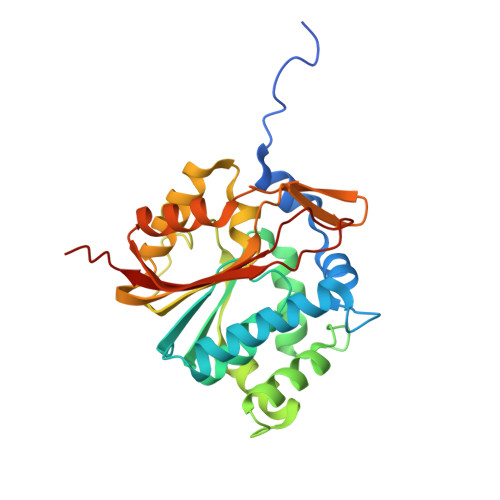
Cancer-associated fibroblasts (CAFs) have a pivotal cancer-supportive role, yet CAF-targeted therapies are lacking 1,2 . Here, using spatial transcriptomics and single-cell RNA sequencing, we investigate the role of nicotinamide N-methyltransferase (NNMT) in high-grade serous ovarian cancer. Mechanistically, NNMT-induced H3K27me3 hypomethylation drives complement secretion from CAFs, attracting immunosuppressive myeloid-derived suppressor cells (MDSCs) to the tumour. Nnmt knockout in immunocompetent mice impairs tumour growth in syngeneic ovarian, breast and colon tumour models through enhanced CD8 + T cell activation. Using high-throughput screening, we develop a potent and specific NNMT inhibitor that reduces the tumour burden and metastasis in multiple mouse cancer models and restores immune checkpoint blockade efficacy by decreasing CAF-mediated recruitment of MDSCs and reinvigorating CD8 + T cell activation. Our findings establish NNMT as a central CAF regulator and a promising therapeutic target to mitigate immunosuppression in the tumour microenvironment.
- Department of Obstetrics and Gynecology, Section of Gynecologic Oncology, University of Chicago, Chicago, IL, USA.
Organizational Affiliation: