Download Mendeley
Structure and assembly of a bacterial gasdermin pore
Johnson, A.G., Mayer, M.L., Schaefer, S.L., McNamara-Bordewick, N.K., Hummer, G., Kranzusch, P.J.(2024) Nature
- PubMed: 38509367 Search on PubMedSearch on PubMed Central
- DOI: https://doi.org/10.1038/s41586-024-07216-3
- Primary Citation Related Structures:
8SL0, 9A84, 9A85, 9A86 - PubMed Abstract:
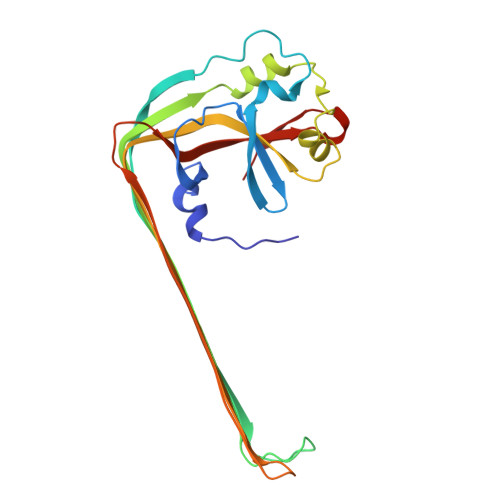
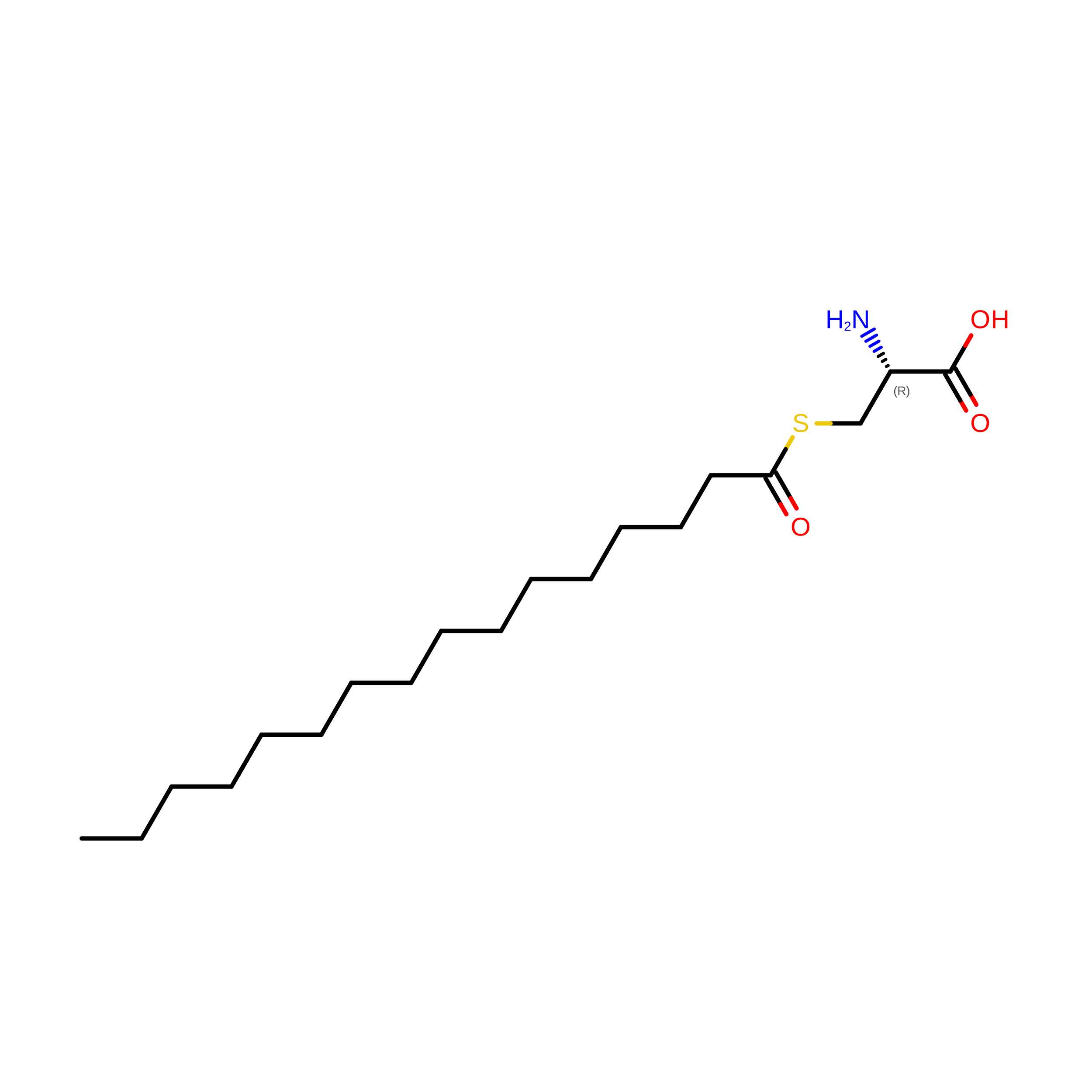
In response to pathogen infection, gasdermin (GSDM) proteins form membrane pores that induce a host cell death process called pyroptosis 1-3 . Studies of human and mouse GSDM pores have revealed the functions and architectures of assemblies comprising 24 to 33 protomers 4-9 , but the mechanism and evolutionary origin of membrane targeting and GSDM pore formation remain unknown. Here we determine a structure of a bacterial GSDM (bGSDM) pore and define a conserved mechanism of pore assembly. Engineering a panel of bGSDMs for site-specific proteolytic activation, we demonstrate that diverse bGSDMs form distinct pore sizes that range from smaller mammalian-like assemblies to exceptionally large pores containing more than 50 protomers. We determine a cryo-electron microscopy structure of a Vitiosangium bGSDM in an active 'slinky'-like oligomeric conformation and analyse bGSDM pores in a native lipid environment to create an atomic-level model of a full 52-mer bGSDM pore. Combining our structural analysis with molecular dynamics simulations and cellular assays, our results support a stepwise model of GSDM pore assembly and suggest that a covalently bound palmitoyl can leave a hydrophobic sheath and insert into the membrane before formation of the membrane-spanning β-strand regions. These results reveal the diversity of GSDM pores found in nature and explain the function of an ancient post-translational modification in enabling programmed host cell death.
- Department of Microbiology, Harvard Medical School, Boston, MA, USA. algejohnson@gmail.com.
Organizational Affiliation: