8Z5N | pdb_00008z5n

Cryo-EM structure of the LPHT ring


Experimental Data Snapshot

  • Method: ELECTRON MICROSCOPY
  • Resolution: 2.95 Å
  • Aggregation State: PARTICLE 
  • Reconstruction Method: SINGLE PARTICLE 

Starting Model: in silico
View more details

wwPDB Validation 3D Report Full Report

Validation slider image for 8Z5N

This is version 1.1 of the entry. See complete history

Literature

Molecular basis of high-torque transmission of the Vibrio polar flagellar motor.

Zhang, L.Tan, J.Duan, X.Wang, X.Wang, T.Yuan, K.Homma, M.Kojima, S.Zhou, Y.Zhu, Y.

(2026) Protein Cell 

  • DOI: https://doi.org/10.1093/procel/pwag025
  • Primary Citation Related Structures: 
    8Z5N, 8Z5S, 8Z5U, 8Z5V, 8Z5W, 8Z5X, 8Z5Y, 8Z5Z, 8Z60

  • PubMed Abstract: 

    The bacterial flagellar motor is a protein nanomachine that rotates the flagellum to facilitate bacterial motility. These motors exhibit structural diversity among species, enabling the transmission of varying torques to flagellar filaments to grant bacteria diverse swimming capabilities. Compared to peritrichous flagellar motors, polar flagellar motors are faster machines that transmit higher torque to drive high-speed motility in liquids and empower swimming in viscous environments. However, structural basis of high-torque transmission of the polar flagellar motors is still unclear. Here we present a cryo-electron microscopy structure of the polar flagellar motor in complex with the hook from Vibrio alginolyticus, comprising 295 subunits from 18 proteins. Compared to the peritrichous flagellar rod, this structure reveals an increased number of inter-subunit interactions in the rod of the polar flagellar motor. Nine phospholipid molecules insert into the interface between the export apparatus and the proximal rod. The LP ring contains more electrostatic charges on the inner surface and has fewer physical contacts with the rod, while the HT ring tightly binds to the outer surface of the LP ring. FlrP, a protein of previously unknown function, is identified as a new component of the polar flagellar motor, and extensively participates in the interactions of 15 FliF peptides of the MS ring with the rod. In contrast to that in the peritrichous flagellum, the hook in the polar flagellum has two different conformational states, L- and R-types. These findings provide unprecedented insights into structural adaptations of the bacterial polar flagellar motors for high-torque transmission.


  • Organizational Affiliation
    • School of Public Health, Life Sciences Institute, and Department of Infectious Diseases of the Second Affiliated Hospital, School of Medicine, Zhejiang University, Hangzhou, 310058, China.

Macromolecule Content 

  • Total Structure Weight: 4,773.87 kDa 
  • Atom Count: 269,711 
  • Modeled Residue Count: 34,671 
  • Deposited Residue Count: 43,134 
  • Unique protein chains: 7

Macromolecules

Find similar proteins by:|  3D Structure
Entity ID: 1
MoleculeChains  Sequence LengthOrganismDetailsImage
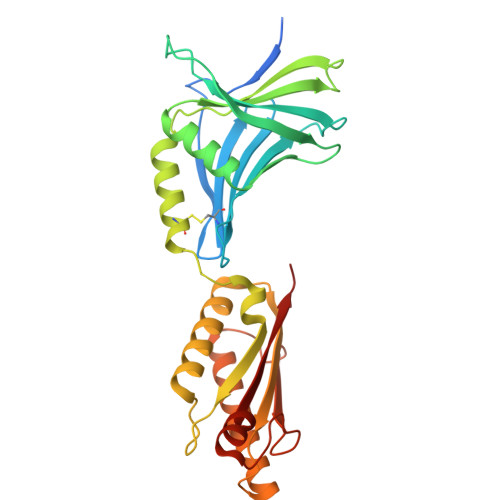
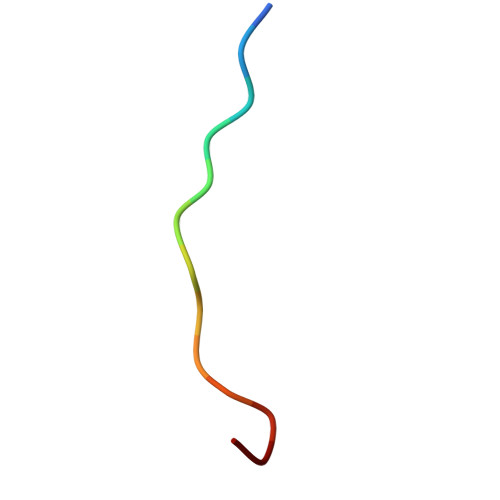
Component of sodium-driven polar flagellar motor293Vibrio alginolyticusMutation(s): 0 
UniProt
Find proteins for P74944 (Vibrio alginolyticus)
Explore P74944 
Go to UniProtKB:  P74944
Entity Groups
Sequence Clusters30% Identity50% Identity70% Identity90% Identity95% Identity100% Identity
UniProt GroupP74944
Sequence Annotations
Expand
Reference Sequence
Find similar proteins by:|  3D Structure
Entity ID: 2
MoleculeChains  Sequence LengthOrganismDetailsImage
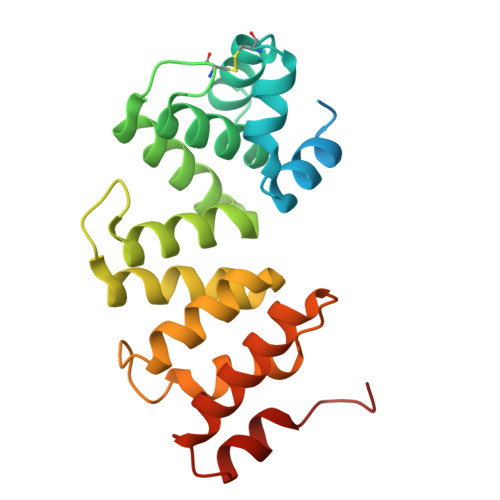
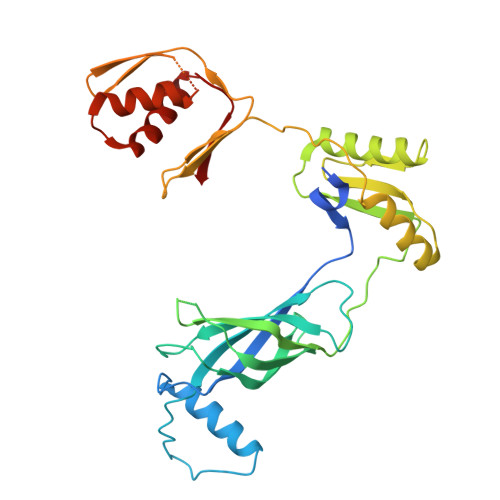
Sodium-type flagellar motor component211Vibrio alginolyticusMutation(s): 0 
UniProt
Find proteins for Q93R25 (Vibrio alginolyticus)
Explore Q93R25 
Go to UniProtKB:  Q93R25
Entity Groups
Sequence Clusters30% Identity50% Identity70% Identity90% Identity95% Identity100% Identity
UniProt GroupQ93R25
Sequence Annotations
Expand
Reference Sequence
Find similar proteins by:|  3D Structure
Entity ID: 4
MoleculeChains  Sequence LengthOrganismDetailsImage
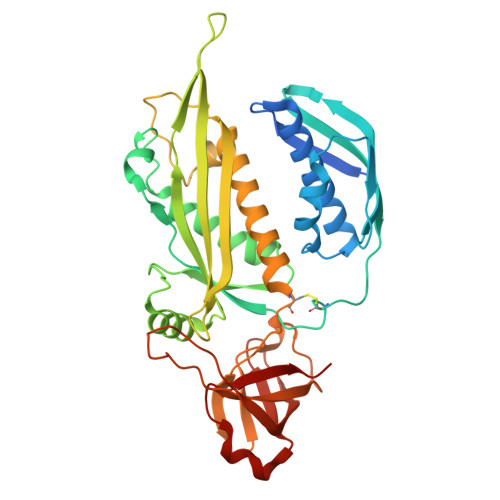
Flagellar assembly lipoprotein FlgP143Vibrio alginolyticusMutation(s): 0 
UniProt
Find proteins for A0A0H0Y943 (Vibrio alginolyticus)
Explore A0A0H0Y943 
Go to UniProtKB:  A0A0H0Y943
Entity Groups
Sequence Clusters30% Identity50% Identity70% Identity90% Identity95% Identity100% Identity
UniProt GroupA0A0H0Y943
Sequence Annotations
Expand
Reference Sequence
Find similar proteins by:  Sequence   |   3D Structure  
Find similar proteins by:|  3D Structure
Entity ID: 7
MoleculeChains  Sequence LengthOrganismDetailsImage
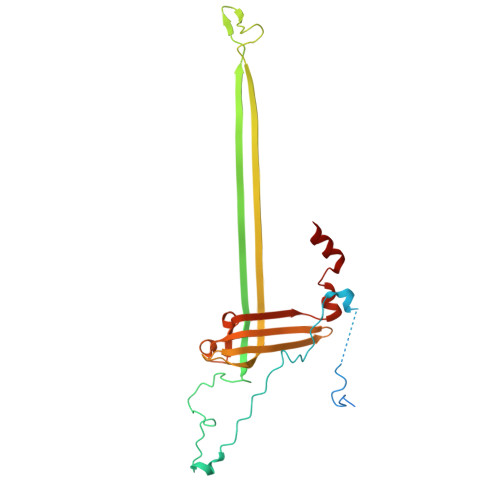
Flagella basal-body protein377Vibrio alginolyticusMutation(s): 0 
UniProt
Find proteins for D9N551 (Vibrio alginolyticus)
Explore D9N551 
Go to UniProtKB:  D9N551
Entity Groups
Sequence Clusters30% Identity50% Identity70% Identity90% Identity95% Identity100% Identity
UniProt GroupD9N551
Sequence Annotations
Expand
Reference Sequence

Experimental Data & Validation

Experimental Data

  • Method: ELECTRON MICROSCOPY
  • Resolution: 2.95 Å
  • Aggregation State: PARTICLE 
  • Reconstruction Method: SINGLE PARTICLE 
EM Software:
TaskSoftware PackageVersion
RECONSTRUCTIONcryoSPARC
MODEL REFINEMENTPHENIX1.20.1_4487:

Structure Validation

View Full Validation Report


Entry History 

& Funding Information

Deposition Data


Funding OrganizationLocationGrant Number
National Natural Science Foundation of China (NSFC)China81925024
National Natural Science Foundation of China (NSFC)ChinaU23A20163
Ministry of Science and Technology (MoST, China)China2017YFA0503900

Revision History  (Full details and data files)

  • Version 1.0: 2025-10-22
    Type: Initial release
  • Version 1.1: 2026-05-13
    Changes: Data collection, Database references