Download Mendeley
Recombinant Production and Characterization of Six Ene-reductases from Penicillium steckii.
Damada, P.H., Rozeboom, H.J., Fraaije, M.W.(2025) Chembiochem 26: e202401007-e202401007
- PubMed: 40072226 Search on PubMedSearch on PubMed Central
- DOI: https://doi.org/10.1002/cbic.202401007
- Primary Citation Related Structures:
8S4P - PubMed Abstract:
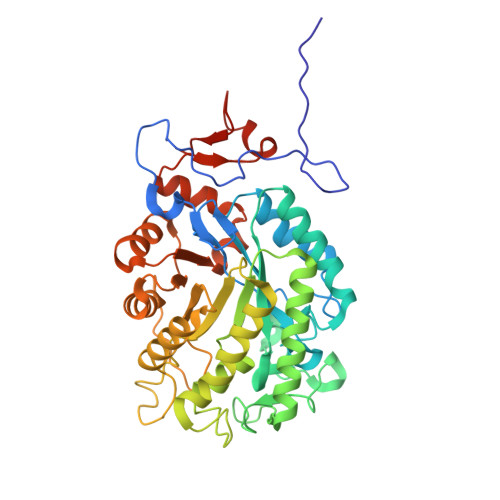
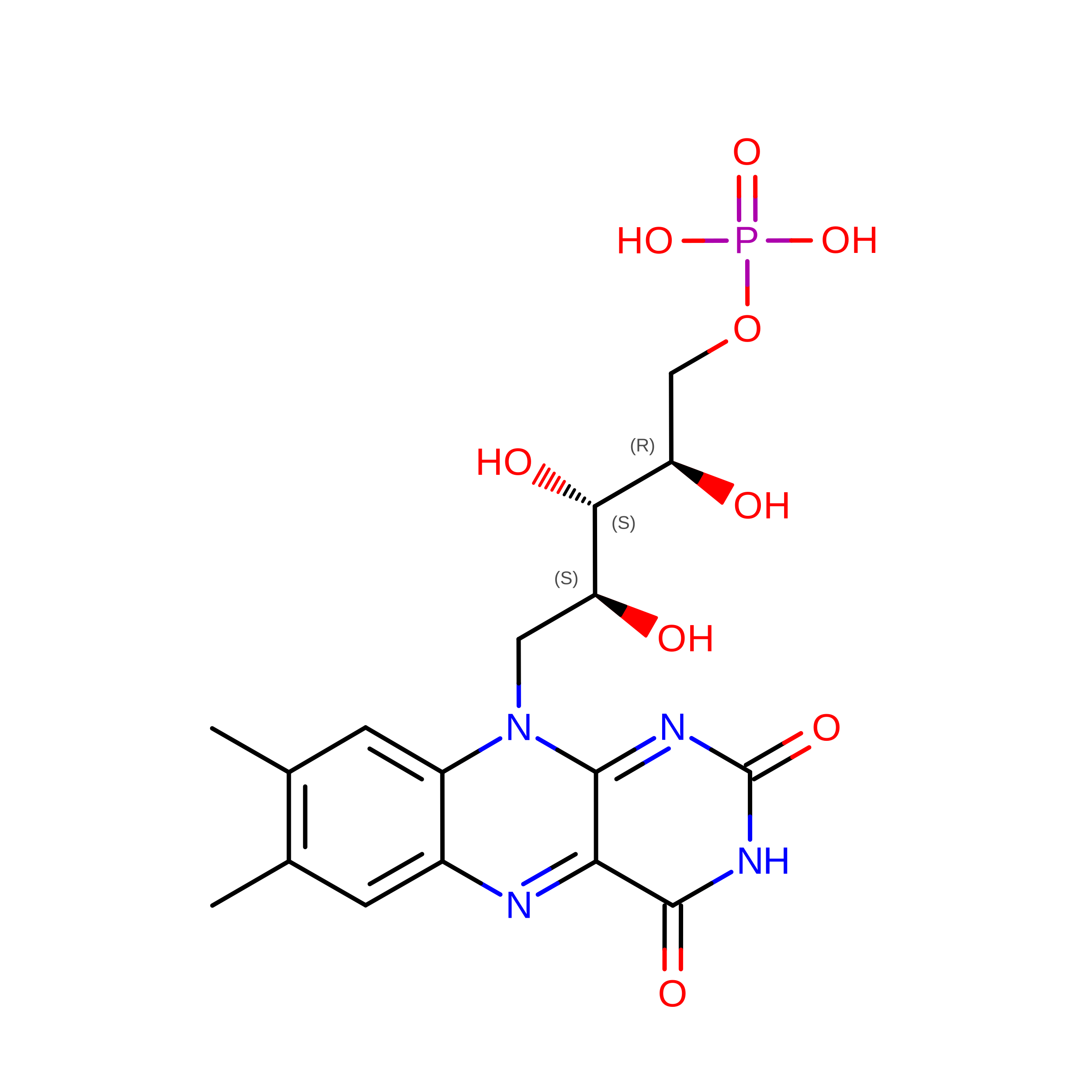
Fungi, known for their adaptability, are valuable sources of enzymes, making them promising for biocatalyst discovery. This study explored Penicillium steckii, primarily recognized for secondary metabolite production, as a source of ene-reductases (ERs), which reduce α,β-unsaturated compounds. Eleven ER-encoding genes were identified, and plasmids for Escherichia coli expression were generated. Six ERs (PsOYE1-6) were successfully produced and purified as soluble FMN-containing proteins. Sequence analysis classified them into Class II (PsOYE1, PsOYE4, PsOYE6), Class III (PsOYE2, PsOYE3), and Class V (PsOYE5) OYEs. All were active on p-benzoquinone and maleimide, with varying activity on other substrates. Their pH optima ranged from 6 to 7, and they exhibited moderate thermostability (35-50 °C). PsOYE2 was crystallized, and its 2.3 Å structure revealed a stable dimer with a unique active site. PsOYE3, PsOYE4, and PsOYE5 were tested for R-carvone conversion and stereoselectivity, all favouring one diastereomer. These fungal ERs expand the enzymatic toolbox for biocatalysis, emphasizing the need for tailored strategies based on specific applications.
- Molecular Enzymology Group, Institute of Biomolecular Sciences & Biotechnology, University of Groningen, Nijenborgh 3, 9747 AG, Groningen, the, Netherlands.
Organizational Affiliation: