Download Mendeley
Ultrapotent class I neutralizing antibodies post Omicron breakthrough infection overcome broad SARS-CoV-2 escape variants.
Luo, M., Zhou, R., Tang, B., Liu, H., Chen, B., Liu, N., Mo, Y., Zhang, P., Lee, Y.L., Ip, J.D., Wing-Ho Chu, A., Chan, W.M., Man, H.O., Chen, Y., To, K.K., Yuen, K.Y., Dang, S., Chen, Z.(2024) EBioMedicine 108: 105354-105354
- PubMed: 39341153 Search on PubMedSearch on PubMed Central
- DOI: https://doi.org/10.1016/j.ebiom.2024.105354
- Primary Citation Related Structures:
8K18, 8K19 - PubMed Abstract:
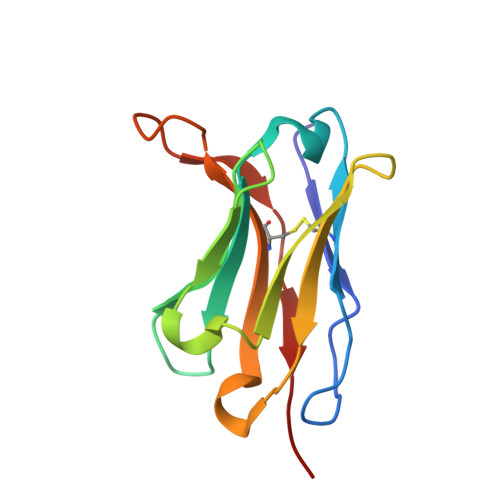
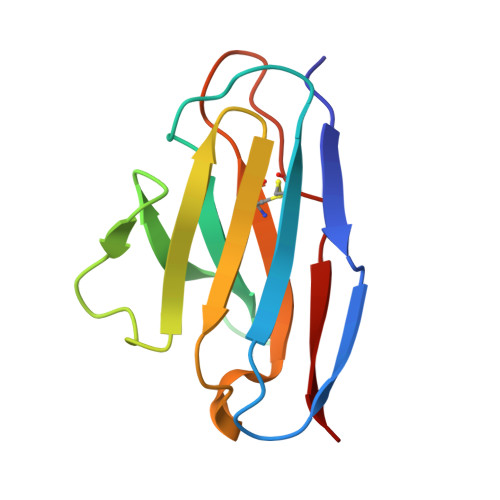
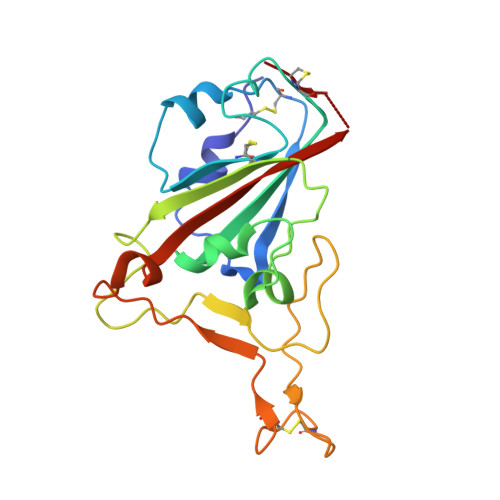
The spread of emerging SARS-CoV-2 immune escape sublineages, especially JN.1 and KP.2, has resulted in new waves of COVID-19 globally. The evolving memory B cell responses elicited by the parental Omicron variants to subvariants with substantial antigenic drift remain incompletely investigated. Using the single B cell antibody cloning technology, we isolated single memory B cells, delineated the B cell receptor repertoire and conducted the pseudovirus-based assay for recovered neutralizing antibodies (NAb) screening. We analyzed the cryo-EM structures of top broadly NAbs (bnAbs) and evaluated their in vivo efficacy (golden Syrian hamster model). By investigating the evolution of human B cell immunity, we discovered a new panel of bnAbs arising from vaccinees after Omicron BA.2/BA.5 breakthrough infections. Two lead bnAbs neutralized major Omicron subvariants including JN.1 and KP.2 with IC 50 values less than 10 ng/mL, representing ultrapotent receptor binding domain (RBD)-specific class I bnAbs. They belonged to the IGHV3-53/3-66 clonotypes instead of evolving from the pre-existing vaccine-induced IGHV1-58/IGKV3-20 bnAb ZCB11. Despite sequence diversity, they targeted previously unrecognized, highly conserved conformational epitopes in the receptor binding motif (RBM) for ultrapotent ACE2 blockade. The lead bnAb ZCP3B4 not only protected the lungs of hamsters intranasally challenged with BA.5.2, BQ.1.1 and XBB.1.5 but also prevented their contact transmission. Our findings demonstrated that class I bnAbs have evolved an ultrapotent mode of action protecting against highly transmissible and broad Omicron escape variants, and their epitopes are potential targets for novel bnAbs and vaccine development. A full list of funding bodies that contributed to this study can be found in the Acknowledgements section.
- AIDS Institute, School of Clinical Medicine, Li Ka Shing Faculty of Medicine, The University of Hong Kong, Pokfulam, Hong Kong SAR, People's Republic of China; Department of Microbiology, School of Clinical Medicine, Li Ka Shing Faculty of Medicine, The University of Hong Kong, Pokfulam, Hong Kong SAR, People's Republic of China.
Organizational Affiliation: