Download Mendeley
A Hybrid compound H93 treats prostate cancer by directly binding UHRF1 and promoting protein dimerization.
Fu, Y., Jiang, L., Xie, G., Peng, Y., Fu, Y., Zhu, Q., Liu, Y., Zhao, G., Liu, X., Peng, Y., Chen, Y., Li, X.(2025) Commun Chem 8: 356-356
- PubMed: 41254147 Search on PubMedSearch on PubMed Central
- DOI: https://doi.org/10.1038/s42004-025-01744-3
- Primary Citation Related Structures:
8JIG - PubMed Abstract:
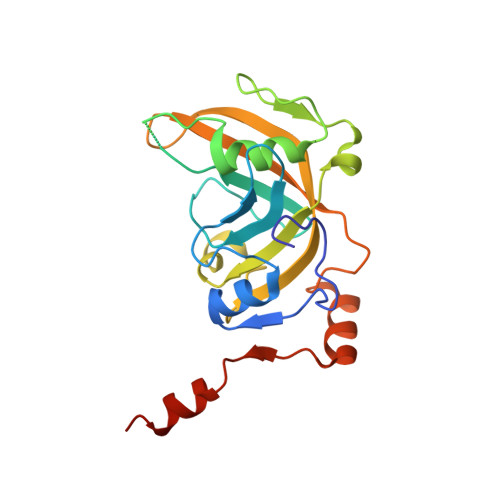
UHRF1 is a pivotal epigenetic regulator bridging DNA methylation and histone modifications, frequently overexpressed in prostate cancer (PCa). However, no UHRF1-targeted therapeutics have advanced to clinical trials. Here, we report the development of H93, a hybrid small molecule integrating functional groups derived from NSC232003 and vorinostat, respectively. H93 exhibits potent anticancer activity in vitro, correlating with UHRF1 protein abundance, and co-crystallization studies confirm that H93 directly binding to the SRA domain of UHRF1. Intriguingly, H93 promotes UHRF1 dimerization, generating a defined binding pocket that stabilizes compound engagement and enhances druggability of UHRF1 as a non-kinase target. Dimerized UHRF1 adopts a "closed" conformation that disrupts its interaction with DNMT1, impairs DNA methylation maintenance, and reactivates epigenetically silenced tumor suppressor genes. In vivo, H93 demonstrates significant antitumor efficacy. Overall, this study elucidates the structural and mechanistic basis of H93, establishing it as a promising UHRF1-targeted therapy for PCa.
- Xiangya Cancer Center, National Clinical Research Center for Geriatric Disorders, Xiangya Hospital, Central South University, Changsha, China.
Organizational Affiliation: