8HR0 | pdb_00008hr0

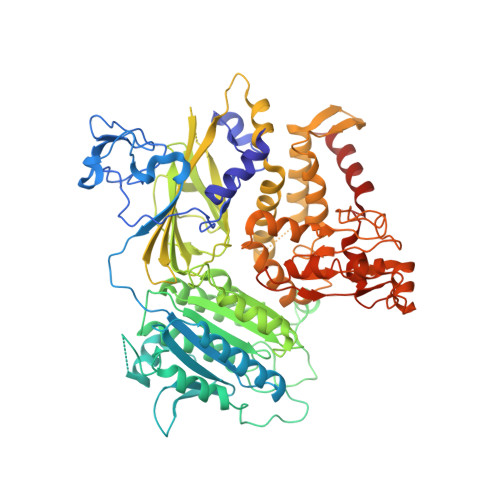
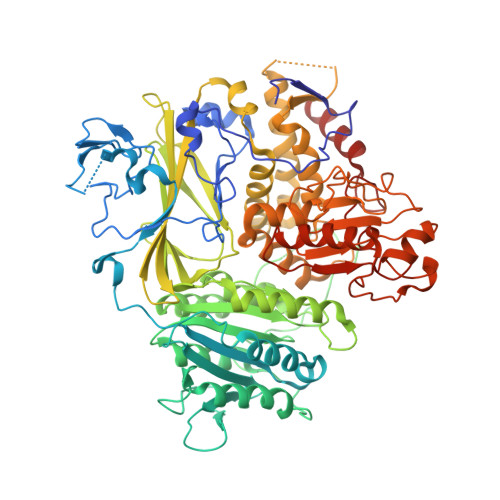
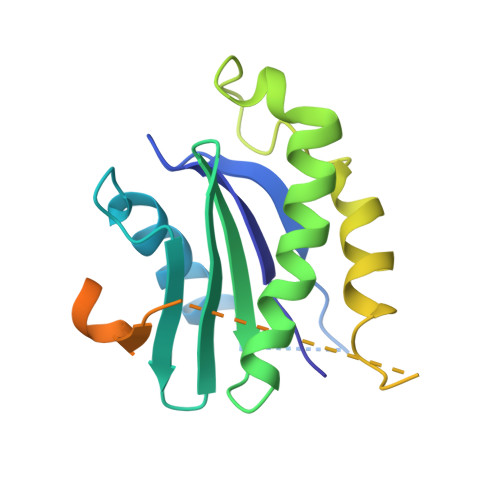
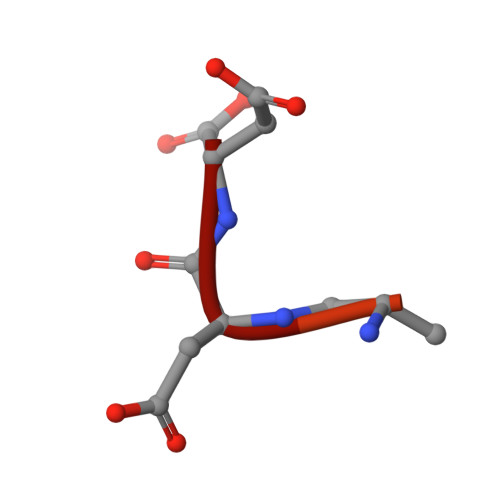
The complex structure of COPII coat with HCoV-OC43 DD sorting motif


Experimental Data Snapshot

  • Method: X-RAY DIFFRACTION
  • Resolution: 3.34 Å
  • R-Value Free: 
    0.299 (Depositor), 0.304 (DCC) 
  • R-Value Work: 
    0.223 (Depositor), 0.230 (DCC) 
  • R-Value Observed: 
    0.229 (Depositor) 

Starting Model: experimental
View more details

wwPDB Validation 3D Report Full Report

Validation slider image for 8HR0

This is version 1.1 of the entry. See complete history. 

Literature

SARS-CoV-2 spike host cell surface exposure promoted by a COPI sorting inhibitor.

Li, Y., Yang, M., Nan, Y., Wang, J., Wang, S., Cui, D., Guo, J., He, P., Dai, W., Zhou, S., Zhang, Y., Ma, W.

(2023) Acta Pharm Sin B 13: 3043-3053

  • DOI: https://doi.org/10.1016/j.apsb.2023.04.007
  • Primary Citation Related Structures: 
    8HQT, 8HQV, 8HQW, 8HQX, 8HR0

  • PubMed Abstract: 

    Via an insufficient coat protein complex I (COPI) retrieval signal, the majority of SARS-CoV-2 spike (S) is resident in host early secretory organelles and a tiny amount is leaked out in cell surface. Only surface-exposed S can be recognized by B cell receptor (BCR) or anti-S therapeutic monoclonal antibodies (mAbs) that is the trigger step for B cell activation after S mRNA vaccination or infected cell clearance by S mAbs. Now, a drug strategy to promote S host surface exposure is absent. Here, we first combined structural and biochemical analysis to characterize S COPI sorting signals. A potent S COPI sorting inhibitor was then invented, evidently capable of promoting S surface exposure and facilitating infected cell clearance by S antibody-dependent cellular cytotoxicity (ADCC). Importantly, with the inhibitor as a probe, we revealed Omicron BA.1 S is less cell surface exposed than prototypes because of a constellation of S folding mutations, possibly corresponding to its ER chaperone association. Our findings not only suggest COPI is a druggable target against COVID-19, but also highlight SARS-CoV-2 evolution mechanism driven by S folding and trafficking mutations.


  • Organizational Affiliation: 
    • School of Life Science, Beijing University of Chinese Medicine, Beijing 102488, China.

Macromolecule Content 

  • Total Structure Weight: 194.98 kDa 
  • Atom Count: 12,401 
  • Modeled Residue Count: 1,575 
  • Deposited Residue Count: 1,725 
  • Unique protein chains: 4

Macromolecules

Find similar proteins by:|  3D Structure
Entity ID: 1
MoleculeChains  Sequence LengthOrganismDetailsImage
Protein transport protein Sec23A765Homo sapiensMutation(s): 0 
Gene Names: SEC23A
UniProt & NIH Common Fund Data Resources
Find proteins for Q15436 (Homo sapiens)
Explore Q15436 
Go to UniProtKB:  Q15436
PHAROS:  Q15436
GTEx:  ENSG00000100934 
Entity Groups
Sequence Clusters30% Identity50% Identity70% Identity90% Identity95% Identity100% Identity
UniProt GroupQ15436
Sequence Annotations
Expand
Reference Sequence
Find similar proteins by:|  3D Structure
Entity ID: 2
MoleculeChains  Sequence LengthOrganismDetailsImage
Protein transport protein Sec24A751Homo sapiensMutation(s): 0 
Gene Names: SEC24A
UniProt & NIH Common Fund Data Resources
Find proteins for O95486 (Homo sapiens)
Explore O95486 
Go to UniProtKB:  O95486
PHAROS:  O95486
GTEx:  ENSG00000113615 
Entity Groups
Sequence Clusters30% Identity50% Identity70% Identity90% Identity95% Identity100% Identity
UniProt GroupO95486
Sequence Annotations
Expand
Reference Sequence
Find similar proteins by:|  3D Structure
Entity ID: 3
MoleculeChains  Sequence LengthOrganismDetailsImage
Vesicle-trafficking protein SEC22b199Homo sapiensMutation(s): 0 
Gene Names: SEC22B, SEC22L1
UniProt & NIH Common Fund Data Resources
Find proteins for O75396 (Homo sapiens)
Explore O75396 
Go to UniProtKB:  O75396
PHAROS:  O75396
GTEx:  ENSG00000265808 
Entity Groups
Sequence Clusters30% Identity50% Identity70% Identity90% Identity95% Identity100% Identity
UniProt GroupO75396
Sequence Annotations
Expand
Reference Sequence
Find similar proteins by:  Sequence   |   3D Structure  
Entity ID: 4
MoleculeChains  Sequence LengthOrganismDetailsImage
HCoV-OC4310Human coronavirus OC43Mutation(s): 0 
UniProt
Find proteins for P36334 (Human coronavirus OC43)
Explore P36334 
Go to UniProtKB:  P36334
Entity Groups
Sequence Clusters30% Identity50% Identity70% Identity90% Identity95% Identity100% Identity
UniProt GroupP36334
Sequence Annotations
Expand
Reference Sequence

Experimental Data & Validation

Experimental Data

  • Method: X-RAY DIFFRACTION
  • Resolution: 3.34 Å
  • R-Value Free:  0.299 (Depositor), 0.304 (DCC) 
  • R-Value Work:  0.223 (Depositor), 0.230 (DCC) 
  • R-Value Observed: 0.229 (Depositor) 
Space Group: C 1 2 1
Unit Cell:
Length ( Å )Angle ( ˚ )
a = 148.58α = 90
b = 96.203β = 90.01
c = 130.465γ = 90
Software Package:
Software NamePurpose
PHENIXrefinement
HKL-3000data reduction
SCALAdata scaling
PHASERphasing

Structure Validation

View Full Validation Report


Entry History 

& Funding Information

Deposition Data


Funding OrganizationLocationGrant Number
Beijing University of Chinese Medicine (BUCM)China90011451310011, 1000061223476, ZYYCXTD-C-202006

Revision History  (Full details and data files)

  • Version 1.0: 2023-12-20
    Type: Initial release
  • Version 1.1: 2025-01-29
    Changes: Database references, Structure summary