Download Mendeley
Molecular glues of the regulatory ChREBP/14-3-3 complex protect beta cells from glucolipotoxicity.
Katz, L.S., Visser, E.J., Plitzko, K.F., Pennings, M., Cossar, P.J., Tse, I.L., Kaiser, M., Brunsveld, L., Scott, D.K., Ottmann, C.(2024) bioRxiv
- PubMed: 38405965 Search on PubMedSearch on PubMed Central
- DOI: https://doi.org/10.1101/2024.02.16.580675
- Primary Citation Related Structures:
8BTQ, 8BWE, 8BWH, 8C1Y - PubMed Abstract:
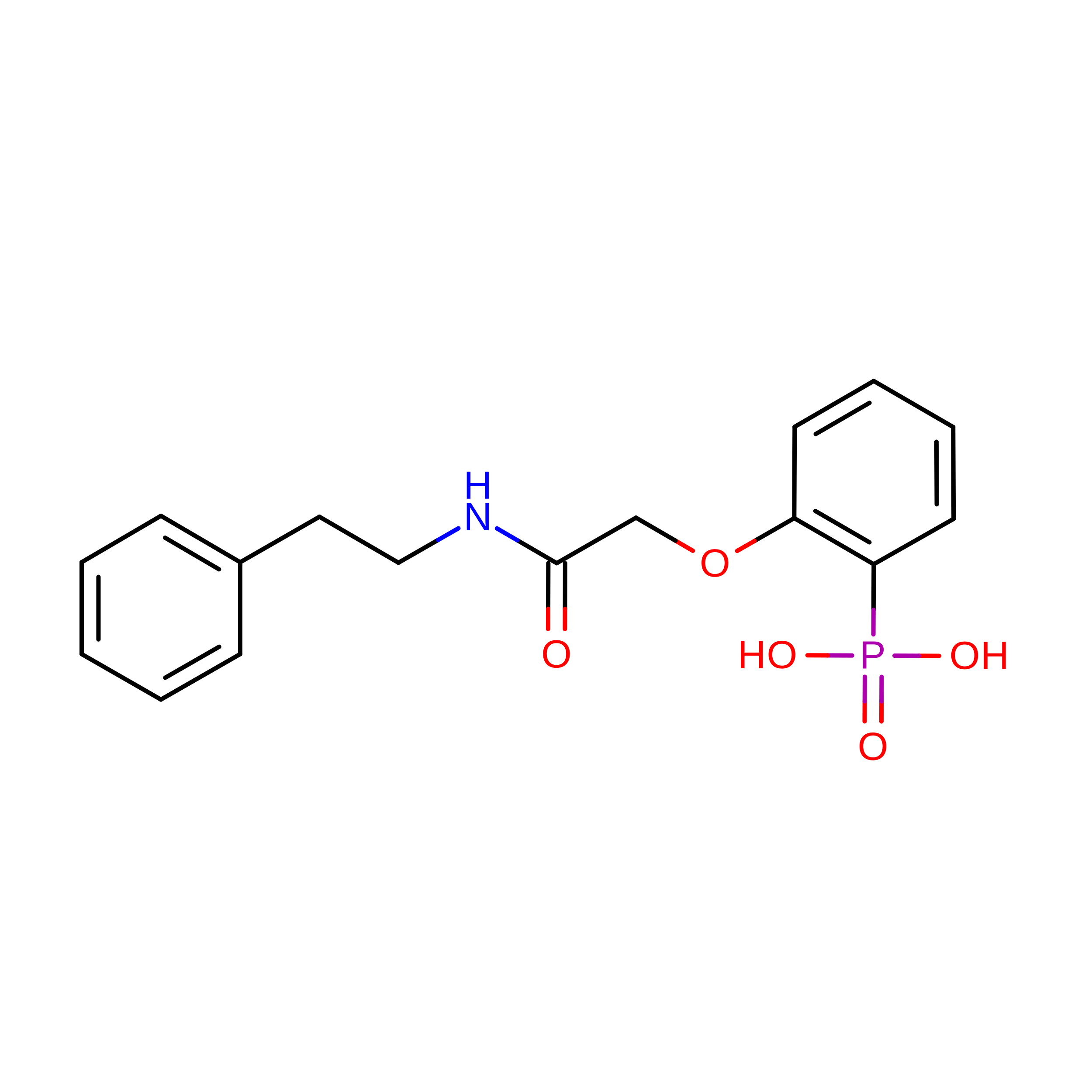
The Carbohydrate Response Element Binding Protein (ChREBP) is a glucose-responsive transcription factor (TF) with two major splice isoforms (α and β). In chronic hyperglycemia and glucolipotoxicity, ChREBPα-mediated ChREBPβ expression surges, leading to insulin-secreting β-cell dedifferentiation and death. 14-3-3 binding to ChREBPα results in cytoplasmic retention and suppression of transcriptional activity. Thus, small molecule-mediated stabilization of this protein-protein interaction (PPI) may be of therapeutic value. Here, we show that structure-based optimizations of a 'molecular glue' compound led to potent ChREBPα/14-3-3 PPI stabilizers with cellular activity. In primary human β-cells, the most active compound retained ChREBPα in the cytoplasm, and efficiently protected β-cells from glucolipotoxicity while maintaining β-cell identity. This study may thus not only provide the basis for the development of a unique class of compounds for the treatment of Type 2 Diabetes but also showcases an alternative 'molecular glue' approach for achieving small molecule control of notoriously difficult to target TFs.
- Diabetes, Obesity and Metabolism Institute and Mindich Child Health and Development Institute, Icahn School of Medicine at Mount Sinai, One Gustave L. Levy Place, Box 1152, New York, 10029, USA.
Organizational Affiliation: