8YE6 | pdb_00008ye6

Cryo-EM structure of Cas9-sgRNA-A32 complex


Experimental Data Snapshot

  • Method: ELECTRON MICROSCOPY
  • Resolution: 2.95 Å
  • Aggregation State: PARTICLE 
  • Reconstruction Method: SINGLE PARTICLE 

wwPDB Validation   3D Report Full Report


This is version 1.0 of the entry. See complete history


Literature

Inhibition mechanisms of CRISPR-Cas9 by AcrIIA25.1 and AcrIIA32.

Zheng, J.Zhu, Y.Huang, T.Gao, W.He, J.Huang, Z.

(2024) Sci China Life Sci 67: 1781-1791

  • DOI: https://doi.org/10.1007/s11427-024-2607-8
  • Primary Citation of Related Structures:  
    8YE6, 8YE9

  • PubMed Abstract: 

    In the ongoing arms race between bacteria and bacteriophages, bacteriophages have evolved anti-CRISPR proteins to counteract bacterial CRISPR-Cas systems. Recently, AcrIIA25.1 and AcrIIA32 have been found to effectively inhibit the activity of SpyCas9 both in bacterial and human cells. However, their molecular mechanisms remain elusive. Here, we report the cryo-electron microscopy structures of ternary complexes formed by AcrIIA25.1 and AcrIIA32 bound to SpyCas9-sgRNA. Using structural analysis and biochemical experiments, we revealed that AcrIIA25.1 and AcrIIA32 recognize a novel, previously-unidentified anti-CRISPR binding site on SpyCas9. We found that both AcrIIA25.1 and AcrIIA32 directly interact with the WED domain, where they spatially obstruct conformational changes of the WED and PI domains, thereby inhibiting SpyCas9 from recognizing protospacer adjacent motif (PAM) and unwinding double-stranded DNA. In addition, they may inhibit nuclease activity by blocking the dynamic conformational changes of the SpyCas9 surveillance complex. In summary, our data elucidate the inhibition mechanisms of two new anti-CRISPR proteins, provide new strategies for the modulation of SpyCas9 activity, and expand our understanding of the diversity of anti-CRISPR protein inhibition mechanisms.


  • Organizational Affiliation
    • HIT Center for Life Sciences, School of Life Science and Technology, Harbin Institute of Technology, Harbin, 150080, China.

Macromolecules

Find similar proteins by:  (by identity cutoff)  |  3D Structure
Entity ID: 1
MoleculeChains Sequence LengthOrganismDetailsImage
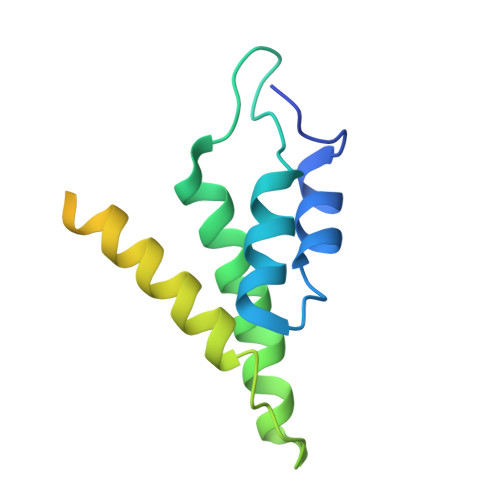
A32A [auth B]141StreptococcusMutation(s): 0 
Entity Groups  
Sequence Clusters30% Identity50% Identity70% Identity90% Identity95% Identity100% Identity
Sequence Annotations
Expand
  • Reference Sequence
Find similar proteins by:  (by identity cutoff)  |  3D Structure
Entity ID: 2
MoleculeChains Sequence LengthOrganismDetailsImage
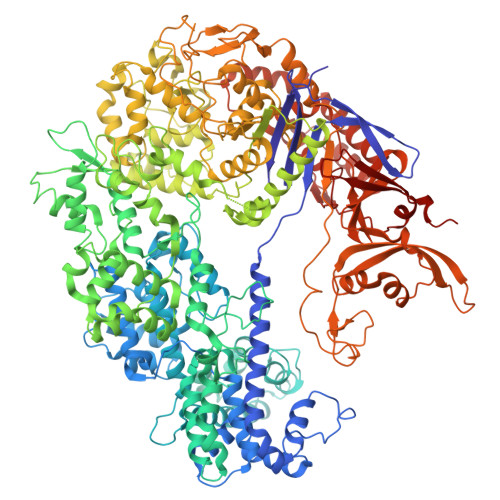
CRISPR-associated endonuclease Cas9/Csn1B [auth A]1,368Streptococcus pyogenes serotype M1Mutation(s): 0 
Gene Names: cas9csn1SPy_1046
EC: 3.1
UniProt
Find proteins for Q99ZW2 (Streptococcus pyogenes serotype M1)
Explore Q99ZW2 
Go to UniProtKB:  Q99ZW2
Entity Groups  
Sequence Clusters30% Identity50% Identity70% Identity90% Identity95% Identity100% Identity
UniProt GroupQ99ZW2
Sequence Annotations
Expand
  • Reference Sequence
Find similar nucleic acids by:  (by identity cutoff)  |  3D Structure
Entity ID: 3
MoleculeChains LengthOrganismImage
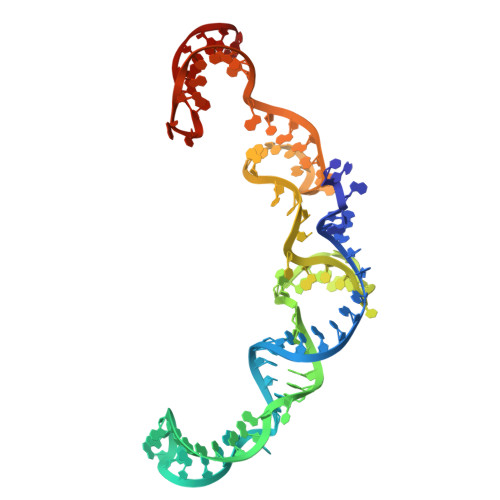
RNA (92-MER)92Streptococcus pyogenes
Sequence Annotations
Expand
  • Reference Sequence
Experimental Data & Validation

Experimental Data

  • Method: ELECTRON MICROSCOPY
  • Resolution: 2.95 Å
  • Aggregation State: PARTICLE 
  • Reconstruction Method: SINGLE PARTICLE 
EM Software:
TaskSoftware PackageVersion
MODEL REFINEMENTPHENIX1.11.1_2575:

Structure Validation

View Full Validation Report


Entry History & Funding Information

Deposition Data


Funding OrganizationLocationGrant Number
National Natural Science Foundation of China (NSFC)China31422014, 31450001, and 31300605

Revision History  (Full details and data files)

  • Version 1.0: 2024-09-11
    Type: Initial release