8YC1 | pdb_00008yc1

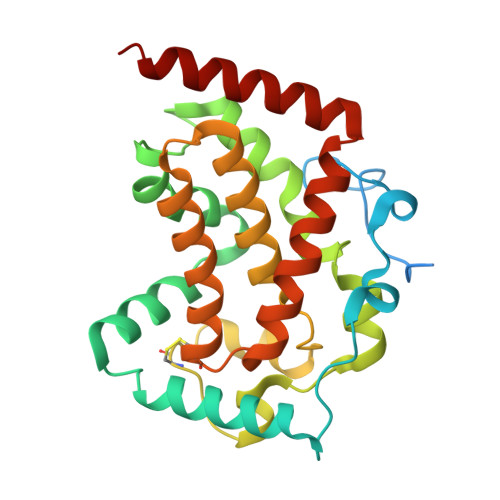
Acid phosphate hydrolase from Shigella flexneri (apo)


Experimental Data Snapshot

  • Method: X-RAY DIFFRACTION
  • Resolution: 2.70 Å
  • R-Value Free: 
    0.241 (Depositor), 0.241 (DCC) 
  • R-Value Work: 
    0.195 (Depositor), 0.195 (DCC) 
  • R-Value Observed: 
    0.199 (Depositor) 

Starting Model: experimental
View more details

wwPDB Validation 3D Report Full Report

Validation slider image for 8YC1

This is version 1.1 of the entry. See complete history

Literature

Microbe Engineering to Provide Drimane-Type Building Blocks for Chiral Pool Synthesis of Meroterpenoids.

Du, W.Cheng, Z.Pan, X.Liu, C.Yue, M.Li, T.Xiao, Z.Li, L.L.Zeng, X.Lin, X.Li, F.Dong, L.B.

(2025) Angew Chem Int Ed Engl 64: e202419463-e202419463

  • DOI: https://doi.org/10.1002/anie.202419463
  • Primary Citation Related Structures: 
    8YC1

  • PubMed Abstract: 

    Drimane-type merosesquiterpenoids (DMT) are a class of natural products with diverse structures and broad biological activity. Classical DMT synthesis relies on atom-inefficient plant-derived chiral pool building blocks, while alternative drimane-type building blocks such as drimenol and albicanol offer more direct routes but face production challenges. In this study, we engineered a microbial platform for efficient production of these building blocks. By optimizing the PhoN-IPK system through rational engineering and incorporating a Nudix hydrolase, we achieved a drimenol production of 398 mg/L and high albicanol titers of 1805 mg/L in shake flasks and 3.5 g/L in a bioreactor. Structural analysis and molecular dynamics simulations of the engineered PhoN provided insights into its improved catalytic efficiency. We demonstrated the utility of this platform by synthesizing several DMT using albicanol as the starting material, reducing the number of synthetic steps and improving overall efficiency as compared to classical approaches.


  • Organizational Affiliation
    • State Key Laboratory of Natural Medicines, School of Traditional Chinese Pharmacy, China Pharmaceutical University, Nanjing, 211198, China.

Macromolecule Content 

  • Total Structure Weight: 85.43 kDa 
  • Atom Count: 5,191 
  • Modeled Residue Count: 676 
  • Deposited Residue Count: 783 
  • Unique protein chains: 1

Macromolecules

Find similar proteins by:|  3D Structure
Entity ID: 1
MoleculeChains  Sequence LengthOrganismDetailsImage
Acid phosphatase
A, B, C
261Shigella flexneriMutation(s): 0 
Gene Names: phoN
EC: 3.1.3.2
UniProt
Find proteins for O50542 (Shigella flexneri)
Explore O50542 
Go to UniProtKB:  O50542
Entity Groups
Sequence Clusters30% Identity50% Identity70% Identity90% Identity95% Identity100% Identity
UniProt GroupO50542
Sequence Annotations
Expand
Reference Sequence

Small Molecules

Ligands 1 Unique
IDChains Name / Formula / InChI Key2D Diagram3D Interactions
GOL

Query on GOL


Download:Ideal Coordinates CCD File
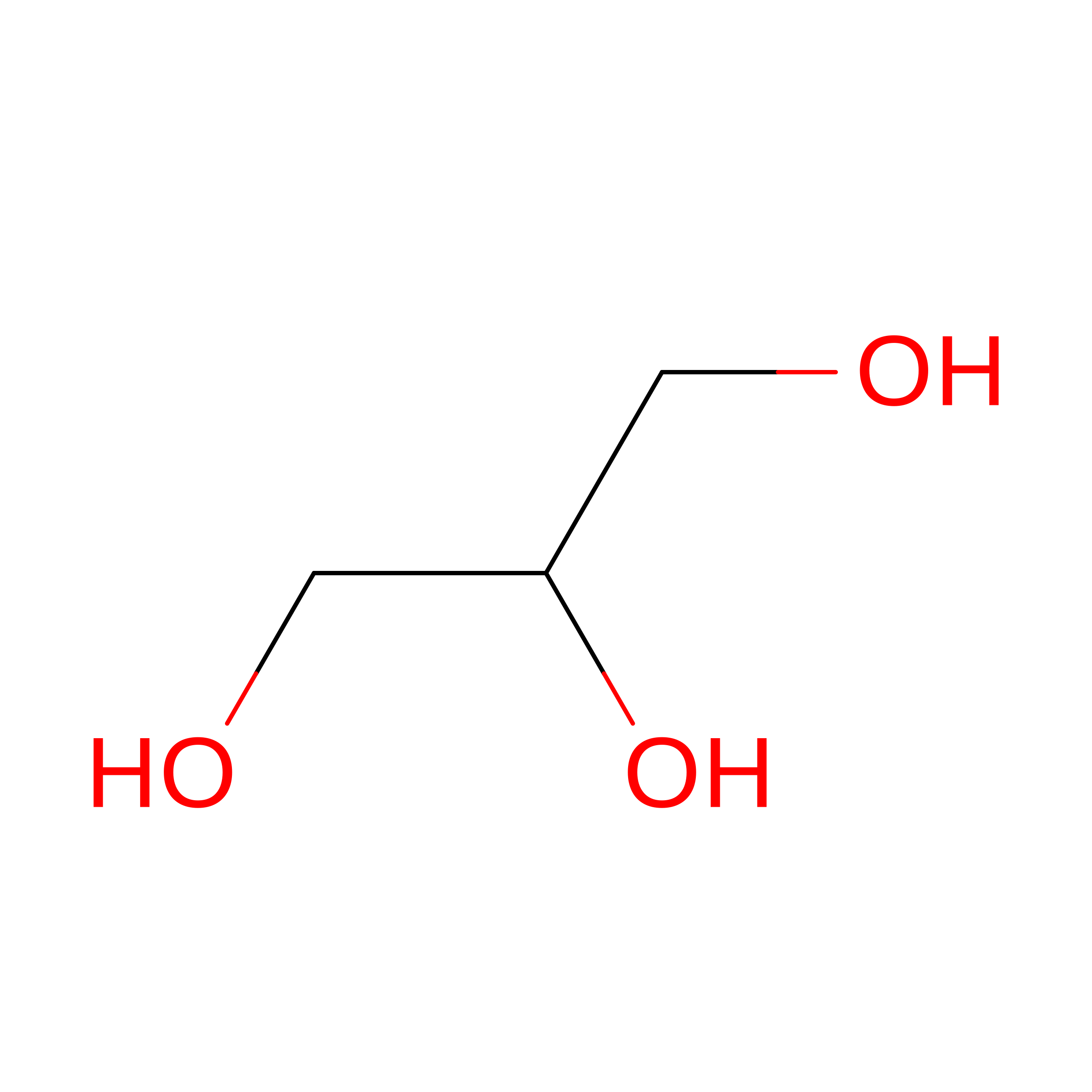
D [auth C]GLYCEROL
C3 H8 O3
PEDCQBHIVMGVHV-UHFFFAOYSA-N

Experimental Data & Validation

Experimental Data

  • Method: X-RAY DIFFRACTION
  • Resolution: 2.70 Å
  • R-Value Free:  0.241 (Depositor), 0.241 (DCC) 
  • R-Value Work:  0.195 (Depositor), 0.195 (DCC) 
  • R-Value Observed: 0.199 (Depositor) 
Space Group: P 31 2 1
Unit Cell:
Length ( Å )Angle ( ˚ )
a = 98.84α = 90
b = 98.84β = 90
c = 144.05γ = 120
Software Package:
Software NamePurpose
PHENIXrefinement
xia2data reduction
Aimlessdata scaling
PHASERphasing

Structure Validation

View Full Validation Report


Entry History 

& Funding Information

Deposition Data


Funding OrganizationLocationGrant Number
National Natural Science Foundation of China (NSFC)China82073746

Revision History  (Full details and data files)

  • Version 1.0: 2025-02-19
    Type: Initial release
  • Version 1.1: 2025-11-26
    Changes: Database references