Download Mendeley
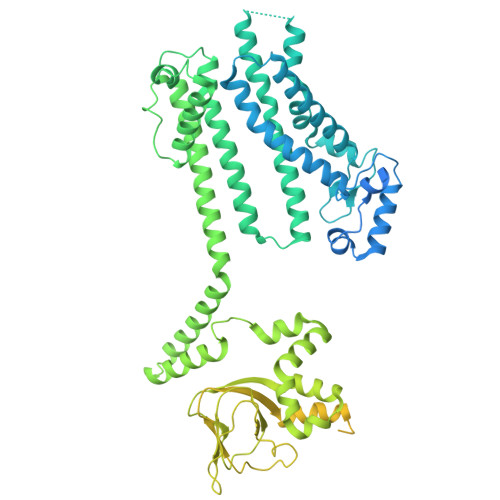
Structural mechanism of human HCN1 hyperpolarization-activated channel inhibition by ivabradine.
Che, T., Zhang, W., Cheng, X., Lv, S., Zhang, M., Zhang, Y., Yang, T., Nan, W., Wan, S., Zeng, B., Li, J., Xiong, B., Zhang, J.(2024) J Biol Chem 300: 107798-107798
- PubMed: 39307309 Search on PubMedSearch on PubMed Central
- DOI: https://doi.org/10.1016/j.jbc.2024.107798
- Primary Citation Related Structures:
8Y60 - PubMed Abstract:
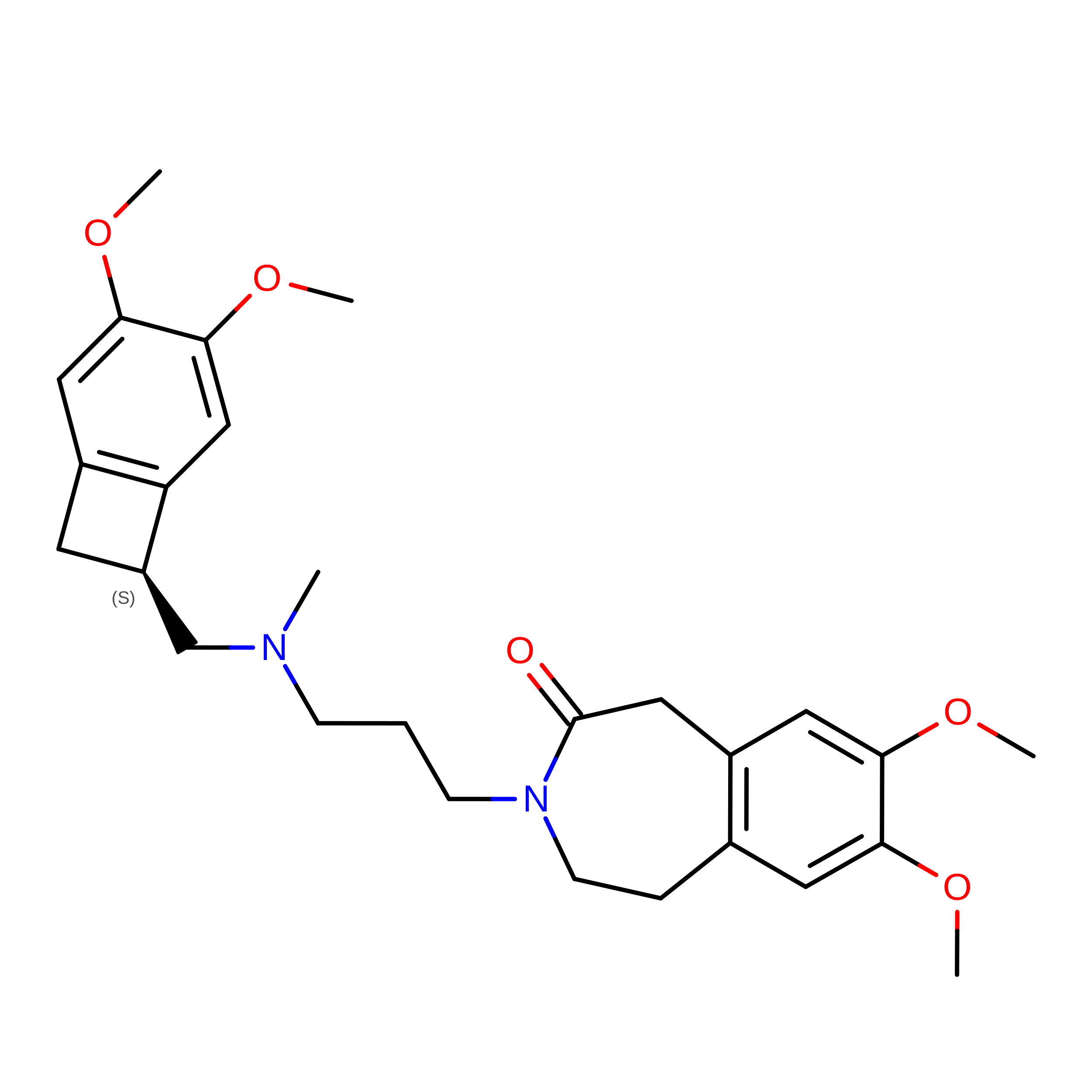
The hyperpolarization-activated cyclic nucleotide-gated (HCN) channels play a crucial role in regulating neuronal excitability. Despite growing evidence supporting the therapeutic potential of HCN1 inhibition in treating neurological disorders, the structural basis of channel inhibition by inhibitor has remained elusive. Here, we present the cryo-electron microscopy structure of human HCN1 channel in complex with inhibitor ivabradine, the drug on the market that acts on HCN channels. Combining electrophysiology, mutagenesis, and molecular dynamics simulations, our findings reveal that ivabradine binds to a previously unidentified pocket formed between the S4, S1, and HCN domain. Furthermore, through structure-based virtual screening, we identify two Food and Drug Administration-approved drugs that can inhibit the HCN1 channel by interacting with the ivabradine-binding site. Our results not only provide insights into the structural intricacies of ivabradine-mediated inhibition, but also offer a potential pharmacological framework for developing novel drugs targeting the HCN1 channel. The elucidation of these molecular interactions serves as a foundational step in advancing therapeutic strategies for modulating HCN1 activity, contributing to the broader landscape of drug discovery and development in this area.
- The MOE Basic Research and Innovation Center for the Targeted Therapeutics of Solid Tumors, School of Basic Medical Sciences, Jiangxi Medical College, Nanchang University, Nanchang, Jiangxi, China; The Second Affiliated Hospital, Jiangxi Medical College, Nanchang University, Nanchang, Jiangxi, China.
Organizational Affiliation: