8XVK | pdb_00008xvk

Cryo-EM structure of ETAR bound with Ambrisentan


Experimental Data Snapshot

  • Method: ELECTRON MICROSCOPY
  • Resolution: 3.21 Å
  • Aggregation State: PARTICLE 
  • Reconstruction Method: SINGLE PARTICLE 

wwPDB Validation 3D Report Full Report

Validation slider image for 8XVK

This is version 1.2 of the entry. See complete history

Literature

Structural basis of antagonist selectivity in endothelin receptors.

Hou, J.Liu, S.Zhang, X.Tu, G.Wu, L.Zhang, Y.Yang, H.Li, X.Liu, J.Jiang, L.Tan, Q.Bai, F.Liu, Z.Miao, C.Hua, T.Luo, Z.

(2024) Cell Discov 10: 79-79

  • DOI: https://doi.org/10.1038/s41421-024-00705-9
  • Primary Citation Related Structures: 
    8XVE, 8XVH, 8XVI, 8XVJ, 8XVK, 8XVL

  • PubMed Abstract: 

    Endothelins and their receptors, ET A and ET B , play vital roles in maintaining vascular homeostasis. Therapeutically targeting endothelin receptors, particularly through ET A antagonists, has shown efficacy in treating pulmonary arterial hypertension (PAH) and other cardiovascular- and renal-related diseases. Here we present cryo-electron microscopy structures of ET A in complex with two PAH drugs, macitentan and ambrisentan, along with zibotentan, a selective ET A antagonist, respectively. Notably, a specialized anti-ET A antibody facilitated the structural elucidation. These structures, together with the active-state structures of ET-1-bound ET A and ET B , and the agonist BQ3020-bound ET B , in complex with G q , unveil the molecular basis of agonist/antagonist binding modes in endothelin receptors. Key residues that confer antagonist selectivity to endothelin receptors were identified along with the activation mechanism of ET A . Furthermore, our results suggest that ECL2 in ET A can serve as an epitope for antibody-mediated receptor antagonism. Collectively, these insights establish a robust theoretical framework for the rational design of small-molecule drugs and antibodies with selective activity against endothelin receptors.


  • Organizational Affiliation
    • Cardiac Intensive Care Center, Zhongshan Hospital, Fudan University, Shanghai, China.

Macromolecule Content 

  • Total Structure Weight: 158.69 kDa 
  • Atom Count: 7,388 
  • Modeled Residue Count: 949 
  • Deposited Residue Count: 1,420 
  • Unique protein chains: 4

Macromolecules

Find similar proteins by:|  3D Structure
Entity ID: 1
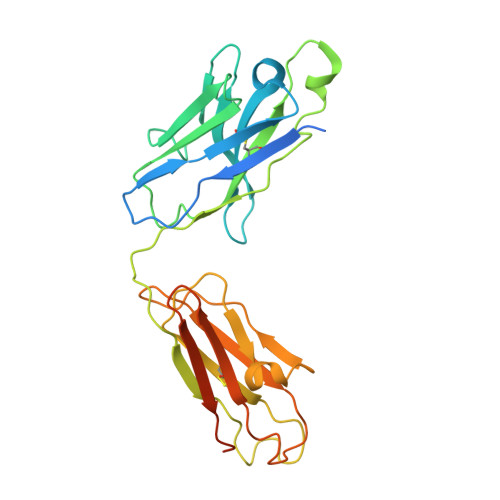
MoleculeChains  Sequence LengthOrganismDetailsImage
anti-BRIL Fab Heavy chainA [auth H]266Homo sapiensMutation(s): 0 
Find similar proteins by:|  3D Structure
Entity ID: 2
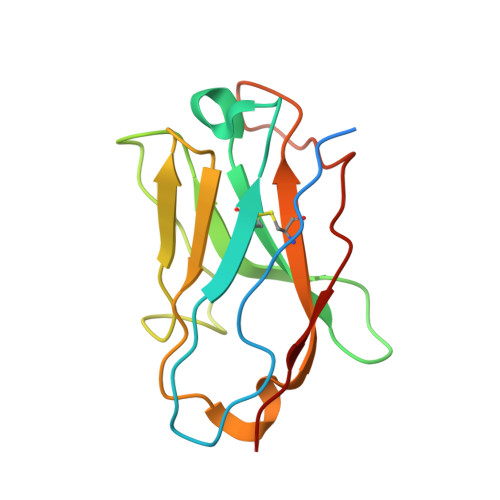
MoleculeChains  Sequence LengthOrganismDetailsImage
anti-Fab NanobodyB [auth K]136synthetic constructMutation(s): 0 
Find similar proteins by:|  3D Structure
Entity ID: 3
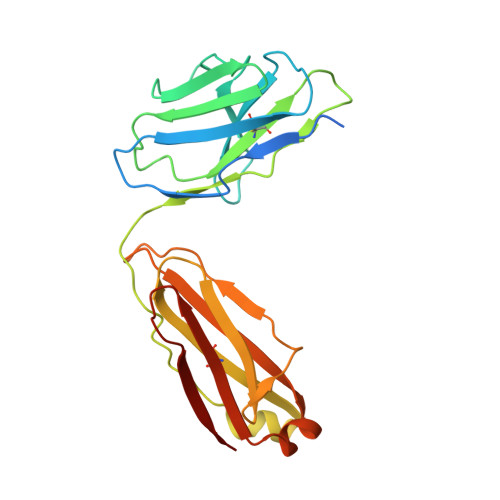
MoleculeChains  Sequence LengthOrganismDetailsImage
anti-BRIL Fab Light chainC [auth L]235Homo sapiensMutation(s): 0 
Find similar proteins by:|  3D Structure
Entity ID: 4
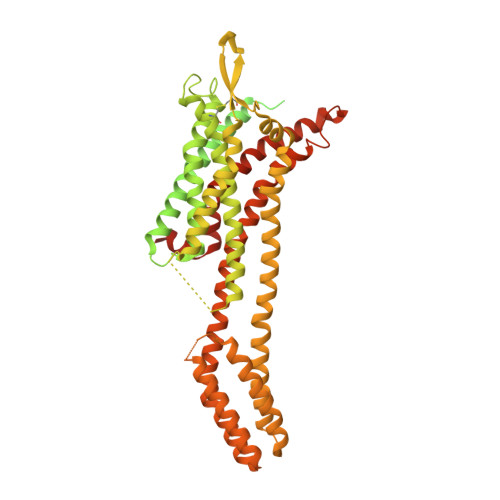
MoleculeChains  Sequence LengthOrganismDetailsImage
Endoglucanase H,Endothelin-1 receptor,Soluble cytochrome b562D [auth R]783Acetivibrio thermocellus ATCC 27405Homo sapiensEscherichia coliMutation(s): 0 
Gene Names: celHCthe_1472EDNRAETAETRAcybC
EC: 3.2.1.4
Membrane Entity: Yes 
UniProt & NIH Common Fund Data Resources
Find proteins for P0ABE7 (Escherichia coli)
Explore P0ABE7 
Go to UniProtKB:  P0ABE7
Find proteins for P16218 (Acetivibrio thermocellus (strain ATCC 27405 / DSM 1237 / JCM 9322 / NBRC 103400 / NCIMB 10682 / NRRL B-4536 / VPI 7372))
Explore P16218 
Go to UniProtKB:  P16218
Find proteins for P25101 (Homo sapiens)
Explore P25101 
Go to UniProtKB:  P25101
PHAROS:  P25101
GTEx:  ENSG00000151617 
Entity Groups
Sequence Clusters30% Identity50% Identity70% Identity90% Identity95% Identity100% Identity
UniProt GroupsP0ABE7P25101P16218
Sequence Annotations
Expand
Reference Sequence

Small Molecules

Ligands 1 Unique
IDChains Name / Formula / InChI Key2D Diagram3D Interactions
A1D5J

Query on A1D5J


Download:Ideal Coordinates CCD File
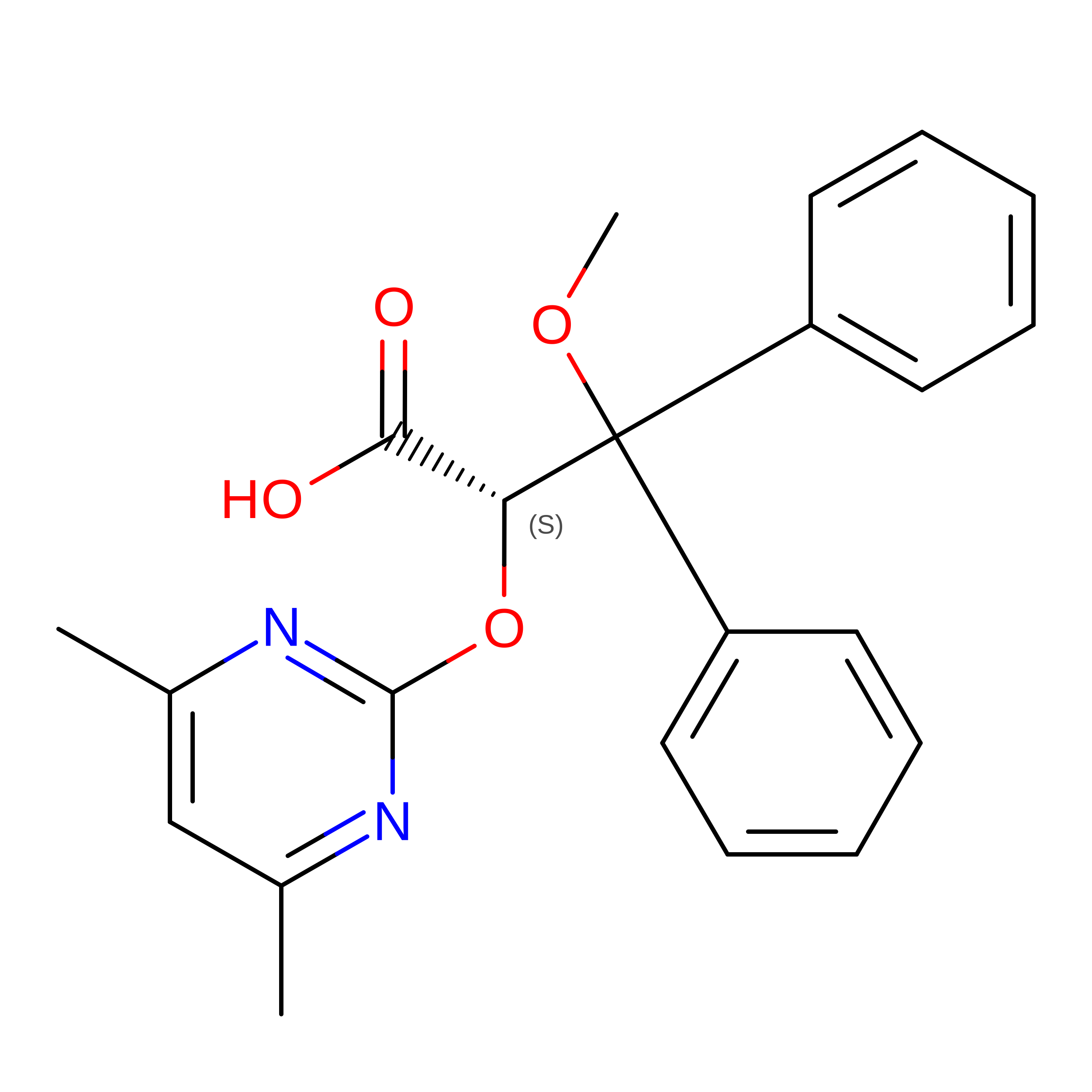
E [auth R]Ambrisentan
C22 H22 N2 O4
OUJTZYPIHDYQMC-LJQANCHMSA-N

Experimental Data & Validation

Experimental Data

  • Method: ELECTRON MICROSCOPY
  • Resolution: 3.21 Å
  • Aggregation State: PARTICLE 
  • Reconstruction Method: SINGLE PARTICLE 
EM Software:
TaskSoftware PackageVersion
MODEL REFINEMENTPHENIX

Structure Validation

View Full Validation Report


Entry History 

& Funding Information

Deposition Data


Funding OrganizationLocationGrant Number
Not fundedChina--

Revision History  (Full details and data files)

  • Version 1.0: 2024-08-28
    Type: Initial release
  • Version 1.1: 2024-11-20
    Changes: Data collection, Derived calculations, Structure summary
  • Version 1.2: 2025-07-23
    Changes: Data collection