Download Mendeley
Binding mechanism and antagonism of the vesicular acetylcholine transporter VAChT.
Ma, Q., Ma, K., Dong, Y., Meng, Y., Zhao, J., Li, R., Bai, Q., Wu, D., Jiang, D., Sun, J., Zhao, Y.(2025) Nat Struct Mol Biol 32: 818-827
- PubMed: 39806024 Search on PubMedSearch on PubMed Central
- DOI: https://doi.org/10.1038/s41594-024-01462-9
- Primary Citation Related Structures:
8XTW, 8XTX, 8XTY - PubMed Abstract:
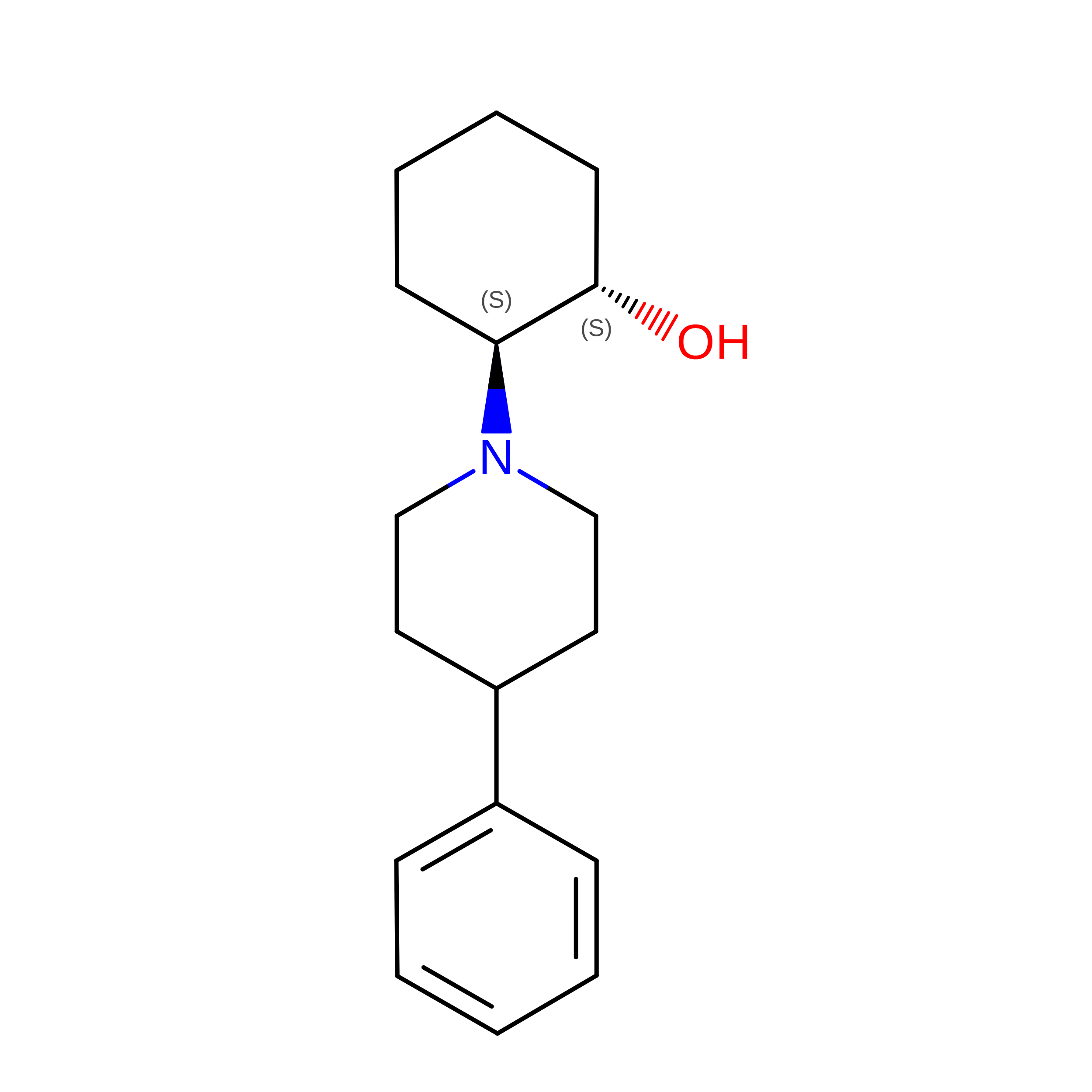
The vesicular acetylcholine transporter (VAChT) has a pivotal role in packaging and transporting acetylcholine for exocytotic release, serving as a vital component of cholinergic neurotransmission. Dysregulation of its function can result in neurological disorders. It also serves as a target for developing radiotracers to quantify cholinergic neuron deficits in neurodegenerative conditions. Here we unveil the cryo-electron microscopy structures of human VAChT in its apo state, the substrate acetylcholine-bound state and the inhibitor vesamicol-bound state. These structures assume a lumen-facing conformation, offering a clear depiction of architecture of VAChT. The acetylcholine-bound structure provides a detailed understanding of how VAChT recognizes its substrate, shedding light on the coupling mechanism of protonation and substrate binding. Meanwhile, the vesamicol-bound structure reveals the binding mode of vesamicol to VAChT, laying the structural foundation for the design of the next generation of radioligands targeting VAChT.
- Key Laboratory of Biomacromolecules (CAS), National Laboratory of Biomacromolecules, CAS Center for Excellence in Biomacromolecules, Institute of Biophysics, Chinese Academy of Sciences, Beijing, China.
Organizational Affiliation: