8X43 | pdb_00008x43

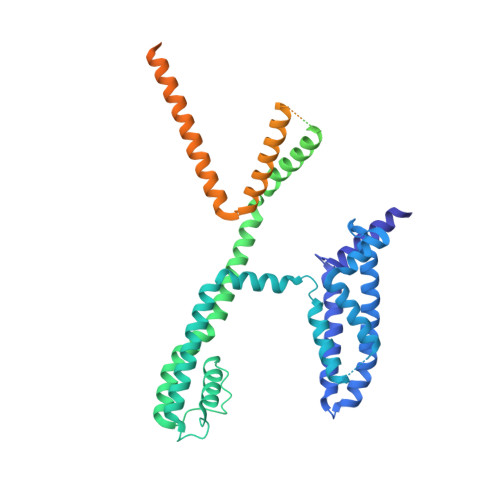
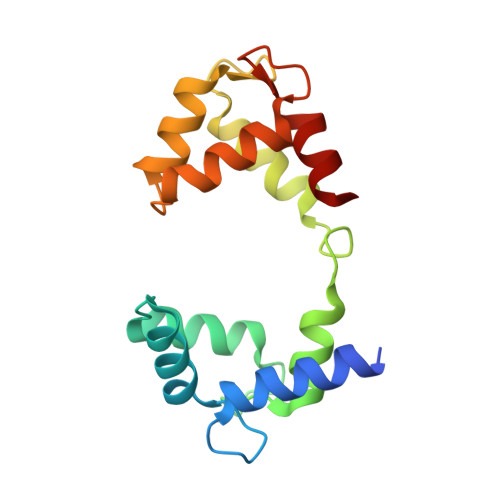
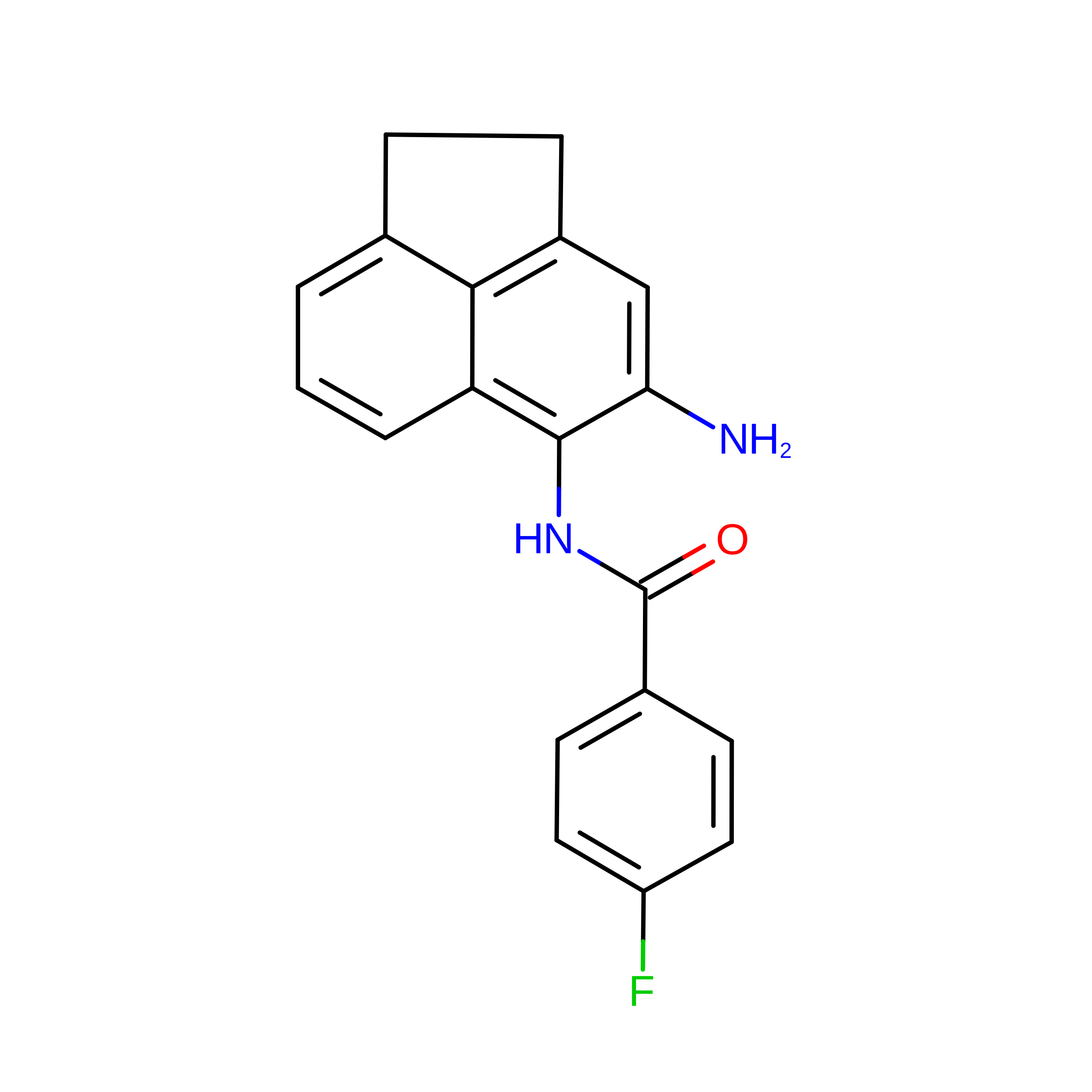
human KCNQ2-CaM-Ebio1-S1 complex in the presence of PIP2


Experimental Data Snapshot

  • Method: ELECTRON MICROSCOPY
  • Resolution: 3.00 Å
  • Aggregation State: PARTICLE 
  • Reconstruction Method: SINGLE PARTICLE 

wwPDB Validation 3D Report Full Report

Validation slider image for 8X43

This is version 1.1 of the entry. See complete history

Literature

A small-molecule activation mechanism that directly opens the KCNQ2 channel.

Zhang, S.Ma, D.Wang, K.Li, Y.Yang, Z.Li, X.Li, J.He, J.Mei, L.Ye, Y.Chen, Z.Shen, J.Hou, P.Guo, J.Zhang, Q.Yang, H.

(2024) Nat Chem Biol 20: 847-856

  • DOI: https://doi.org/10.1038/s41589-023-01515-y
  • Primary Citation Related Structures: 
    8IJK, 8X43

  • PubMed Abstract: 

    Pharmacological activation of voltage-gated ion channels by ligands serves as the basis for therapy and mainly involves a classic gating mechanism that augments the native voltage-dependent open probability. Through structure-based virtual screening, we identified a new scaffold compound, Ebio1, serving as a potent and subtype-selective activator for the voltage-gated potassium channel KCNQ2 and featuring a new activation mechanism. Single-channel patch-clamp, cryogenic-electron microscopy and molecular dynamic simulations, along with chemical derivatives, reveal that Ebio1 engages the KCNQ2 activation by generating an extended channel gate with a larger conductance at the saturating voltage (+50 mV). This mechanism is different from the previously observed activation mechanism of ligands on voltage-gated ion channels. Ebio1 caused S6 helices from residues S303 and F305 to perform a twist-to-open movement, which was sufficient to open the KCNQ2 gate. Overall, our findings provide mechanistic insights into the activation of KCNQ2 channel by Ebio1 and lend support for KCNQ-related drug development.


  • Organizational Affiliation
    • Shanghai Key Laboratory of Regulatory Biology, Institute of Biomedical Sciences and School of Life Sciences, East China Normal University, Shanghai, China.

Macromolecule Content 

  • Total Structure Weight: 363.15 kDa 
  • Atom Count: 15,180 
  • Modeled Residue Count: 1,880 
  • Deposited Residue Count: 3,220 
  • Unique protein chains: 2

Macromolecules

Find similar proteins by:|  3D Structure
Entity ID: 1
MoleculeChains  Sequence LengthOrganismDetailsImage
Potassium voltage-gated channel subfamily KQT member 2
A, C, E, G
656Homo sapiensMutation(s): 0 
Gene Names: KCNQ2
Membrane Entity: Yes 
UniProt & NIH Common Fund Data Resources
Find proteins for O43526 (Homo sapiens)
Explore O43526 
Go to UniProtKB:  O43526
PHAROS:  O43526
GTEx:  ENSG00000075043 
Entity Groups
Sequence Clusters30% Identity50% Identity70% Identity90% Identity95% Identity100% Identity
UniProt GroupO43526
Sequence Annotations
Expand
Reference Sequence
Find similar proteins by:|  3D Structure
Entity ID: 2
MoleculeChains  Sequence LengthOrganismDetailsImage
Calmodulin-1
B, D, F, H
149Homo sapiensMutation(s): 0 
Gene Names: CALM1CALMCAMCAM1
UniProt & NIH Common Fund Data Resources
Find proteins for P0DP23 (Homo sapiens)
Explore P0DP23 
Go to UniProtKB:  P0DP23
PHAROS:  P0DP23
GTEx:  ENSG00000198668 
Entity Groups
Sequence Clusters30% Identity50% Identity70% Identity90% Identity95% Identity100% Identity
UniProt GroupP0DP23
Sequence Annotations
Expand
Reference Sequence

Experimental Data & Validation

Experimental Data

  • Method: ELECTRON MICROSCOPY
  • Resolution: 3.00 Å
  • Aggregation State: PARTICLE 
  • Reconstruction Method: SINGLE PARTICLE 

Structure Validation

View Full Validation Report


Entry History 

& Funding Information

Deposition Data

  • Released Date: 2024-01-17 
  • Deposition Author(s): Ma, D., Guo, J.

Funding OrganizationLocationGrant Number
Ministry of Science and Technology (MoST, China)China2020YFA0908501
Ministry of Science and Technology (MoST, China)China2018YFA0508100

Revision History  (Full details and data files)

  • Version 1.0: 2024-01-17
    Type: Initial release
  • Version 1.1: 2024-07-17
    Changes: Data collection, Database references