Download Mendeley
The Structure of Carboxyl Methyltransferase Provides Insights Into the Substrate Specificity and Divergent Evolution of Iridoid.
Li, L., Luo, Z., He, Z., Tang, J., Wei, W., Zhan, R., Zhou, H., Ma, D.(2026) Plant Biotechnol J
- PubMed: 41714880 Search on PubMed
- DOI: https://doi.org/10.1111/pbi.70592
- Primary Citation Related Structures:
8WWQ - PubMed Abstract:
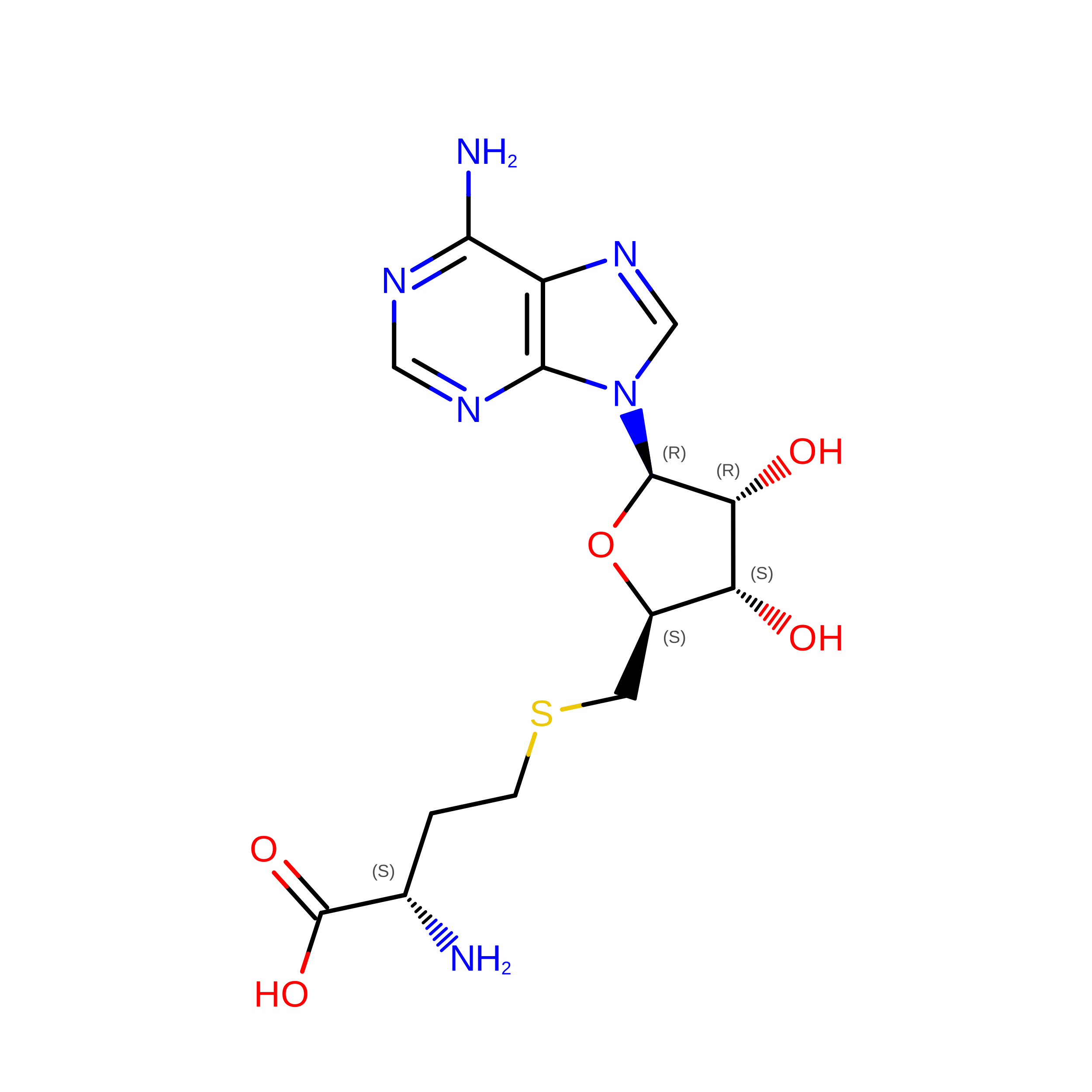
Iridoids constitute a prominent class of plant-specialised metabolites, with carbocyclic iridoids (e.g., geniposide) and secoiridoids (e.g., loganin) diverging early in their biosynthetic pathways. This divergence is marked by substrate-specific carboxyl methyltransferases-GjGAMT and CrLAMT-that catalyse the decisive methylation step in Gardenia jasminoides and Catharanthus roseus, respectively. However, the molecular determinants responsible for their strict substrate specificity and evolutionary relationship remain unclear. In this study, the substrate recognition mechanism of GjGAMT was elucidated through a combination of X-ray crystallography, phylogenetic analysis, site-directed mutagenesis and biochemical assays. GjGAMT forms an asymmetric homodimer, wherein one active site is occupied by both the cofactor product SAH and substrate geniposidic acid, while the other site contains only SAH, suggesting a half-of-the-sites catalysis mechanism. Structural comparison between GjGAMT and CrLAMT suggested that residues Phe311 and Phe315 in GjGAMT (corresponding to Val317 and Met321 in CrLAMT) are critical for substrate discrimination. Consistently, the double mutation F311V/F315M in GjGAMT conferred activity toward loganic acid, whereas reciprocal mutations in CrLAMT enabled recognition of geniposidic acid. Furthermore, functional charaterisation of cytochrome P450 enzymes (CYP72As) showed that CrSLS1 (CrCYP72A1) catalyses ring cleavage of loganin but not geniposide, whereas homologous GjCYP72As lack cleavage activity. Altogether our study elucidates the structural mechanism driving substrate specificity in iridoid methyltransferases, thereby deepening our understanding of how catalytic plasticity shapes metabolic diversity in plants and offering a framework for rational enzyme engineering.
- Ministry of Education Key Laboratory of Chinese Medicinal Resource From Lingnan, School of Pharmaceutical Sciences, Guangzhou University of Chinese Medicine, Guangzhou, China.
Organizational Affiliation: