Download Mendeley
Liquid Phase Exfoliation of Protein Parent Crystals into Nanosheets and Fibrils Based on Orthogonal Supramolecular Interactions.
Li, L., Ye, L., Shi, Y., Yin, L., Chen, G.(2024) J Am Chem Soc 146: 31992-32002
- PubMed: 39530760 Search on PubMed
- DOI: https://doi.org/10.1021/jacs.4c11921
- Primary Citation Related Structures:
8WMG, 8WMK, 9J1A, 9J1B, 9J1C, 9J1D, 9J1F - PubMed Abstract:
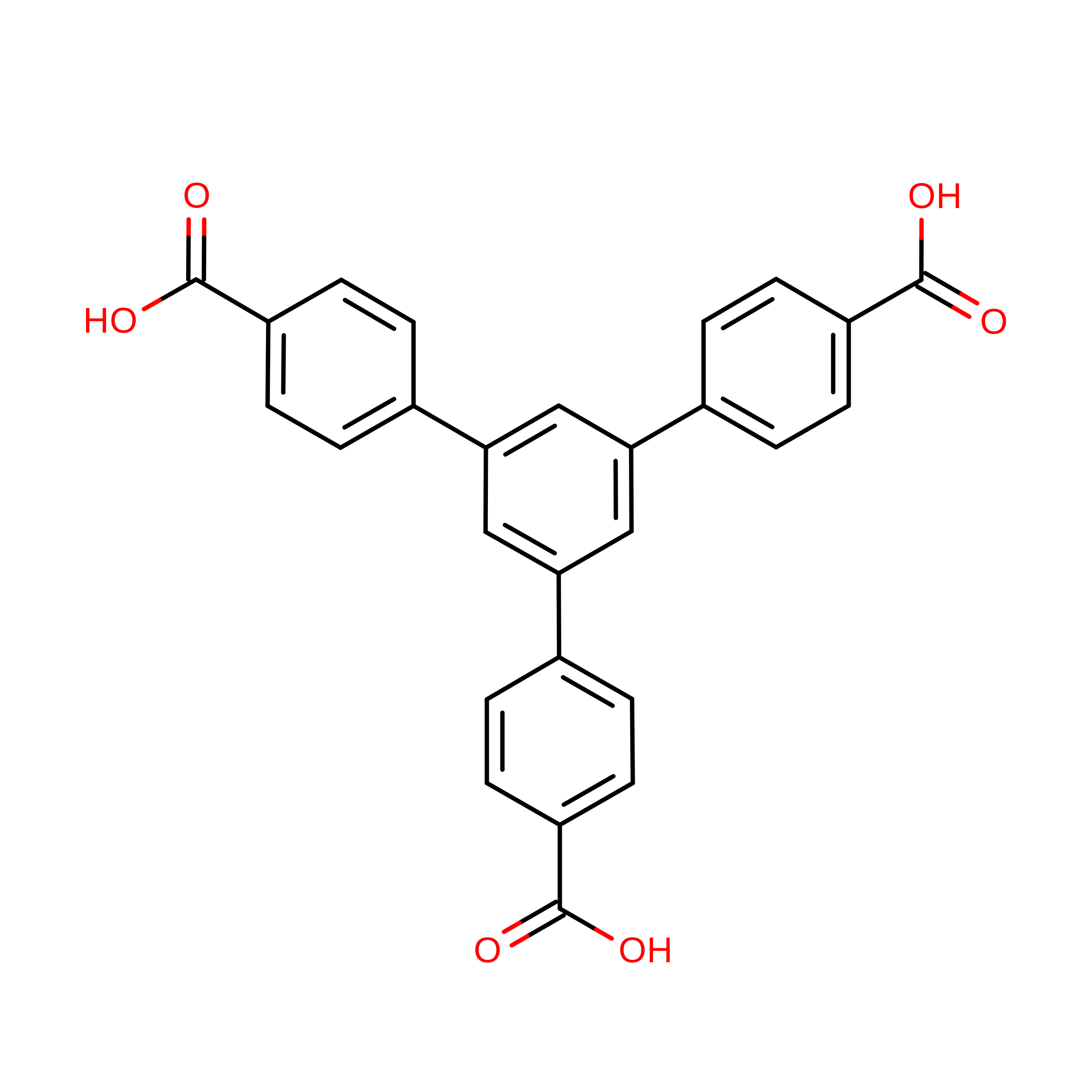
Proteins are attractive building blocks for fabricating diverse and precise nanomaterials. However, the facile fabrication of multidimensional artificial assemblies is highly challenging. Here, inspired by the large-scale production technique of inorganic nanomaterials, we demonstrate the application of liquid phase exfoliation (LPE) on native protein ConA by the design of synthetic ligands. These ligands provide distinct in-plane and out-of-plane supramolecular interactions, allowing the generation of multidimensional architectures based on the same protein by dissociating a single interaction in solution, including 3D porous protein crystals, 2D sizable nanosheets, and 1D fibrils. Importantly, the exfoliated 2D sheets were dozens of times larger than the self-assembled nanosheets, resulting in a dramatic enhancement of the intrinsic bioactivity of the building blocks by receptor clustering and less endocytosis. These findings enable the successful application of LPE on biomacromolecules and open up an alternative avenue to generate advanced multidimensional nanomaterials, without the need for complex protein design and careful adjustment of self-assembly conditions.
- The State Key Laboratory of Molecular Engineering of Polymers and Department of Macromolecular Science, Fudan University, Shanghai 200433, China.
Organizational Affiliation: