Download Mendeley
Hydrogen/Deuterium Exchange and Protein Oxidative Footprinting with Mass Spectrometry Collectively Discriminate the Binding of Small-Molecule Therapeutics to Bcl-2.
Sun, Y., Houde, D., Iacob, R.E., Baird, J., Swift, R.V., Holliday, M., Shi, X., Sidoli, S., Brenowitz, M.(2025) Anal Chem 97: 4329-4340
- PubMed: 39969248 Search on PubMedSearch on PubMed Central
- DOI: https://doi.org/10.1021/acs.analchem.4c04516
- Primary Citation Related Structures:
8VWX, 8VWZ, 8VXM, 8VXN - PubMed Abstract:
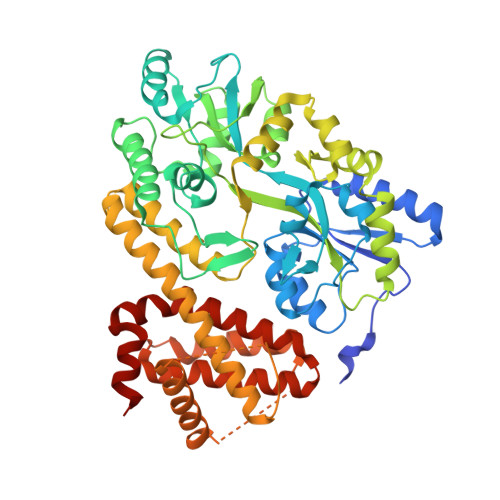
Characterizing protein-ligand interactions is crucial to understanding cellular metabolism and guiding drug discovery and development. Herein, we explore complementing hydrogen/deuterium exchange mass spectrometry (HDX-MS) with a recently developed Fenton chemistry-based approach to protein oxidative footprinting mass spectrometry (OX-MS) to discriminate the binding of small-molecule therapeutics. Using drug-dependent perturbation as the experimental report, this combination of techniques more clearly differentiates the in-solution binding profiles of Venetoclax (ABT-199, GDC-0199-AbbVie and Genentech) and a drug candidate S55746 (Servier) to the apoptotic regulatory protein Bcl-2 than either technique alone. These results highlight the value of combining these methods to compare compounds in drug discovery and development. To better understand the structural context of the HDX-MS and OX-MS drug-dependent perturbations, we mapped these data on Bcl-2-Venetoclax and Bcl-2-S55746 cocrystal structures and compared these results with the structure of apo Bcl-2. HDX-MS shows that Venetoclax more strongly impacts the protein backbone compared to S55746. OX-MS reveals oxidation perturbations rationalized by direct side-chain protection as well as by crystallographically observed drug-induced protein restructuring. Both methods report the perturbation of some, but not all, residues mapped within 4 Å of the bound drugs in the crystal structures. Concordant characterization of backbone and side-chain accessibility will enhance our understanding of in-solution protein structure dynamics and protein-ligand interactions during drug discovery, development, and characterization, particularly when high-resolution structures are lacking.
- Department of Biochemistry, Albert Einstein College of Medicine, Bronx, New York 10461, United States.
Organizational Affiliation: