8VOJ | pdb_00008voj

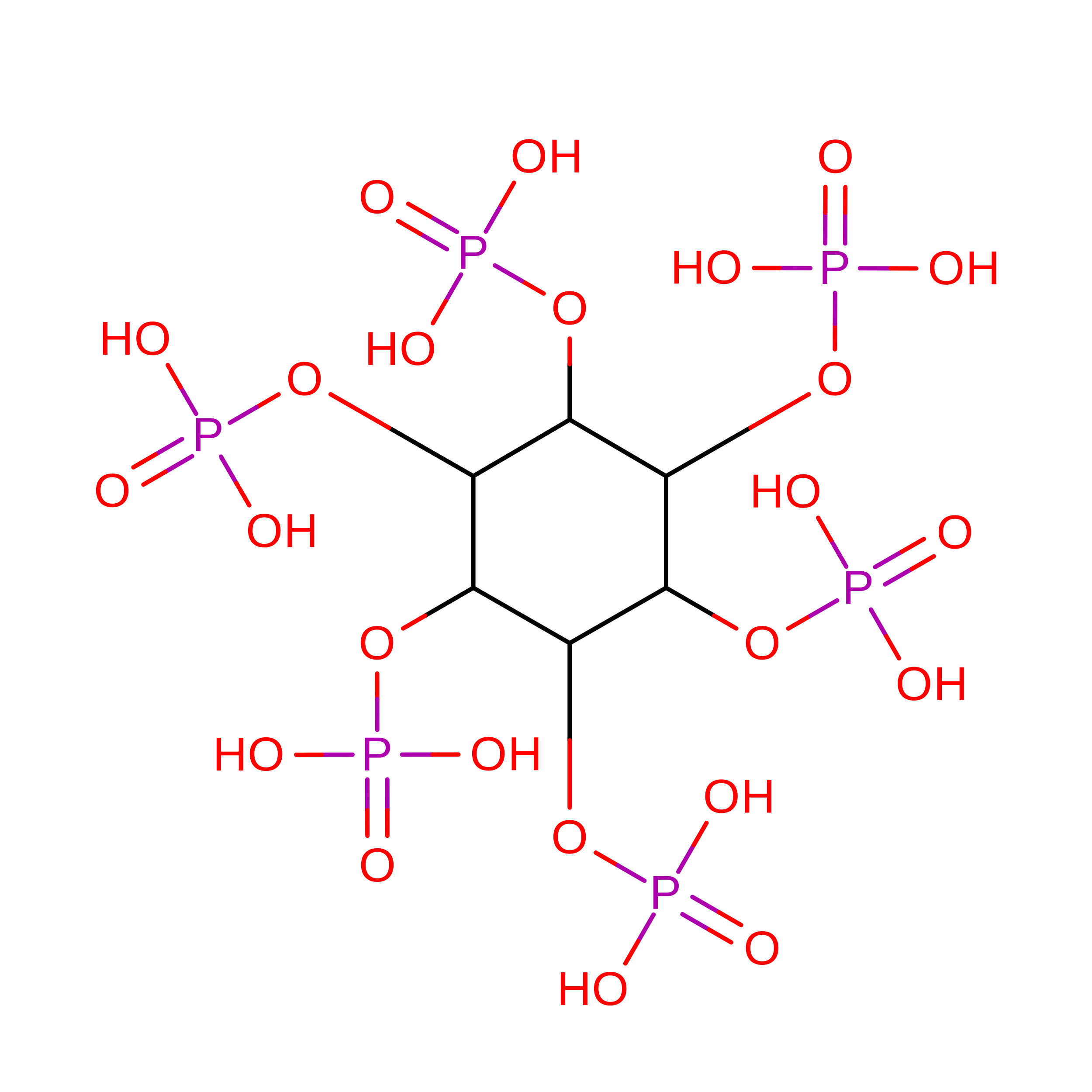
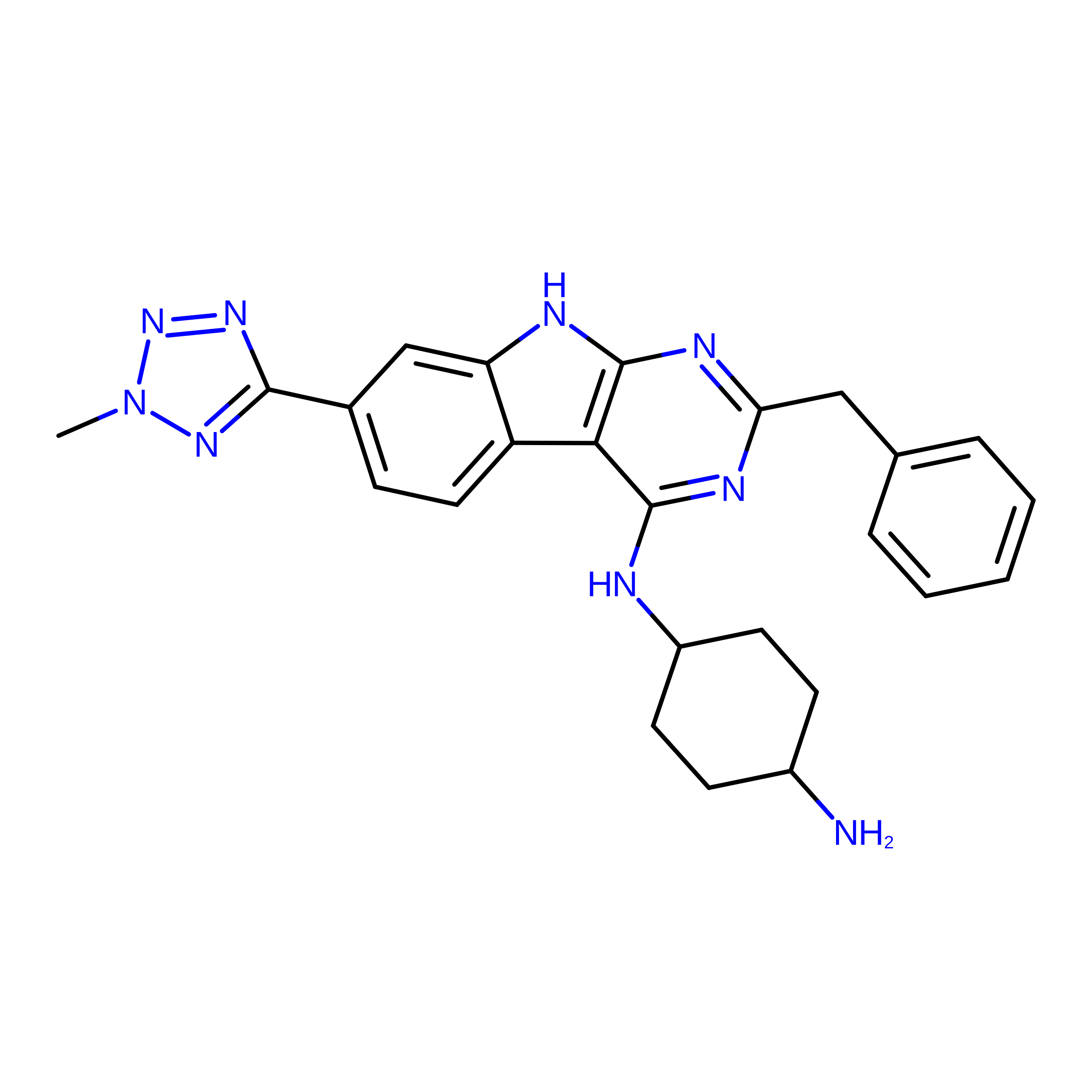
The Cryo-EM structure of LSD1-CoREST-HDAC1 in complex with KBTBD4 enhanced by UM171 and IP6


Experimental Data Snapshot

  • Method: ELECTRON MICROSCOPY
  • Resolution: 3.77 Å
  • Aggregation State: PARTICLE 
  • Reconstruction Method: SINGLE PARTICLE 

wwPDB Validation   3D Report Full Report


This is version 1.1 of the entry. See complete history


Literature

UM171 glues asymmetric CRL3-HDAC1/2 assembly to degrade CoREST corepressors.

Yeo, M.J.R.Zhang, O.Xie, X.Nam, E.Payne, N.C.Gosavi, P.M.Kwok, H.S.Iram, I.Lee, C.Li, J.Chen, N.J.Nguyen, K.Jiang, H.Wang, Z.A.Lee, K.Mao, H.Harry, S.A.Barakat, I.A.Takahashi, M.Waterbury, A.L.Barone, M.Mattevi, A.Carr, S.A.Udeshi, N.D.Bar-Peled, L.Cole, P.A.Mazitschek, R.Liau, B.B.Zheng, N.

(2025) Nature 639: 232-240

  • DOI: https://doi.org/10.1038/s41586-024-08532-4
  • Primary Citation of Related Structures:  
    8VOJ, 9DTG

  • PubMed Abstract: 

    UM171 is a potent agonist of ex vivo human haematopoietic stem cell self-renewal 1 . By co-opting KBTBD4, a substrate receptor of the CUL3-RING E3 ubiquitin ligase (CRL3) complex, UM171 promotes the degradation of the LSD1-CoREST corepressor complex, thereby limiting haematopoietic stem cell attrition 2,3 . However, the direct target and mechanism of action of UM171 remain unclear. Here we show that UM171 acts as a molecular glue to induce high-affinity interactions between KBTBD4 and HDAC1/2 to promote corepressor degradation. Through proteomics and chemical inhibitor studies, we identify the principal target of UM171 as HDAC1/2. Cryo-electron microscopy analysis of dimeric KBTBD4 bound to UM171 and the LSD1-HDAC1-CoREST complex identifies an asymmetric assembly in which a single UM171 molecule enables a pair of KELCH-repeat propeller domains to recruit the HDAC1 catalytic domain. One KBTBD4 propeller partially masks the rim of the HDAC1 active site, which is exploited by UM171 to extend the E3-neosubstrate interface. The other propeller cooperatively strengthens HDAC1 binding through a distinct interface. The overall CoREST-HDAC1/2-KBTBD4 interaction is further buttressed by the endogenous cofactor inositol hexakisphosphate, which acts as a second molecular glue. The functional relevance of the quaternary complex interaction surfaces is demonstrated by base editor scanning of KBTBD4 and HDAC1. By delineating the direct target of UM171 and its mechanism of action, we reveal how the cooperativity offered by a dimeric CRL3 E3 can be leveraged by a small molecule degrader.


  • Organizational Affiliation
    • Department of Chemistry and Chemical Biology, Harvard University, Cambridge, MA, USA.

Macromolecules
Find similar proteins by:  (by identity cutoff)  |  3D Structure
Entity ID: 1
MoleculeChains Sequence LengthOrganismDetailsImage
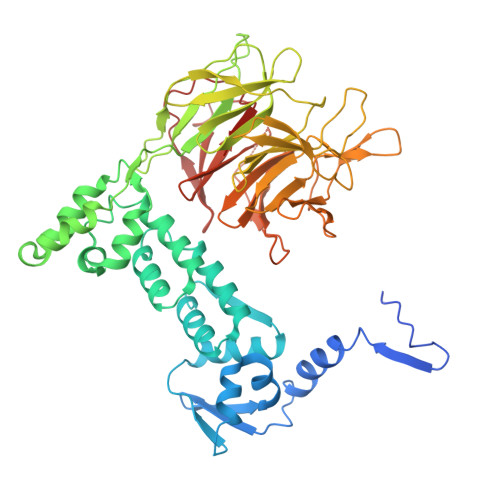
Isoform 2 of Kelch repeat and BTB domain-containing protein 4
A, B
534Homo sapiensMutation(s): 0 
Gene Names: KBTBD4BKLHD4
UniProt & NIH Common Fund Data Resources
Find proteins for Q9NVX7 (Homo sapiens)
Explore Q9NVX7 
Go to UniProtKB:  Q9NVX7
PHAROS:  Q9NVX7
GTEx:  ENSG00000123444 
Entity Groups  
Sequence Clusters30% Identity50% Identity70% Identity90% Identity95% Identity100% Identity
UniProt GroupQ9NVX7
Sequence Annotations
Expand
  • Reference Sequence
Find similar proteins by:  (by identity cutoff)  |  3D Structure
Entity ID: 2
MoleculeChains Sequence LengthOrganismDetailsImage
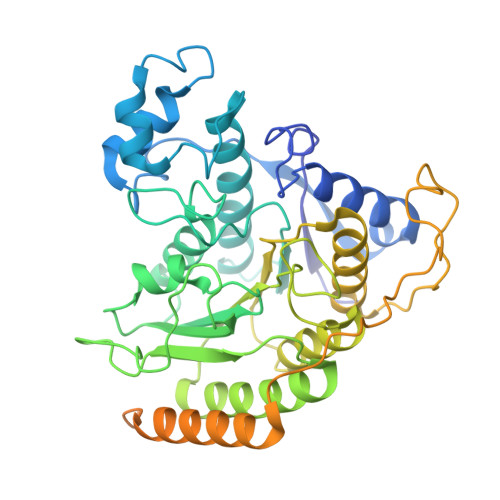
Histone deacetylase 1482Homo sapiensMutation(s): 0 
Gene Names: HDAC1RPD3L1
EC: 3.5.1.98 (PDB Primary Data), 3.5.1 (PDB Primary Data)
UniProt & NIH Common Fund Data Resources
Find proteins for Q13547 (Homo sapiens)
Explore Q13547 
Go to UniProtKB:  Q13547
PHAROS:  Q13547
GTEx:  ENSG00000116478 
Entity Groups  
Sequence Clusters30% Identity50% Identity70% Identity90% Identity95% Identity100% Identity
UniProt GroupQ13547
Sequence Annotations
Expand
  • Reference Sequence
Find similar proteins by:  (by identity cutoff)  |  3D Structure
Entity ID: 3
MoleculeChains Sequence LengthOrganismDetailsImage
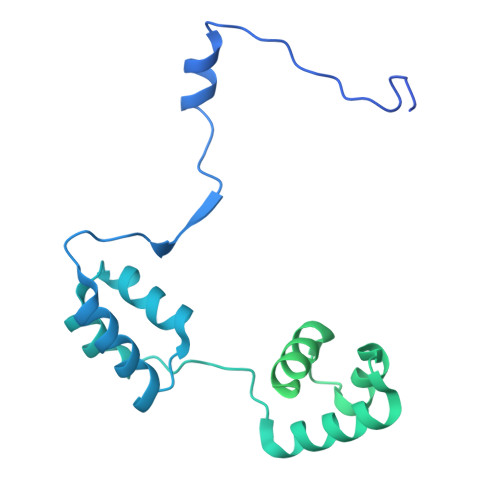
REST corepressor 1401Homo sapiensMutation(s): 0 
Gene Names: RCOR1KIAA0071RCOR
UniProt & NIH Common Fund Data Resources
Find proteins for Q9UKL0 (Homo sapiens)
Explore Q9UKL0 
Go to UniProtKB:  Q9UKL0
PHAROS:  Q9UKL0
GTEx:  ENSG00000089902 
Entity Groups  
Sequence Clusters30% Identity50% Identity70% Identity90% Identity95% Identity100% Identity
UniProt GroupQ9UKL0
Sequence Annotations
Expand
  • Reference Sequence
Experimental Data & Validation

Experimental Data

  • Method: ELECTRON MICROSCOPY
  • Resolution: 3.77 Å
  • Aggregation State: PARTICLE 
  • Reconstruction Method: SINGLE PARTICLE 
EM Software:
TaskSoftware PackageVersion
MODEL REFINEMENTPHENIX1.21.1_5286:

Structure Validation

View Full Validation Report


Entry History & Funding Information

Deposition Data


Funding OrganizationLocationGrant Number
Howard Hughes Medical Institute (HHMI)United States--

Revision History  (Full details and data files)

  • Version 1.0: 2024-12-04
    Type: Initial release
  • Version 1.1: 2025-06-18
    Changes: Data collection, Database references