8TMU | pdb_00008tmu

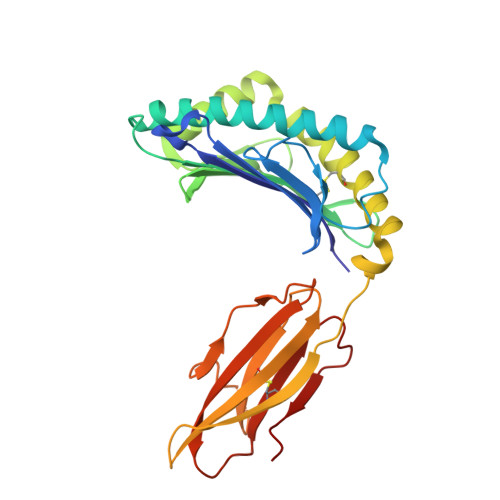
HLA-B*73:01 bound to a 10mer peptide in complex with KIR2DL2


Experimental Data Snapshot

  • Method: X-RAY DIFFRACTION
  • Resolution: 2.90 Å
  • R-Value Free: 
    0.258 (Depositor), 0.256 (DCC) 
  • R-Value Work: 
    0.215 (Depositor), 0.214 (DCC) 
  • R-Value Observed: 
    0.218 (Depositor) 

Starting Models: experimental
View more details

wwPDB Validation   3D Report Full Report


Ligand Structure Quality Assessment 


This is version 1.2 of the entry. See complete history


Literature

Molecular characterization of the archaic HLA-B∗73:01 allele reveals presentation of a unique peptidome and skewed engagement by KIR2DL2.

Ross, P.Hilton, H.G.Lodwick, J.Slezak, T.Guethlein, L.A.McMurtrey, C.P.Han, A.S.Nielsen, M.Yong, D.Dulberger, C.L.Nolan, K.T.Roy, S.Castro, C.D.Hildebrand, W.H.Zhao, M.Kossiakoff, A.Parham, P.Adams, E.J.

(2025) J Biological Chem 301: 110542-110542

  • DOI: https://doi.org/10.1016/j.jbc.2025.110542
  • Primary Citation of Related Structures:  
    8TMU

  • PubMed Abstract: 

    HLA class I alleles of archaic origin may have been retained in modern humans because they provide immunity against diseases to which archaic humans had evolved resistance. According to this model, archaic introgressed alleles were somehow distinct from those that evolved in African populations. Here, we show that HLA-B∗73:01, a rare allotype with putative archaic origins, has a relatively rare peptide binding motif with an unusually long-tailed peptide length distribution. We also find that HLA-B∗73:01 combines a restricted and unique peptidome with high-cell surface expression, characteristics that make it well-suited to combat one or a number of closely related pathogens. Furthermore, a crystal structure of HLA-B∗73:01 in complex with KIR2DL2 highlights differences from previously solved structures with HLA-C molecules. These molecular characteristics distinguish HLA-B∗73:01 from other HLA class I alleles previously investigated and may have provided early modern human migrants that inherited this allele with a selective advantage as they colonized Europe and Asia.


  • Organizational Affiliation
    • Department of Biochemistry and Molecular Biology, The University of Chicago, Chicago, Illinois, USA; Committee on Genetics, Genomics and Systems Biology, The University of Chicago, Chicago, Illinois, USA.

Macromolecules
Find similar proteins by:  (by identity cutoff)  |  3D Structure
Entity ID: 1
MoleculeChains Sequence LengthOrganismDetailsImage
HLA-B*73:01277Homo sapiensMutation(s): 1 
UniProt
Find proteins for A0A583ZBV1 (Homo sapiens)
Explore A0A583ZBV1 
Go to UniProtKB:  A0A583ZBV1
Entity Groups  
Sequence Clusters30% Identity50% Identity70% Identity90% Identity95% Identity100% Identity
UniProt GroupA0A583ZBV1
Sequence Annotations
Expand
  • Reference Sequence
Find similar proteins by:  (by identity cutoff)  |  3D Structure
Entity ID: 2
MoleculeChains Sequence LengthOrganismDetailsImage
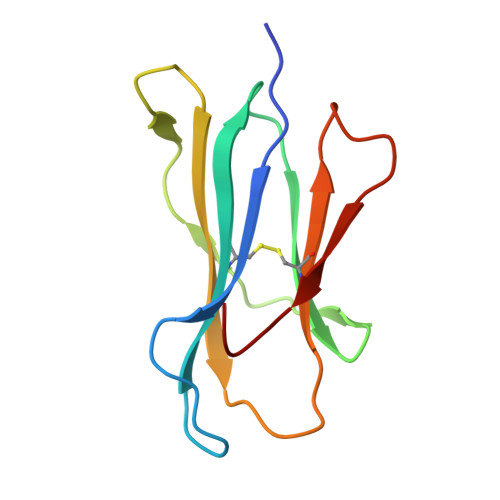
Beta-2-microglobulin101Homo sapiensMutation(s): 0 
Gene Names: B2MCDABP0092HDCMA22P
UniProt & NIH Common Fund Data Resources
Find proteins for P61769 (Homo sapiens)
Explore P61769 
Go to UniProtKB:  P61769
PHAROS:  P61769
GTEx:  ENSG00000166710 
Entity Groups  
Sequence Clusters30% Identity50% Identity70% Identity90% Identity95% Identity100% Identity
UniProt GroupP61769
Sequence Annotations
Expand
  • Reference Sequence
Find similar proteins by:  (by identity cutoff)  |  3D Structure
Entity ID: 3
MoleculeChains Sequence LengthOrganismDetailsImage
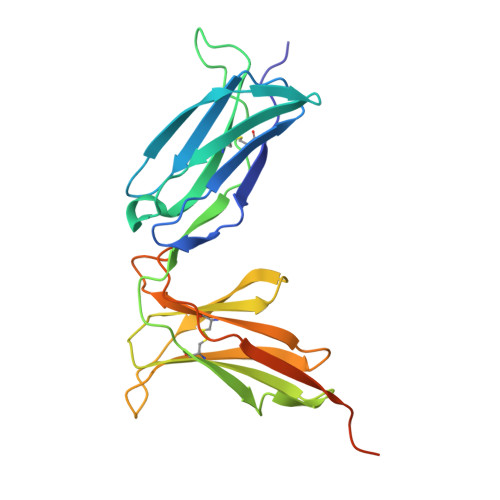
Killer cell immunoglobulin-like receptor 2DL2225Homo sapiensMutation(s): 0 
Gene Names: KIR2DL2
UniProt
Find proteins for P43627 (Homo sapiens)
Explore P43627 
Go to UniProtKB:  P43627
Entity Groups  
Sequence Clusters30% Identity50% Identity70% Identity90% Identity95% Identity100% Identity
UniProt GroupP43627
Glycosylation
Glycosylation Sites: 2Go to GlyGen: P43627-1
Sequence Annotations
Expand
  • Reference Sequence

Find similar proteins by:  Sequence   |   3D Structure  

Entity ID: 4
MoleculeChains Sequence LengthOrganismDetailsImage
KP1D [auth E]10Homo sapiensMutation(s): 0 
UniProt & NIH Common Fund Data Resources
Find proteins for Q96AG3 (Homo sapiens)
Explore Q96AG3 
Go to UniProtKB:  Q96AG3
PHAROS:  Q96AG3
GTEx:  ENSG00000164209 
Entity Groups  
Sequence Clusters30% Identity50% Identity70% Identity90% Identity95% Identity100% Identity
UniProt GroupQ96AG3
Sequence Annotations
Expand
  • Reference Sequence
Small Molecules
Ligands 3 Unique
IDChains Name / Formula / InChI Key2D Diagram3D Interactions
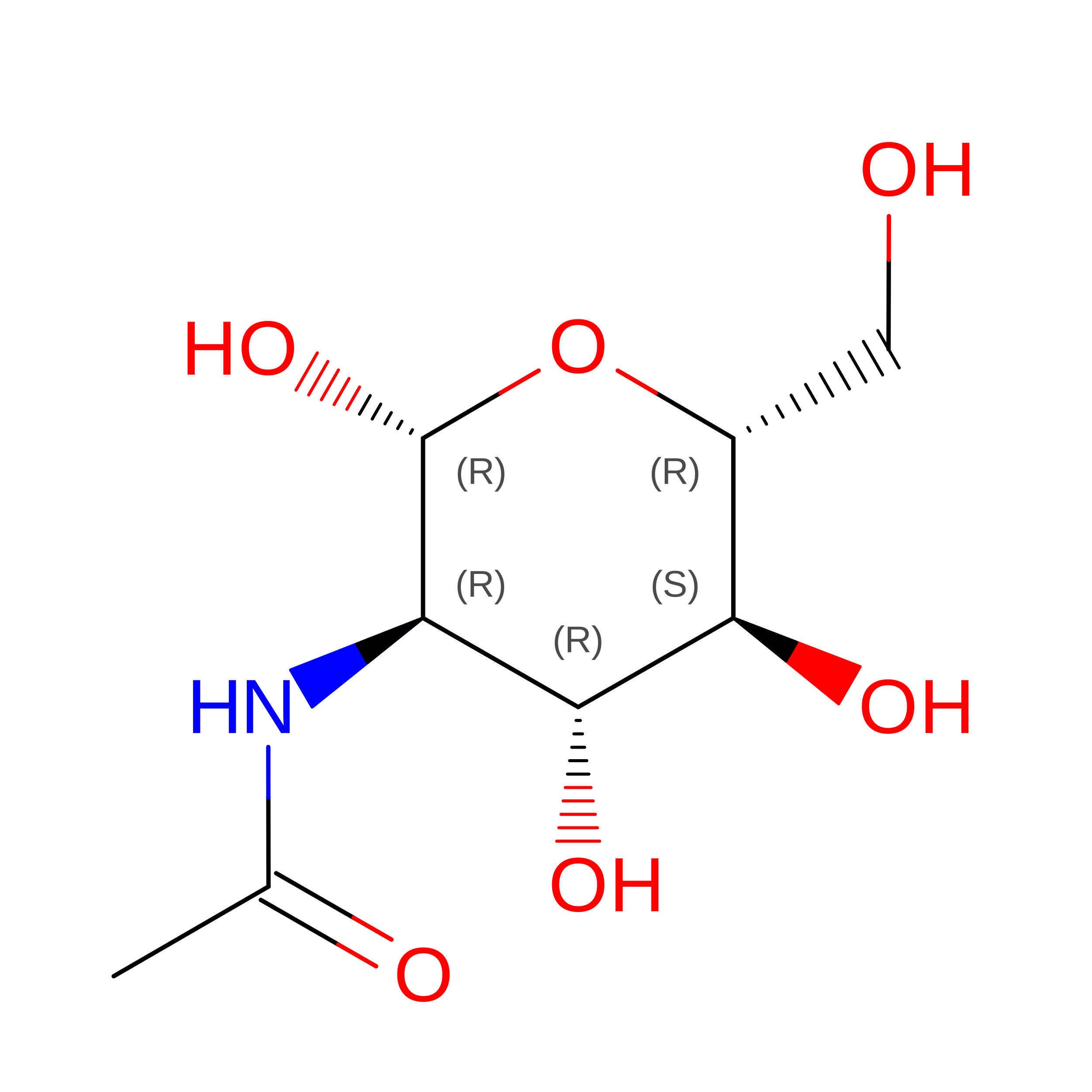
NAG
Query on NAG

Download Ideal Coordinates CCD File 
J [auth C],
K [auth C]
2-acetamido-2-deoxy-beta-D-glucopyranose
C8 H15 N O6
OVRNDRQMDRJTHS-FMDGEEDCSA-N
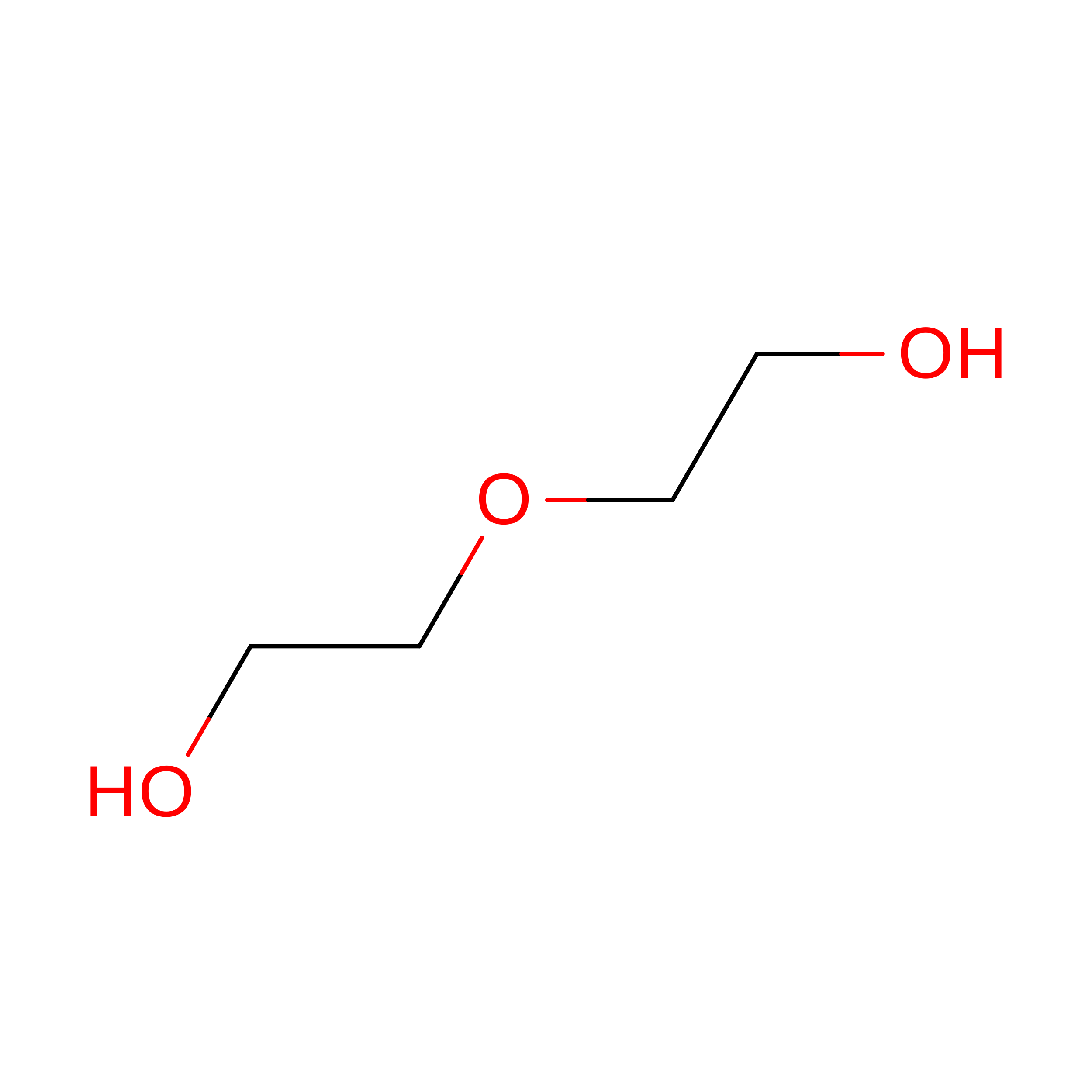
PEG
Query on PEG

Download Ideal Coordinates CCD File 
F [auth A]DI(HYDROXYETHYL)ETHER
C4 H10 O3
MTHSVFCYNBDYFN-UHFFFAOYSA-N
GOL
Query on GOL

Download Ideal Coordinates CCD File 
E [auth A],
G [auth A],
H [auth A],
I [auth B]
GLYCEROL
C3 H8 O3
PEDCQBHIVMGVHV-UHFFFAOYSA-N
Experimental Data & Validation

Experimental Data

  • Method: X-RAY DIFFRACTION
  • Resolution: 2.90 Å
  • R-Value Free:  0.258 (Depositor), 0.256 (DCC) 
  • R-Value Work:  0.215 (Depositor), 0.214 (DCC) 
  • R-Value Observed: 0.218 (Depositor) 
Space Group: P 43 21 2
Unit Cell:
Length ( Å )Angle ( ˚ )
a = 92.69α = 90
b = 92.69β = 90
c = 200.98γ = 90
Software Package:
Software NamePurpose
PHENIXrefinement
iMOSFLMdata reduction
Aimlessdata scaling
PHASERphasing

Structure Validation

View Full Validation Report


Ligand Structure Quality Assessment 


Entry History & Funding Information

Deposition Data


Funding OrganizationLocationGrant Number
National Institutes of Health/National Institute Of Allergy and Infectious Diseases (NIH/NIAID)United States--

Revision History  (Full details and data files)

  • Version 1.0: 2024-12-18
    Type: Initial release
  • Version 1.1: 2025-01-01
    Changes: Derived calculations
  • Version 1.2: 2025-09-17
    Changes: Database references