Download Mendeley
Conformational ensembles of the magnesium channel CorA reveal structural basis for channel gating.
Erramilli, S.K., Nosol, K., Pietrzak-Lichwa, K., Schmandt, N., Li, T., Tokarz, P., Hou, J., Zhao, M., Perozo, E., Kossiakoff, A.A.(2026) Proc Natl Acad Sci U S A 123: e2512532123-e2512532123
- PubMed: 41701836 Search on PubMed
- DOI: https://doi.org/10.1073/pnas.2512532123
- Primary Citation Related Structures:
8TMC, 8TMD, 8TME, 8TMF, 8TMG, 8TMH, 8TMI, 8TMJ, 8TMK, 8TML, 8TMM, 8TMN, 8TMO, 8TMP, 8TMQ - PubMed Abstract:
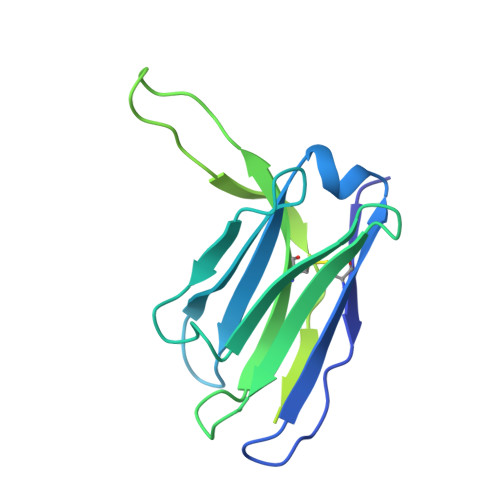
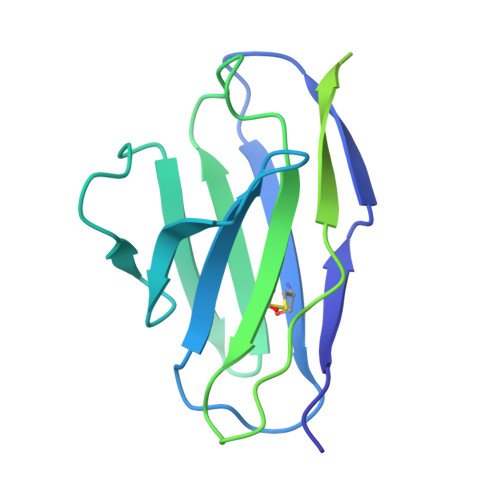
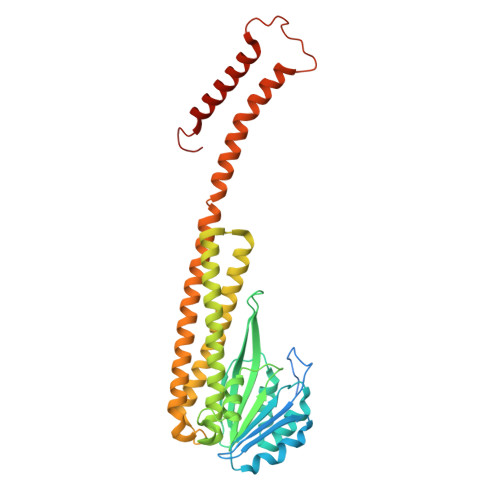
In prokaryotes, CorA is the primary influx pathway for magnesium, a critical divalent cation in cellular physiology and biochemistry. Mechanistic studies show that homopentameric CorA is regulated through an intracellular [Mg 2+ ]-dependent negative feedback loop, involving the asymmetric participation of individual subunits. To understand the connection between asymmetry and activation, we used single-particle cryo-EM to solve sixteen structures of nanodisc-reconstituted CorA. We utilized conformation-specific synthetic antibodies to stabilize subtle but significant conformational differences in the cryo-EM structures. Our results demonstrate that CorA exists as a set of conformational ensembles, where population size inversely correlates with intracellular Mg 2+ concentration. These ensembles include channels with a variety of pore conformations, both constricted and dilated, suggesting a spectrum of active CorA functional states. The ensembles connect asymmetric structural transitions in the cytoplasmic domain with conformational changes in the permeation pathway via an electrostatic network, ultimately controlling channel-gating events. We believe that these results establish a framework for understanding magnesium homeostasis in prokaryotic systems.
- Department of Biochemistry and Molecular Biology, The University of Chicago, Chicago, IL 60637.
Organizational Affiliation: