Download Mendeley
De novo design of a macrocycle-induced dimerization system for cellular control.
Hanna, S., Salveson, P.J., Wicky, B., Kennedy, M.A., Hicks, D.R., Moller, C., Cheng, S., Li, X., Abedi, M., Coventry, B., Said, M.Y., Bera, A.K., Kang, A., Stoddard, B.L., Baker, D.(2026) Nat Commun
- PubMed: 42151133 Search on PubMed
- DOI: https://doi.org/10.1038/s41467-026-71345-8
- Primary Citation Related Structures:
8TLP, 8TM9, 8VX7 - PubMed Abstract:
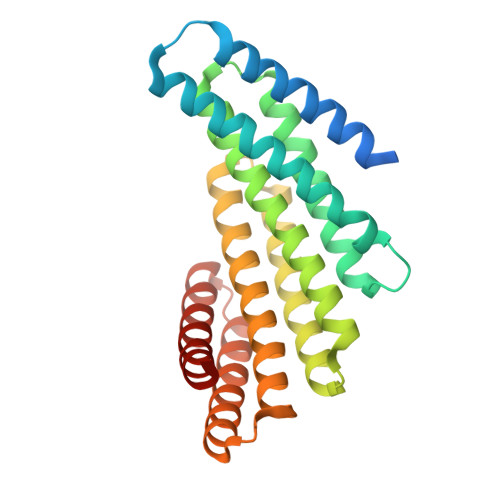
Investigating and manipulating cellular events requires precise control of protein function. To enable control over cellular processes, we set out to design a chemically induced dimerization (CID) system consisting of a de novo-designed ligand and protein pair. Here, we describe the design of a C2 symmetric membrane-permeable macrocyclic peptide and a cognate protein homodimer which binds the macrocycle through a large interface with both chains. The designed homodimer binds the macrocycle with a K D of 36 nM, and the x-ray crystal structure of the protein homodimer-macrocycle complex is very close to the computational design model, with the C2 axis of the macrocycle aligned with the homodimer C2 axis. Transcriptional and split luciferase assays in mammalian cells demonstrate conditional control over both a reporter gene expression and luciferase reconstitution.
- Department of Chemistry, University of Washington, Seattle, WA, USA.
Organizational Affiliation: