Download Mendeley
Covalent Fragments Acting as Tyrosine Mimics for Mutant p53-Y220C Rescue by Nucleophilic Aromatic Substitution.
Klett, T., Stahlecker, J., Jaag, S., Masberg, B., Knappe, C., Lammerhofer, M., Coles, M., Stehle, T., Boeckler, F.M.(2024) Acs Pharmacol Transl Sci 7: 3984-3999
- PubMed: 39698266 Search on PubMedSearch on PubMed Central
- DOI: https://doi.org/10.1021/acsptsci.4c00414
- Primary Citation Related Structures:
8RBA, 8RBB, 8RBC - PubMed Abstract:
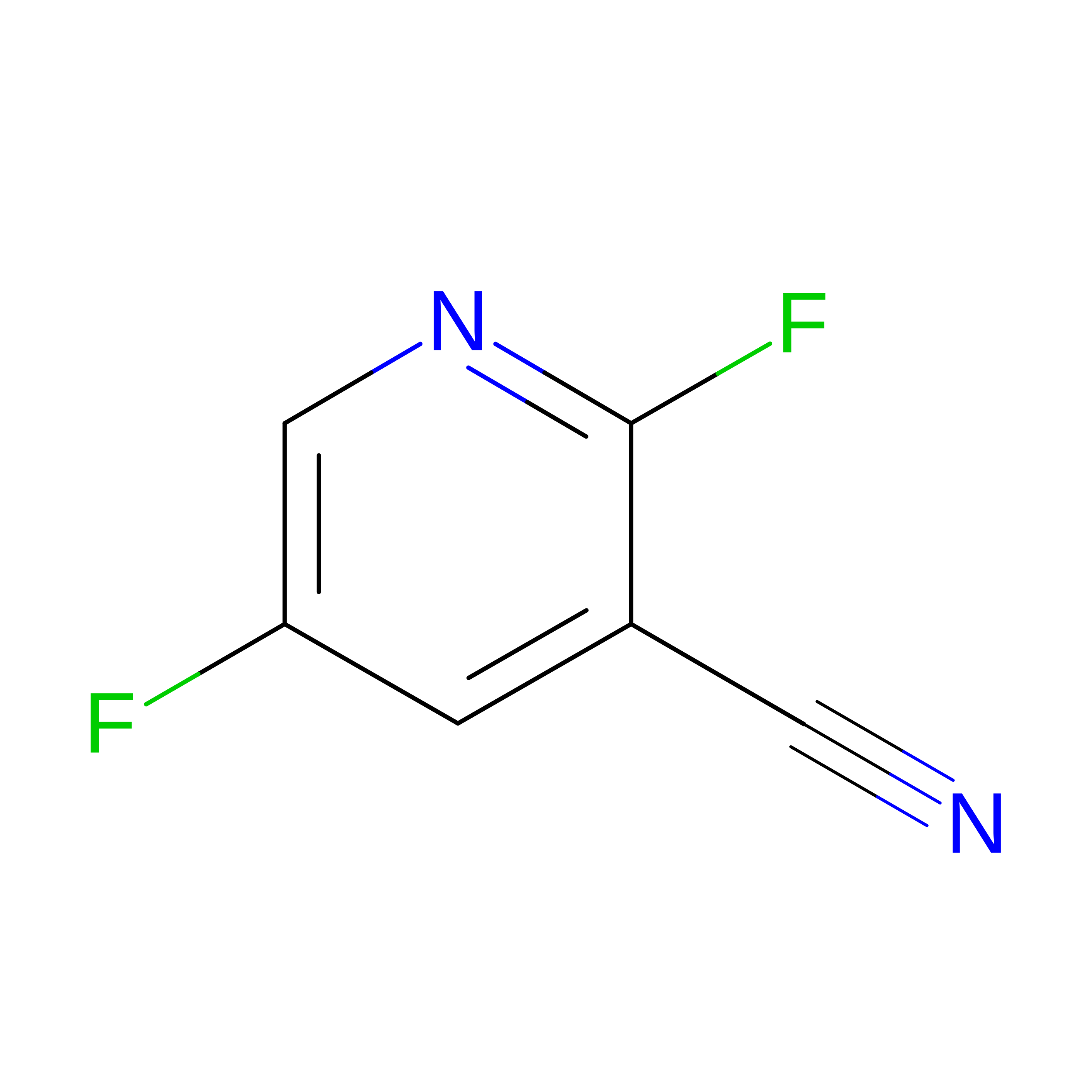
The tumor suppressor p53 is frequently mutated in human cancers. The Y220C mutant is the ninth most common p53 cancer mutant and is classified as a structural mutant, as it leads to strong thermal destabilization and degradation by creating a solvent-accessible hydrophobic cleft. To identify small molecules that thermally stabilize p53, we employed DSF to screen S N Ar-type electrophiles from our covalent fragment library (CovLib) for binding to different structural (Y220C, R282W) and DNA contact (R273H) mutants of p53. The reactive fragments SN001, SN006, and SN007 were detected to specifically stabilize Y220C, indicating the arylation of Cys220 in the mutational cleft, as confirmed by X-ray crystallography. The fragments occupy the central cavity and mimic the ring system of the WT tyrosine lost by the mutation. Surpassing previously reported noncovalent ligands, SN001 stabilized T-p53C-Y220C concentration-dependently up to 4.45 °C and, due to its small size, represents a promising starting point for optimization.
- Lab for Molecular Design & Pharm. Biophysics, Institute of Pharmaceutical Sciences, Eberhard Karls Universität Tübingen, 72076 Tübingen, Germany.
Organizational Affiliation: