Find PDB structures and Computed Structure Models (CSM) by combining queries from tools in this suite: Attribute Search, Sequence Similarity, Sequence Motif, 3D Similarity, and 3D Motif with 'AND' logic.
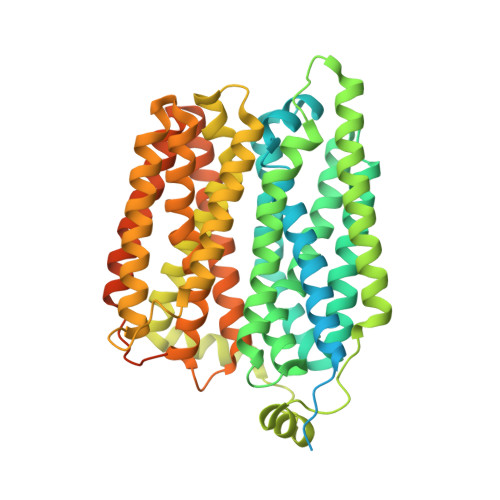
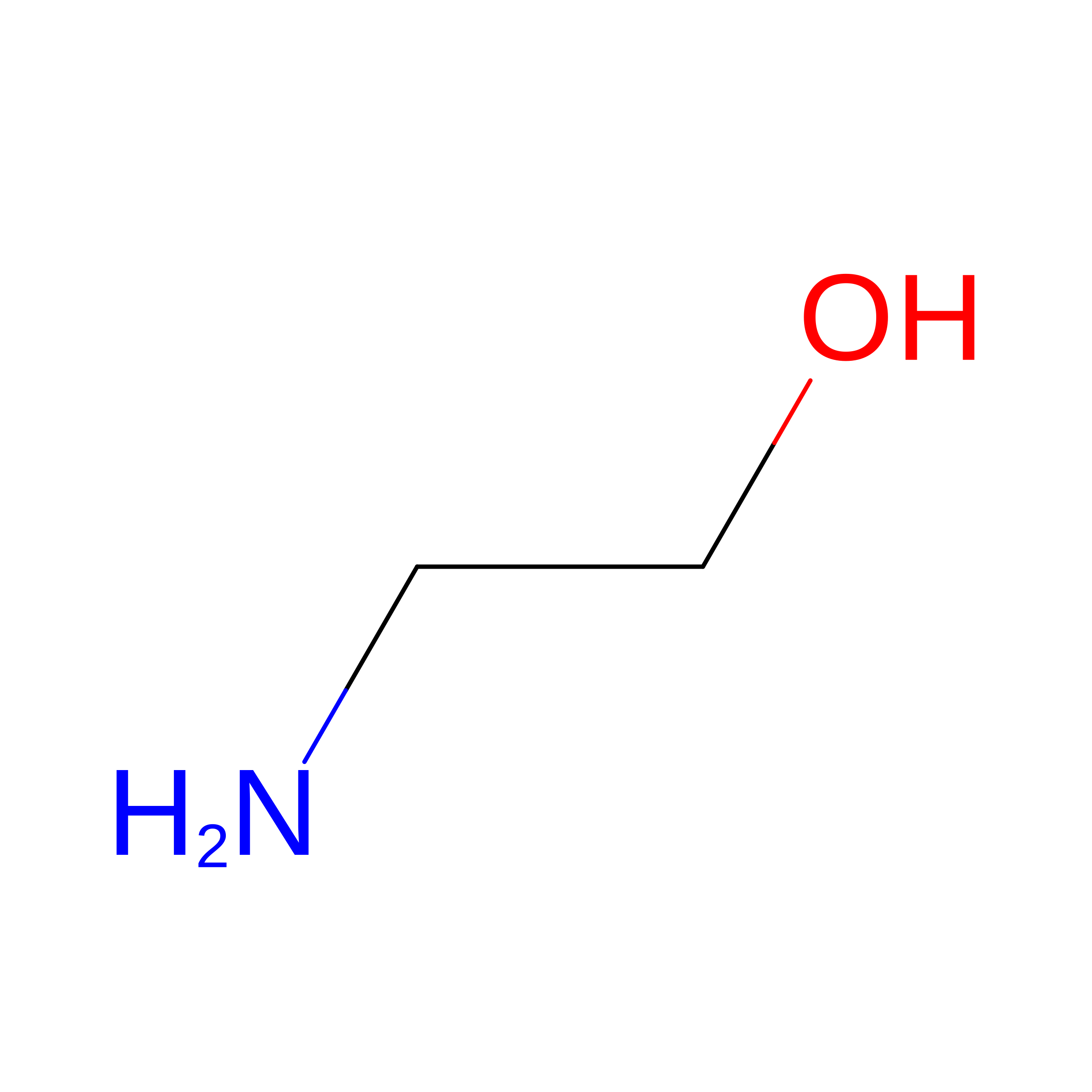
Human feline leukaemia virus subgroup C receptor-related proteins 1 and 2 (FLVCR1 and FLVCR2) are members of the major facilitator superfamily 1 . Their dysfunction is linked to several clinical disorders, including PCARP, HSAN and Fowler syndrome 2-7 . Earlier studies concluded that FLVCR1 may function as a haem exporter 8-12 , whereas FLVCR2 was suggested to act as a haem importer 13 , yet conclusive biochemical and detailed molecular evidence remained elusive for the function of both transporters 14-16 . Here, we show that FLVCR1 and FLVCR2 facilitate the transport of choline and ethanolamine across the plasma membrane, using a concentration-driven substrate translocation process. Through structural and computational analyses, we have identified distinct conformational states of FLVCRs and unravelled the coordination chemistry underlying their substrate interactions. Fully conserved tryptophan and tyrosine residues form the binding pocket of both transporters and confer selectivity for choline and ethanolamine through cation-π interactions. Our findings clarify the mechanisms of choline and ethanolamine transport by FLVCR1 and FLVCR2, enhance our comprehension of disease-associated mutations that interfere with these vital processes and shed light on the conformational dynamics of these major facilitator superfamily proteins during the transport cycle.
Organizational Affiliation:
Department of Biochemistry, Yong Loo Lin School of Medicine, National University of Singapore, Singapore, Singapore.
Immunology Program, Life Sciences Institute, National University of Singapore, Singapore, Singapore.
Singapore Lipidomics Incubator (SLING), Life Sciences Institute, National University of Singapore, Singapore, Singapore.
Cardiovascular Disease Research (CVD) Programme, Yong Loo Lin School of Medicine, National University of Singapore, Singapore, Singapore.
Immunology Translational Research Program, Yong Loo Lin School of Medicine, National University of Singapore, Singapore, Singapore.
Department and Emeritus Group of Molecular Membrane Biology, Max Planck Institute of Biophysics, Frankfurt, Germany.
Department of Theoretical Biophysics, Max Planck Institute of Biophysics, Frankfurt, Germany.
IMPRS on Cellular Biophysics, Frankfurt, Germany.
Nanion Technologies GmbH, Munich, Germany.
Central Electron Microscopy Facility, Max Planck Institute of Biophysics, Frankfurt, Germany.
Division of Hematology, Department of Medicine, University of Washington, Seattle, WA, USA.
Department of Theoretical Biophysics, Max Planck Institute of Biophysics, Frankfurt, Germany. gerhard.hummer@biophys.mpg.de.
Institute of Biophysics, Goethe University Frankfurt, Frankfurt, Germany. gerhard.hummer@biophys.mpg.de.
Department and Emeritus Group of Molecular Membrane Biology, Max Planck Institute of Biophysics, Frankfurt, Germany. di.wu@biophys.mpg.de.
Fraunhofer Institute for Translational Medicine and Pharmacology ITMP, Frankfurt, Germany. di.wu@biophys.mpg.de.
Department of Biochemistry, Yong Loo Lin School of Medicine, National University of Singapore, Singapore, Singapore. bchnnl@nus.edu.sg.
Immunology Program, Life Sciences Institute, National University of Singapore, Singapore, Singapore. bchnnl@nus.edu.sg.
Singapore Lipidomics Incubator (SLING), Life Sciences Institute, National University of Singapore, Singapore, Singapore. bchnnl@nus.edu.sg.
Cardiovascular Disease Research (CVD) Programme, Yong Loo Lin School of Medicine, National University of Singapore, Singapore, Singapore. bchnnl@nus.edu.sg.
Immunology Translational Research Program, Yong Loo Lin School of Medicine, National University of Singapore, Singapore, Singapore. bchnnl@nus.edu.sg.
Department and Emeritus Group of Molecular Membrane Biology, Max Planck Institute of Biophysics, Frankfurt, Germany. schara.safarian@biophys.mpg.de.
Fraunhofer Institute for Translational Medicine and Pharmacology ITMP, Frankfurt, Germany. schara.safarian@biophys.mpg.de.
Institute of Clinical Pharmacology, Faculty of Medicine, Goethe University Frankfurt, Frankfurt, Germany. schara.safarian@biophys.mpg.de.
Fraunhofer Cluster of Excellence for Immune Mediated Diseases (CIMD), Frankfurt, Germany. schara.safarian@biophys.mpg.de.

 Download Mendeley