8PXZ | pdb_00008pxz

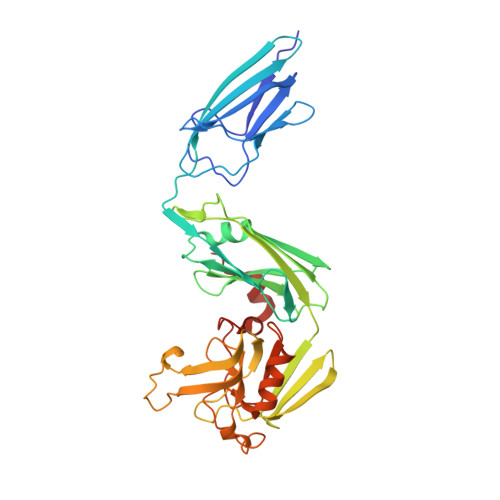
Crystal structure of the transpeptidase LdtMt2 from Mycobacterium tuberculosis in complex with natural substrate


Experimental Data Snapshot

  • Method: X-RAY DIFFRACTION
  • Resolution: 1.98 Å
  • R-Value Free: 
    0.226 (Depositor), 0.226 (DCC) 
  • R-Value Work: 
    0.180 (Depositor), 0.185 (DCC) 
  • R-Value Observed: 
    0.182 (Depositor) 

wwPDB Validation   3D Report Full Report


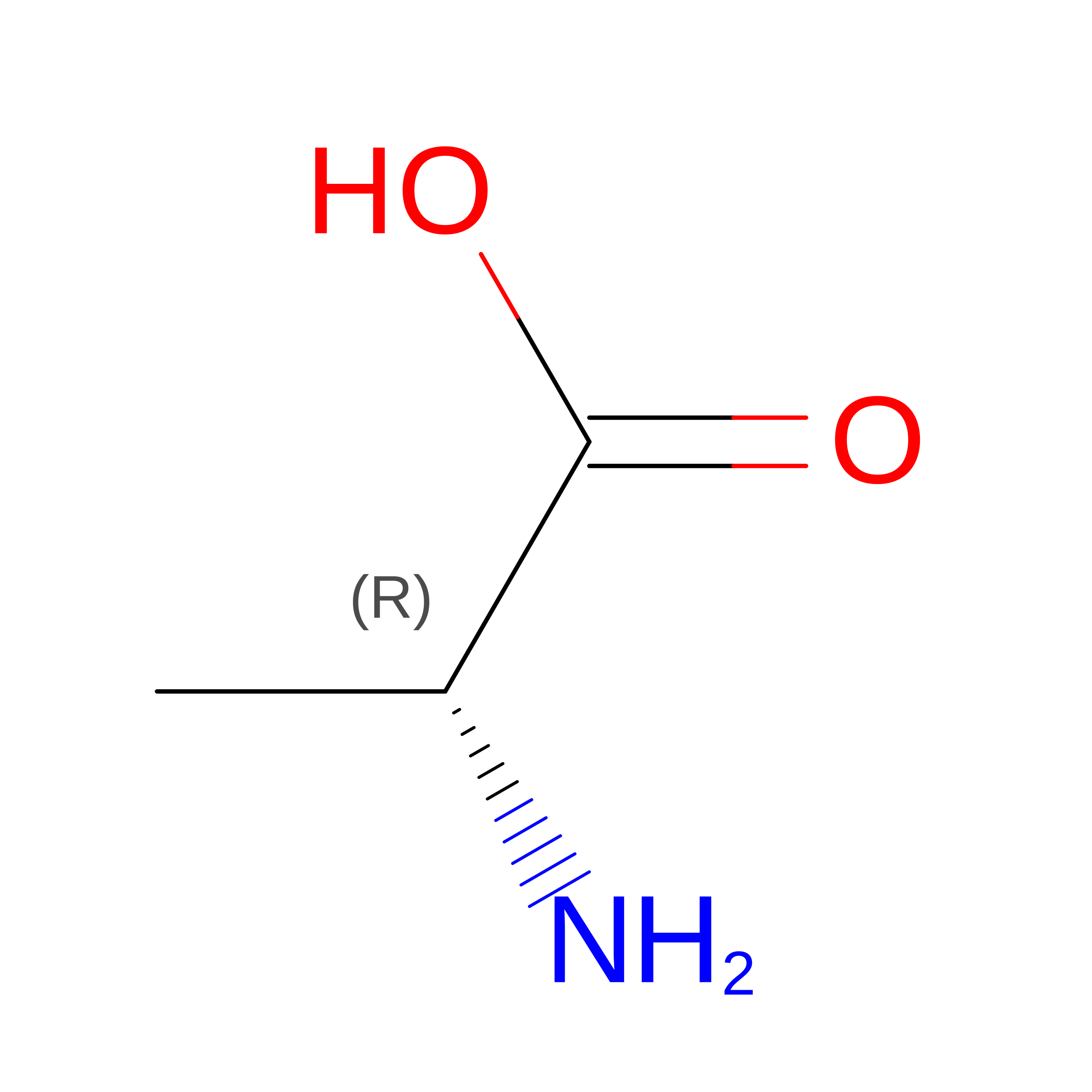
Ligand Structure Quality Assessment 


This is version 2.0 of the entry. See complete history


Literature

Biochemical and crystallographic studies of L,D-transpeptidase 2 from Mycobacterium tuberculosis with its natural monomer substrate.

de Munnik, M.Lang, P.A.Calvopina, K.Rabe, P.Brem, J.Schofield, C.J.

(2024) Commun Biol 7: 1173-1173

  • DOI: https://doi.org/10.1038/s42003-024-06785-3
  • Primary Citation of Related Structures:  
    8PXY, 8PXZ

  • PubMed Abstract: 

    The essential L,D-transpeptidase of Mycobacterium tuberculosis (Ldt Mt2 ) catalyses the formation of 3 3 cross-links in cell wall peptidoglycan and is a target for development of antituberculosis therapeutics. Efforts to inhibit Ldt Mt2 have been hampered by lack of knowledge of how it binds its substrate. To address this gap, we optimised the isolation of natural disaccharide tetrapeptide monomers from the Corynebacterium jeikeium bacterial cell wall through overproduction of the peptidoglycan sacculus. The tetrapeptides were used in binding / turnover assays and biophysical studies on Ldt Mt2. We determined a crystal structure of wild-type Ldt Mt2 reacted with its natural substrate, the tetrapeptide monomer of the peptidoglycan layer. This structure shows formation of a thioester linking the catalytic cysteine and the donor substrate, reflecting an intermediate in the transpeptidase reaction; it informs on the mode of entrance of the donor substrate into the Ldt Mt2 active site. The results will be useful in design of Ldt Mt2 inhibitors, including those based on substrate binding interactions, a strategy successfully employed for other nucleophilic cysteine enzymes.


  • Organizational Affiliation
    • Chemistry Research Laboratory, Department of Chemistry and the Ineos Oxford Institute of Antimicrobial Research, University of Oxford, Oxford, UK.

Macromolecules
Find similar proteins by:  (by identity cutoff)  |  3D Structure
Entity ID: 1
MoleculeChains Sequence LengthOrganismDetailsImage
L,D-transpeptidase 2355Mycobacterium tuberculosisMutation(s): 0 
Gene Names: ldtBMT2594V735_02606
EC: 2.3.2
UniProt
Find proteins for I6Y9J2 (Mycobacterium tuberculosis (strain ATCC 25618 / H37Rv))
Explore I6Y9J2 
Go to UniProtKB:  I6Y9J2
Entity Groups  
Sequence Clusters30% Identity50% Identity70% Identity90% Identity95% Identity100% Identity
UniProt GroupI6Y9J2
Sequence Annotations
Expand
  • Reference Sequence

Find similar proteins by:  Sequence   |   3D Structure  

Entity ID: 2
MoleculeChains Sequence LengthOrganismDetailsImage
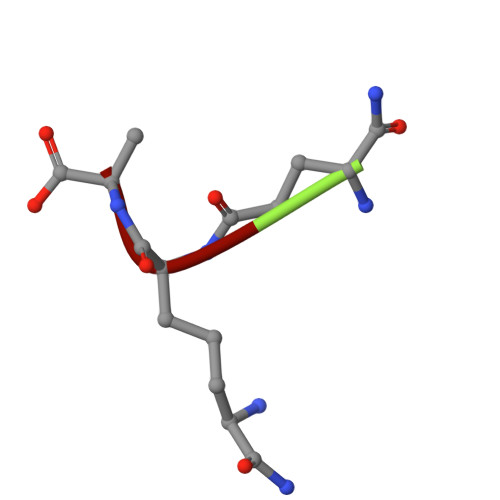
Peptidoglycan tripeptide3Corynebacterium jeikeiumMutation(s): 0 
Sequence Annotations
Expand
  • Reference Sequence

Find similar proteins by:  Sequence   |   3D Structure  

Entity ID: 3
MoleculeChains Sequence LengthOrganismDetailsImage
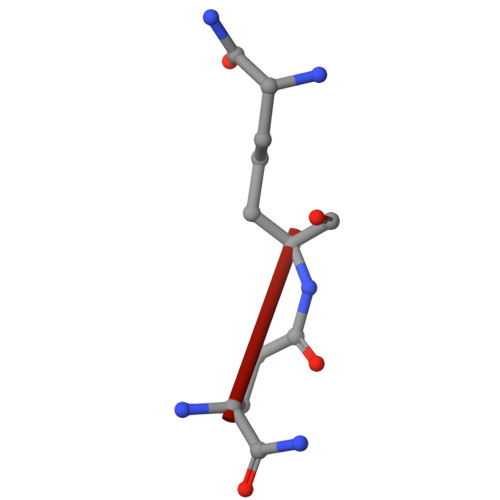
Peptidoglycan dipeptide2Corynebacterium jeikeiumMutation(s): 0 
Sequence Annotations
Expand
  • Reference Sequence
Experimental Data & Validation

Experimental Data

  • Method: X-RAY DIFFRACTION
  • Resolution: 1.98 Å
  • R-Value Free:  0.226 (Depositor), 0.226 (DCC) 
  • R-Value Work:  0.180 (Depositor), 0.185 (DCC) 
  • R-Value Observed: 0.182 (Depositor) 
Space Group: P 21 21 2
Unit Cell:
Length ( Å )Angle ( ˚ )
a = 77.12α = 90
b = 95.83β = 90
c = 59.23γ = 90
Software Package:
Software NamePurpose
PHENIXrefinement
xia2data scaling
XDSdata reduction
PHASERphasing

Structure Validation

View Full Validation Report


Ligand Structure Quality Assessment 


Entry History & Funding Information

Deposition Data


Funding OrganizationLocationGrant Number
Biotechnology and Biological Sciences Research Council (BBSRC)United Kingdom--

Revision History  (Full details and data files)

  • Version 1.0: 2024-08-07
    Type: Initial release
  • Version 2.0: 2024-10-16
    Changes: Advisory, Atomic model, Author supporting evidence, Data collection, Database references, Derived calculations, Non-polymer description, Polymer sequence, Source and taxonomy, Structure summary