Download Mendeley
Structure-based identification of herbacetin and caffeic acid phenethyl ester as inhibitors of S-adenosylmethionine-dependent viral methyltransferase.
Bhutkar, M., Kumar, A., Rani, R., Singh, V., Saha, A., Pathak, A., Kothiala, A., Mahajan, S., Waghmode, B., Verma, S., Kumar, R., Mudgal, R., Sircar, D., Kumar, P., Tomar, S.(2025) FEBS Lett 599: 1531-1555
- PubMed: 40353321 Search on PubMed
- DOI: https://doi.org/10.1002/1873-3468.70054
- Primary Citation Related Structures:
8KDZ - PubMed Abstract:
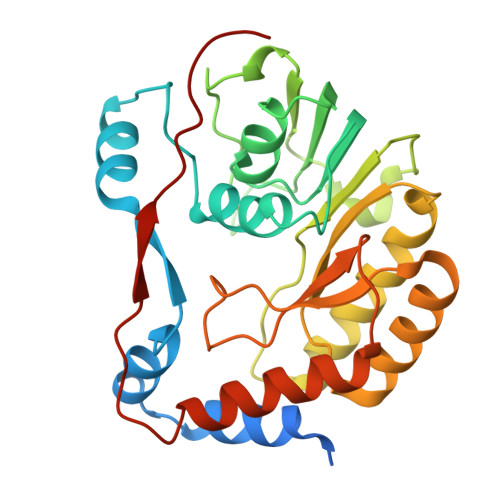
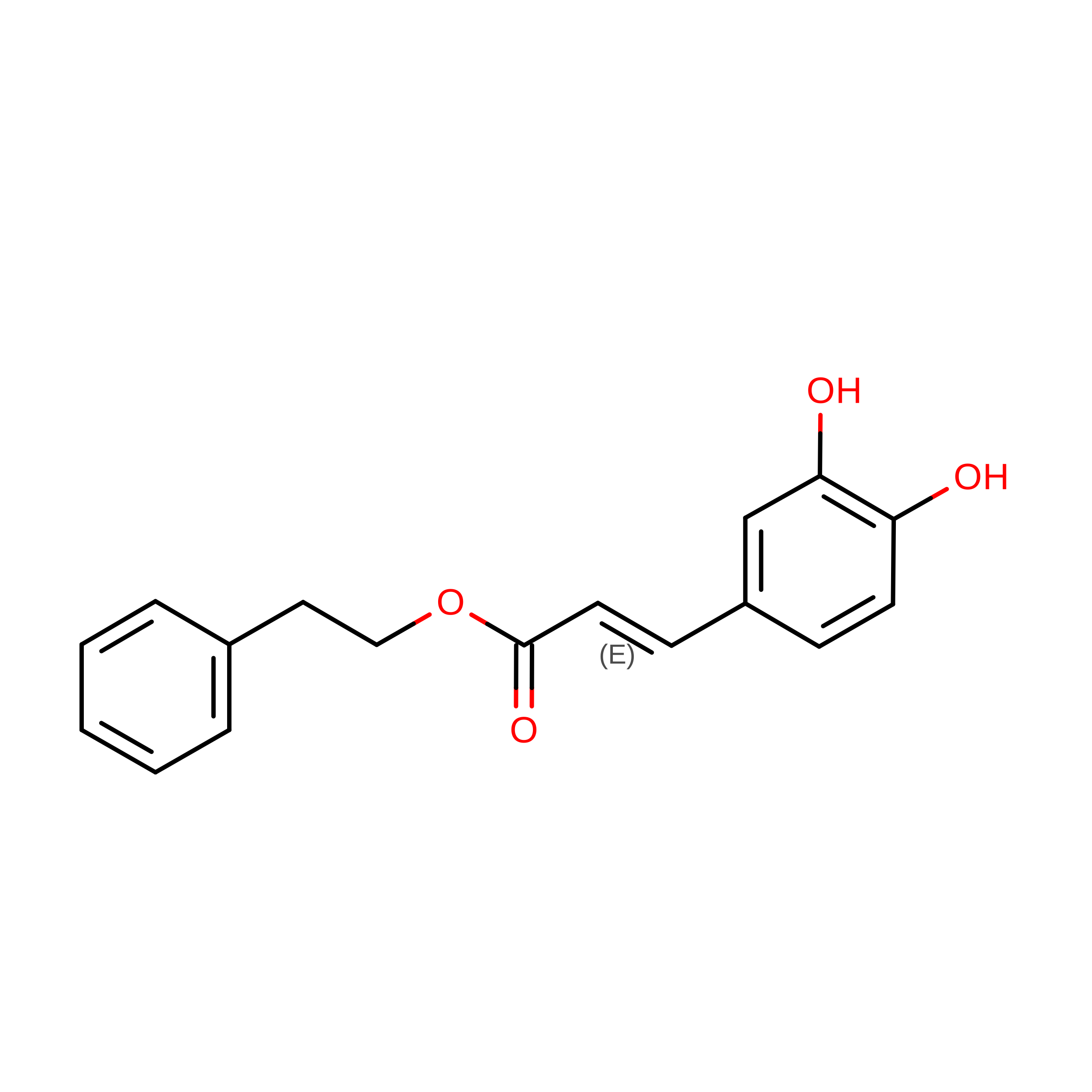
Chikungunya (CHIKV) and dengue (DENV) viruses pose a public health risk and lack antiviral treatments. Structure-based molecular docking of a natural MTase substrates library identified herbacetin (HC) and caffeic acid phenethyl ester (CAPE) as potential CHIKV nsP1 and DENV NS5 MTase inhibitors. Binding affinities and MTase inhibition were confirmed using purified proteins. The crystal structure of DENV 3 NS5 MTase and CAPE complex revealed CAPE binding at viral RNA capping sites. Interestingly, HC and CAPE depleted polyamines crucial for RNA virus replication and decreased viral titer with IC 50 values of ~ 13.44 and ~ 0.57 μm against CHIKV, and ~ 7.24 and ~ 1.01 μm against DENV 3, respectively. Polyamine addition did not reverse the antiviral effects, suggesting a dual inhibition mechanism. Impact statement This study reveals the antiviral potential of natural small molecules, Herbacetin (HC) and Caffeic acid phenethyl ester (CAPE) against Dengue and Chikungunya viruses. The molecules deplete polyamine levels and directly inhibit viral methyltransferases. This study opens new avenues for developing antiviral strategies that target both host factors and viral components.
- Department of Biosciences and Bioengineering, Indian Institute of Technology Roorkee, India.
Organizational Affiliation: