Download Mendeley
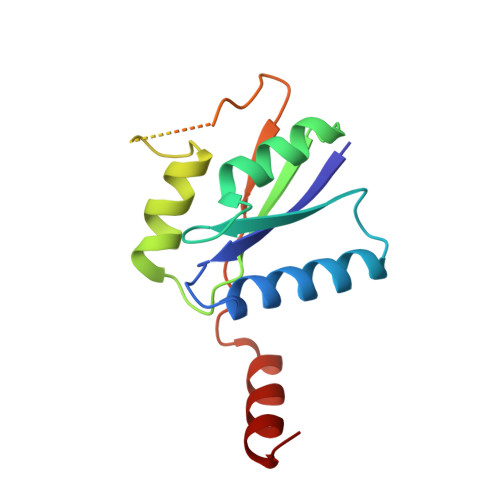
Structural insights into the recognition of tetrapyrrole substrates by ancestral class II chelatase CfbA.
Ogawa, S., Hikita, M., Fujishiro, T.(2024) Protein Sci 33: e5208-e5208
- PubMed: 39548701 Search on PubMedSearch on PubMed Central
- DOI: https://doi.org/10.1002/pro.5208
- Primary Citation Related Structures:
8I55, 8I56, 8I57, 8I58, 8IYU - PubMed Abstract:
Nickel-chelatase CfbA, unlike descendant chelatases, is an ancestral class II chelatase with a symmetric active site architecture. CfbA utilizes sirohydrochlorin (SHC) as a physiological substrate in the biosynthesis of coenzyme F430. CbiX S , a structural analog of CfbA, can use uroporphyrin III (UPIII) and uroporphyrin I (UPI) as non-physiological substrates. Owing to the broad tetrapyrrole specificity of the unique active site of ancestral class II chelatases, the substrate recognition mechanism of CfbA has garnered interest. Herein, we conducted an X-ray crystallographic analysis of CfbA in complex with UPIII and UPI. Interestingly, the binding sites for UPIII and UPI were distinct. UPI was bound at the entrance of the active site, whereas UPIII was bound deep inside the active site cavity in a manner similar to SHC. Despite the difference in the binding positions of UPIII and UPI, Ser11 at the active site provided critical polar interactions for recognizing UPIII and UPI. Several CfbA variants with a Ser11 mutation were studied to confirm the significance of Ser11's position in the context of tetrapyrrole recognition. The CfbA S11T variant showed Ni 2+ -chelatase activity against coproporphyrin I (CPI), which is a more hydrophobic tetrapyrrole than UPIII and UPI. Using a CPI-docked model of the S11T variant, we proposed that balancing the hydrophobic/polar interactions at residue 11 could alter substrate selectivity. The structural and mutational analyses reported here highlight the importance of polar and hydrophobic interactions at the entry region of the active site for substrate tetrapyrrole recognition by ancestral and descendant class II chelatases.
- Department of Biochemistry and Molecular Biology, Graduate School of Science and Engineering, Saitama University, Saitama, Japan.
Organizational Affiliation: