Download Mendeley
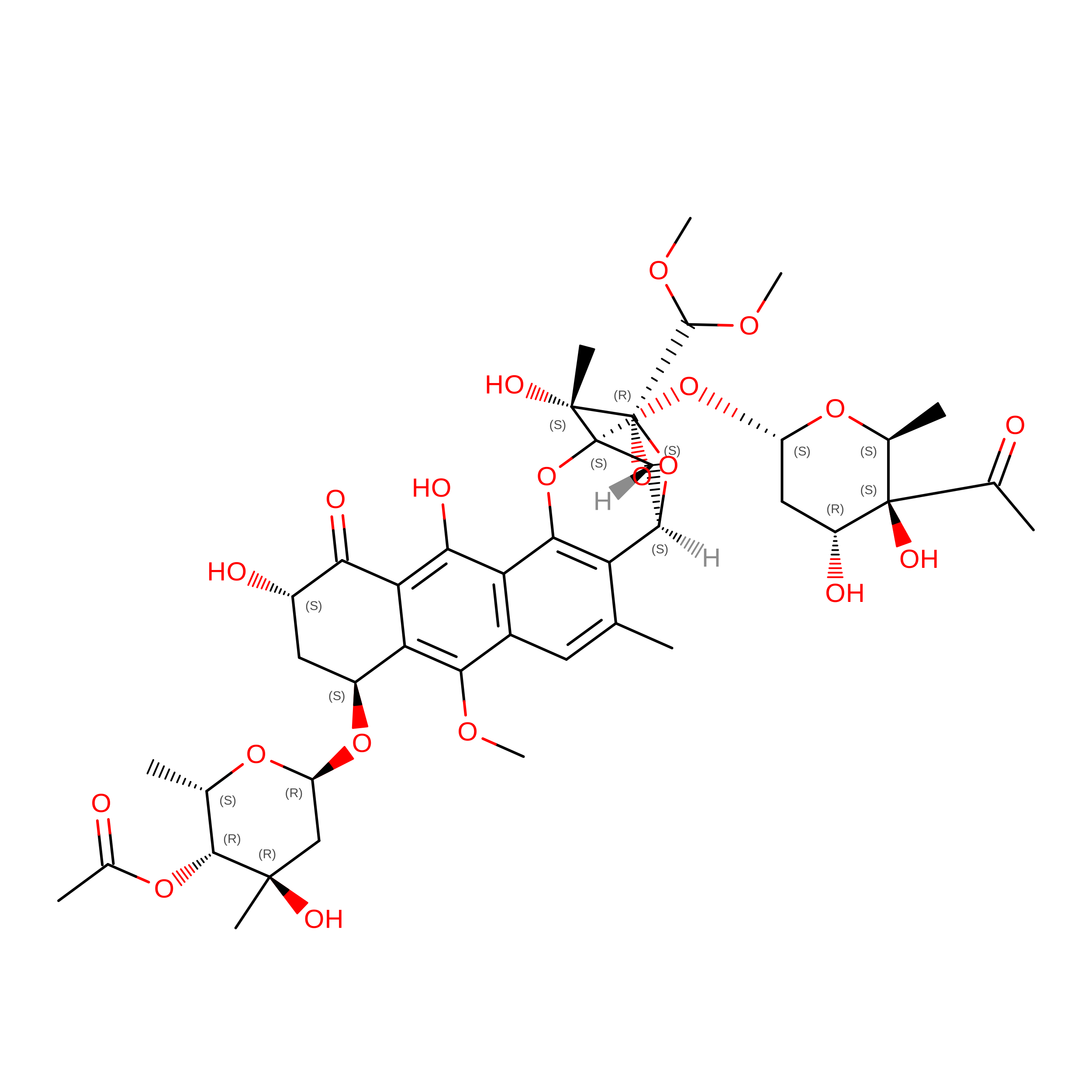
Trioxacarcin A Interactions with G-Quadruplex DNA Reveal Its Potential New Targets as an Anticancer Agent.
Yin, S., Lan, W., Hou, X., Liu, Z., Xue, H., Wang, C., Tang, G.L., Cao, C.(2023) J Med Chem 66: 6798-6810
- PubMed: 37154782 Search on PubMed
- DOI: https://doi.org/10.1021/acs.jmedchem.3c00178
- Primary Citation Related Structures:
8GP7 - PubMed Abstract:
Trioxacarcin (TXN) A was reported to be an anticancer agent through alkylation of dsDNA. G-quadruplex DNA (G4-DNA) is frequently formed in the promoter regions of oncogenes and the ends of telomerase genes, considered as promising drug targets for anticancer therapy. There are no reports about TXN A interactions with G4-DNA. Here, we tested TXN A's interactions with several G4-DNA oligos with parallel, antiparallel, or hybrid folding, respectively. We demonstrated that TXN A preferred to alkylate one flexible guanine in the loops of parallel G4-DNA. The position of the alkylated guanine is in favor of interactions of G4-DNA with TXN A. The structure of TXN A covalently bound RET G4-DNA indicated that TXN A alkylation on RET G4-DNA stabilizes the G4-DNA conformation. These studies opened a new window of how TXN A interacted with G4-DNA, which might hint a new mode of its function as an anticancer agent.
- State Key Laboratory of Bioorganic and Natural Product Chemistry, Center for Excellence in Molecular Synthesis, Shanghai Institute of Organic Chemistry, Chinese Academy of Sciences, 345 Lingling Road, Shanghai 200032, China.
Organizational Affiliation: