Download Mendeley
Inhibition of L-threonine dehydrogenase from Trypanosoma cruzi reduces glycine and acetate production and interferes with parasite growth and viability.
Faria, J.D.N., Eufrasio, A.G., Fagundes, M., Lobo-Rojas, A., Marchese, L., de Lima Silva, C.C., Bezerra, E.H.S., Mercaldi, G.F., Alborghetti, M.R., Sforca, M.L., Cordeiro, A.T.(2025) J Biol Chem 301: 108080-108080
- PubMed: 39675710 Search on PubMedSearch on PubMed Central
- DOI: https://doi.org/10.1016/j.jbc.2024.108080
- Primary Citation Related Structures:
8GIL, 8GJB - PubMed Abstract:
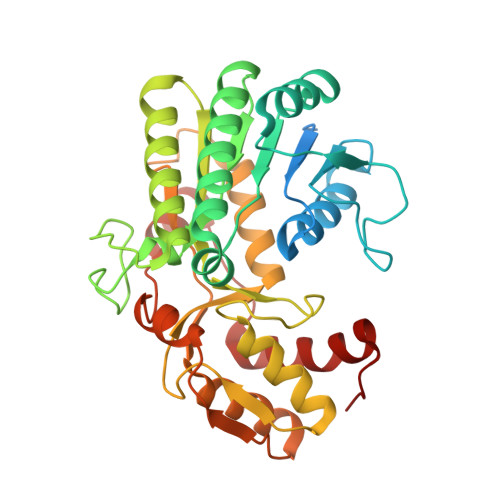
Trypanosoma cruzi is a flagellated protozoan and the etiological agent of Chagas disease, a neglected tropical disease described by Carlos Chagas in 1909 that remains without appropriate diagnostics and treatment. Throughout its life cycle, T. cruzi undergoes through many different environments, requiring adaptation of its metabolism to different nutrition sources. Recent studies have confirmed the adaptability of T. cruzi metabolism to different carbon sources and encouraged a deeper investigation of related metabolic pathways. In the present study, we investigated the catabolism of threonine in T. cruzi epimastigotes cultivated in LIT medium and following 24h of starvation in PBS. In LIT medium, threonine, serine, and histidine were rapidly consumed concomitantly with carbohydrates during parasite exponential growth. When threonine was provided as the only carbon source to starved parasites, they excreted acetate and glycine, corroborating the activity of a mitochondrial threonine degradation pathway. Subsequently, we used a recombinant T. cruzi L-threonine dehydrogrenase (TcTDH) to screen the Chagas Box, an open-source collection of phenotypic hits, and identified compound TCMDC-143160 as a low micromolar TcTDH inhibitor (IC50 = 3.5 μM). When TCMDC-143160 was administrated to starved parasites, it inhibited the threonine degradation pathway. Finally, we report the crystal structure of TcTDH and characterize its allosteric activation by potassium. Collectively, these data demonstrate the relevance of threonine catabolism in T. cruzi metabolism and provide a set of tools to further investigate TcTDH as a potential drug target for Chagas disease.
- Brazilian Biosciences National Laboratory, Brazilian Center for Research in Energy and Materials, Sao Paulo, Brazil.
Organizational Affiliation: