7QF7 | pdb_00007qf7

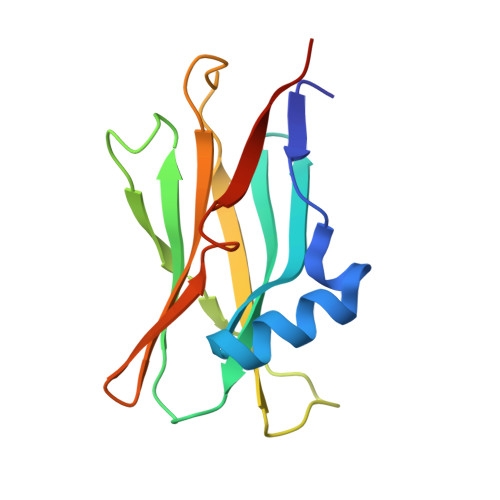
Orthorhombic crystal structure of PTG CBM21 in complex with beta-cyclodextrin


Experimental Data Snapshot

  • Method: X-RAY DIFFRACTION
  • Resolution: 1.47 Å
  • R-Value Free: 
    0.195 (Depositor), 0.198 (DCC) 
  • R-Value Work: 
    0.175 (Depositor), 0.179 (DCC) 
  • R-Value Observed: 
    0.176 (Depositor) 

Starting Model: experimental
View more details

wwPDB Validation 3D Report Full Report

Validation slider image for 7QF7

This is version 1.1 of the entry. See complete history

Literature

Molecular architecture of the glycogen- committed PP1/PTG holoenzyme.

Semrau, M.S.Giachin, G.Covaceuszach, S.Cassetta, A.Demitri, N.Storici, P.Lolli, G.

(2022) Nat Commun 13: 6199-6199

  • DOI: https://doi.org/10.1038/s41467-022-33693-z
  • Primary Citation Related Structures: 
    7QF7, 7QFA, 7QFB, 7QM2

  • PubMed Abstract: 

    The delicate alternation between glycogen synthesis and degradation is governed by the interplay between key regulatory enzymes altering the activity of glycogen synthase and phosphorylase. Among these, the PP1 phosphatase promotes glycogenesis while inhibiting glycogenolysis. PP1 is, however, a master regulator of a variety of cellular processes, being conveniently directed to each of them by scaffolding subunits. PTG, Protein Targeting to Glycogen, addresses PP1 action to glycogen granules. In Lafora disease, the most aggressive pediatric epilepsy, genetic alterations leading to PTG accumulation cause the deposition of insoluble polyglucosans in neurons. Here, we report the crystallographic structure of the ternary complex PP1/PTG/carbohydrate. We further refine the mechanism of the PTG-mediated PP1 recruitment to glycogen by identifying i) an unusual combination of recruitment sites, ii) their contributions to the overall binding affinity, and iii) the conformational heterogeneity of this complex by in solution SAXS analyses.


  • Organizational Affiliation
    • Department of Cellular, Computational and Integrative Biology - CIBio, University of Trento, via Sommarive 9, 38123, Povo, Trento, Italy.

Macromolecule Content 

  • Total Structure Weight: 16.82 kDa 
  • Atom Count: 1,276 
  • Modeled Residue Count: 129 
  • Deposited Residue Count: 134 
  • Unique protein chains: 1

Macromolecules

Find similar proteins by:|  3D Structure
Entity ID: 1
MoleculeChains  Sequence LengthOrganismDetailsImage
Protein phosphatase 1 regulatory subunit 3C134Homo sapiensMutation(s): 0 
Gene Names: PPP1R3CPPP1R5
UniProt & NIH Common Fund Data Resources
Find proteins for Q9UQK1 (Homo sapiens)
Explore Q9UQK1 
Go to UniProtKB:  Q9UQK1
PHAROS:  Q9UQK1
GTEx:  ENSG00000119938 
Entity Groups
Sequence Clusters30% Identity50% Identity70% Identity90% Identity95% Identity100% Identity
UniProt GroupQ9UQK1
Sequence Annotations
Expand
Reference Sequence

Oligosaccharides

Help  
Entity ID: 2
MoleculeChains Length2D Diagram GlycosylationD Interactions
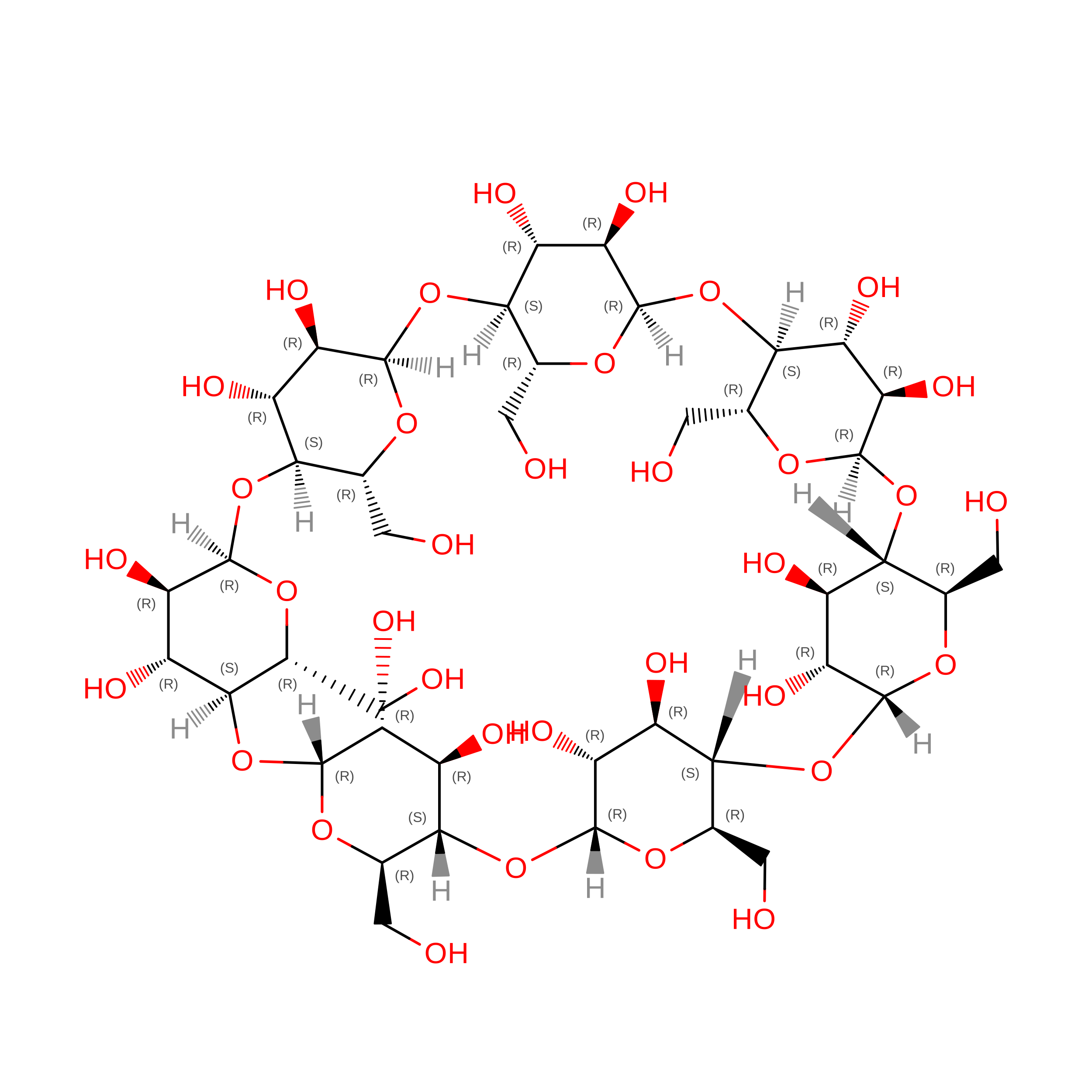
Cycloheptakis-(1-4)-(alpha-D-glucopyranose)B [auth C]7N/A
Glycosylation Resources
GlyTouCan: G01435GL
GlyCosmos: G01435GL

Small Molecules

Ligands 1 Unique
IDChains Name / Formula / InChI Key2D Diagram3D Interactions
NA

Query on NA


Download:Ideal Coordinates CCD File
C [auth A]SODIUM ION
Na
FKNQFGJONOIPTF-UHFFFAOYSA-N

Biologically Interesting Molecules (External Reference) 

1 Unique

Experimental Data & Validation

Experimental Data

  • Method: X-RAY DIFFRACTION
  • Resolution: 1.47 Å
  • R-Value Free:  0.195 (Depositor), 0.198 (DCC) 
  • R-Value Work:  0.175 (Depositor), 0.179 (DCC) 
  • R-Value Observed: 0.176 (Depositor) 
Space Group: P 2 21 21
Unit Cell:
Length ( Å )Angle ( ˚ )
a = 38.593α = 90
b = 56.443β = 90
c = 70.553γ = 90
Software Package:
Software NamePurpose
PHENIXrefinement
XDSdata reduction
Aimlessdata scaling
PHASERphasing
PDB_EXTRACTdata extraction

Structure Validation

View Full Validation Report


Entry History 

& Funding Information

Deposition Data


Funding OrganizationLocationGrant Number
Not funded--

Revision History  (Full details and data files)

  • Version 1.0: 2022-11-02
    Type: Initial release
  • Version 1.1: 2024-01-31
    Changes: Data collection, Refinement description