Download Mendeley
Structural investigation of human U6 snRNA recognition by spliceosomal recycling factor SART3 RNA recognition motifs.
Kim, I., Bang, K.M., An, S.Y., Park, C., Shin, J.Y., Kim, Y., Song, H.K., Suh, J.Y., Kim, N.K.(2025) FEBS J
- PubMed: 41046346 Search on PubMedSearch on PubMed Central
- DOI: https://doi.org/10.1111/febs.70275
- Primary Citation Related Structures:
7XX8, 7XX9 - PubMed Abstract:
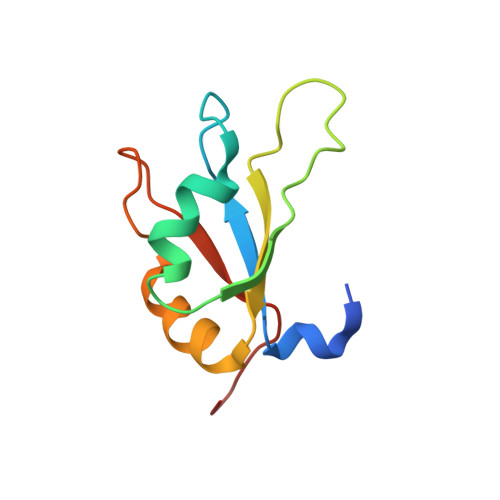
Human spliceosome-associated factor 3, SART3, is a key factor in spliceosome recycling and engages with U6 small nuclear RNA (snRNA) to promote the formation of the U4/U6 small nuclear ribonucleoprotein complex. Unlike its counterpart U4/U6 snRNA-associated-splicing factor PRP24 (Prp24) from Saccharomyces cerevisiae, which uses four RNA recognition motifs (RRMs) for the U6 snRNA interaction, SART3 has two RRMs at its C terminus. Here, we demonstrate that SART3 binds U6 snRNA as a dimer, and four RRM subunits recognize the asymmetric bulge of U6 snRNA. SART3 RRMs adopt a tandem βαββαβ motif of the canonical RRM fold to interact with the U6 bulge region via a conserved electropositive surface. We identified the cognate U6 elements that specifically bind SART3 RRM1, which is distinct from the Prp24-U6 interactions in yeast. Our findings suggest a divergent RRM binding mechanism for U6 snRNA recognition during spliceosome assembly and recycling.
- Department of Agricultural Biotechnology, Seoul National University, Seoul, Korea.
Organizational Affiliation: