7WTB | pdb_00007wtb

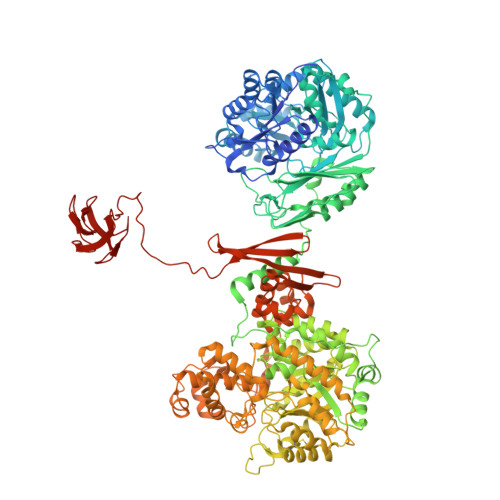
Cryo-EM structure of human pyruvate carboxylase with acetyl-CoA


Experimental Data Snapshot

  • Method: ELECTRON MICROSCOPY
  • Resolution: 3.70 Å
  • Aggregation State: PARTICLE 
  • Reconstruction Method: SINGLE PARTICLE 

wwPDB Validation 3D Report Full Report

Validation slider image for 7WTB

This is version 1.1 of the entry. See complete history

Literature

Mechanistic insight into allosteric activation of human pyruvate carboxylase by acetyl-CoA.

Chai, P.Lan, P.Li, S.Yao, D.Chang, C.Cao, M.Shen, Y.Ge, S.Wu, J.Lei, M.Fan, X.

(2022) Mol Cell 82: 4116-4130.e6

  • DOI: https://doi.org/10.1016/j.molcel.2022.09.033
  • Primary Citation Related Structures: 
    7WTA, 7WTB, 7WTC, 7WTD, 7WTE

  • PubMed Abstract: 

    Pyruvate carboxylase (PC) catalyzes the two-step carboxylation of pyruvate to produce oxaloacetate, playing a key role in the maintenance of metabolic homeostasis in cells. Given its involvement in multiple diseases, PC has been regarded as a potential therapeutic target for obesity, diabetes, and cancer. Albeit acetyl-CoA has been recognized as the allosteric regulator of PC for over 60 years, the underlying mechanism of how acetyl-CoA induces PC activation remains enigmatic. Herein, by using time-resolved cryo-electron microscopy, we have captured the snapshots of PC transitional states during its catalytic cycle. These structures and the biochemical studies reveal that acetyl-CoA stabilizes PC in a catalytically competent conformation, which triggers a cascade of events, including ATP hydrolysis and the long-distance communication between the two reactive centers. These findings provide an integrated picture for PC catalysis and unveil the unique allosteric mechanism of acetyl-CoA in an essential biochemical reaction in all kingdoms of life.


  • Organizational Affiliation
    • Department of Ophthalmology, Ninth People's Hospital, Shanghai Jiao Tong University School of Medicine, Shanghai 200011, People's Republic of China; Shanghai Key Laboratory of Orbital Diseases and Ocular Oncology, Shanghai 200011, People's Republic of China.

Macromolecule Content 

  • Total Structure Weight: 522.74 kDa 
  • Atom Count: 28,480 
  • Modeled Residue Count: 3,661 
  • Deposited Residue Count: 4,712 
  • Unique protein chains: 1

Macromolecules

Find similar proteins by:|  3D Structure
Entity ID: 1
MoleculeChains  Sequence LengthOrganismDetailsImage
Pyruvate carboxylase, mitochondrial
A, B, C, D
1,178Homo sapiensMutation(s): 0 
EC: 6.4.1.1
UniProt & NIH Common Fund Data Resources
Find proteins for P11498 (Homo sapiens)
Explore P11498 
Go to UniProtKB:  P11498
PHAROS:  P11498
GTEx:  ENSG00000173599 
Entity Groups
Sequence Clusters30% Identity50% Identity70% Identity90% Identity95% Identity100% Identity
UniProt GroupP11498
Sequence Annotations
Expand
Reference Sequence

Small Molecules

Ligands 3 Unique
IDChains Name / Formula / InChI Key2D Diagram3D Interactions
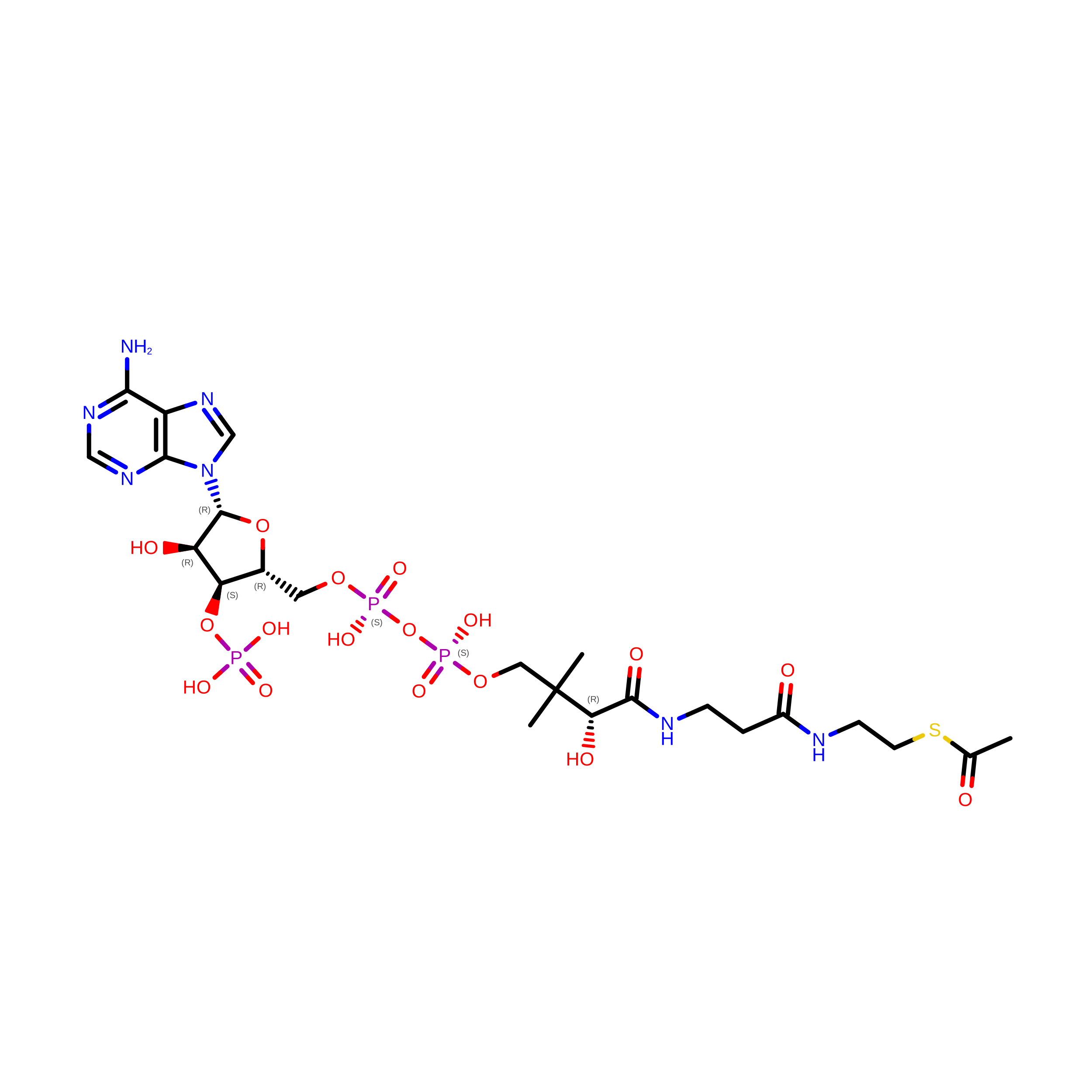
ACO
(Subject of Investigation/LOI)

Query on ACO


Download:Ideal Coordinates CCD File
G [auth A],
H [auth B]
ACETYL COENZYME *A
C23 H38 N7 O17 P3 S
ZSLZBFCDCINBPY-ZSJPKINUSA-N
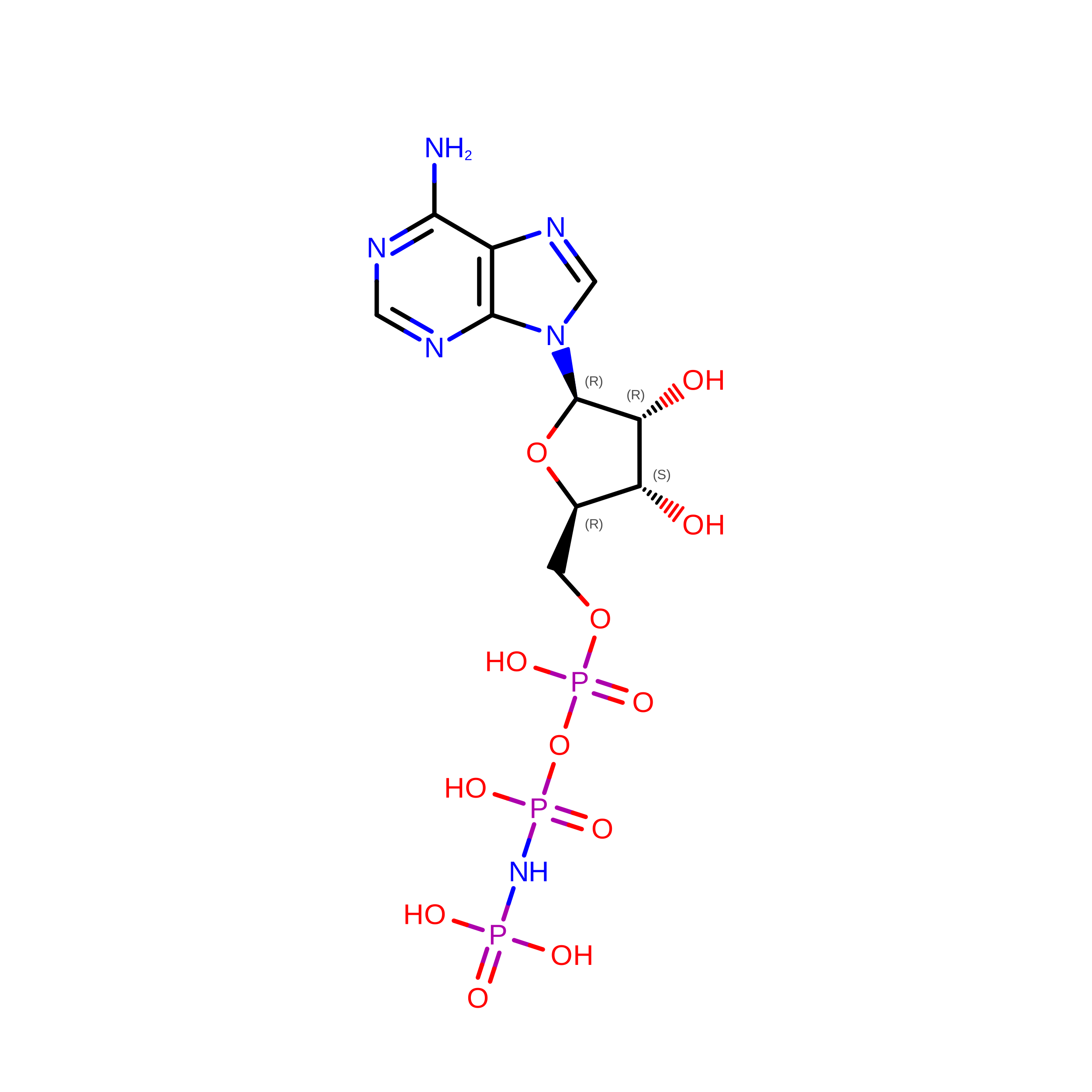
ANP

Query on ANP


Download:Ideal Coordinates CCD File
F [auth A],
J [auth B]
PHOSPHOAMINOPHOSPHONIC ACID-ADENYLATE ESTER
C10 H17 N6 O12 P3
PVKSNHVPLWYQGJ-KQYNXXCUSA-N
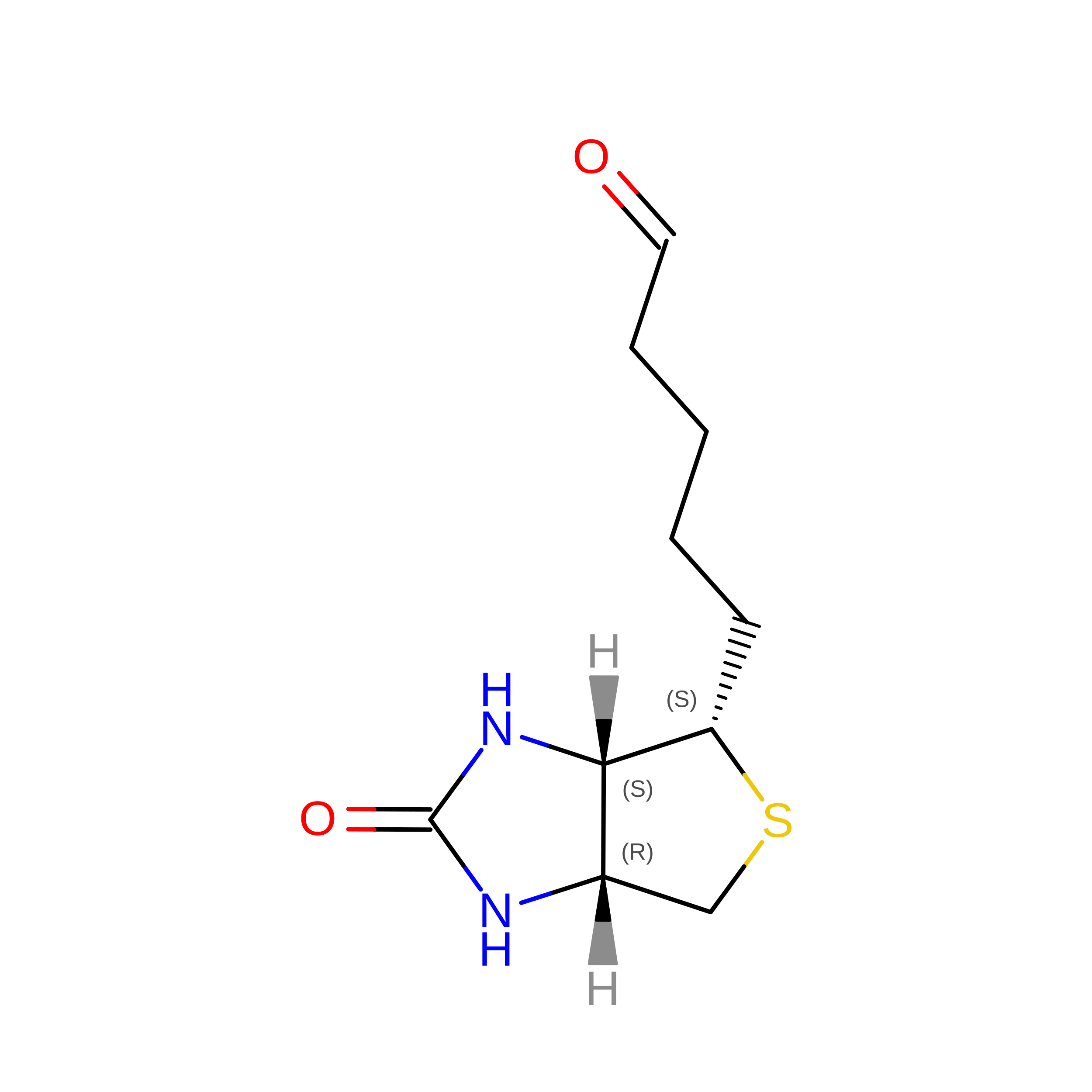
BTI

Query on BTI


Download:Ideal Coordinates CCD File
E [auth A],
I [auth B],
K [auth C],
L [auth D]
5-(HEXAHYDRO-2-OXO-1H-THIENO[3,4-D]IMIDAZOL-6-YL)PENTANAL
C10 H16 N2 O2 S
ARDNWGMSCXSPBF-CIUDSAMLSA-N

Experimental Data & Validation

Experimental Data

  • Method: ELECTRON MICROSCOPY
  • Resolution: 3.70 Å
  • Aggregation State: PARTICLE 
  • Reconstruction Method: SINGLE PARTICLE 

Structure Validation

View Full Validation Report


Entry History 

& Funding Information

Deposition Data


Funding OrganizationLocationGrant Number
National Natural Science Foundation of China (NSFC)China--

Revision History  (Full details and data files)

  • Version 1.0: 2022-11-09
    Type: Initial release
  • Version 1.1: 2022-11-16
    Changes: Database references