7W72 | pdb_00007w72

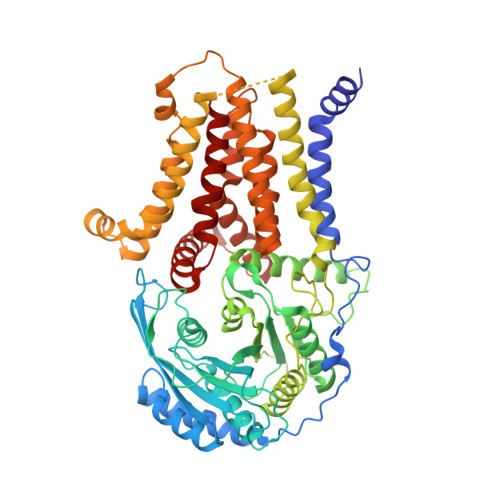
Structure of a human glycosylphosphatidylinositol (GPI) transamidase


Experimental Data Snapshot

  • Method: ELECTRON MICROSCOPY
  • Resolution: 3.10 Å
  • Aggregation State: PARTICLE 
  • Reconstruction Method: SINGLE PARTICLE 

wwPDB Validation 3D Report Full Report

Validation slider image for 7W72

This is version 1.4 of the entry. See complete history

Literature

Structure of human glycosylphosphatidylinositol transamidase.

Zhang, H.Su, J.Li, B.Gao, Y.Liu, M.He, L.Xu, H.Dong, Y.Zhang, X.C.Zhao, Y.

(2022) Nat Struct Mol Biol 29: 203-209

  • DOI: https://doi.org/10.1038/s41594-022-00726-6
  • Primary Citation Related Structures: 
    7W72

  • PubMed Abstract: 

    Glycosylphosphatidylinositol (GPI) molecules are complex glycophospholipids and serve as membrane anchors for tethering many proteins to the cell surface. Attaching GPI to the protein in the endoplasmic reticulum (ER) is catalyzed by the transmembrane GPI transamidase (GPIT) complex, which is essential for maturation of the GPI-anchored proteins. The GPIT complex is known to be composed of five subunits: PIGK, PIGU, PIGT, PIGS and GPAA1. Here, we determined the structure of the human GPIT complex at a resolution of 3.1 Å using single-particle cryo-EM, elucidating its overall assembly. The PIGK subunit functions as the catalytic component, in which we identified a C206-H164-N58 triad that is critical for the transamination reaction. Transmembrane helices constitute a widely opened cleft, which is located underneath PIGK, serving as a GPI substrate-binding site. The ubiquitin E3 ligase RNF121 is visualized at the back of the complex and probably serves as a quality control factor for the GPIT complex.


  • Organizational Affiliation
    • National Laboratory of Biomacromolecules, CAS Center for Excellence in Biomacromolecules, Institute of Biophysics, Chinese Academy of Sciences, Beijing, China.

Macromolecule Content 

  • Total Structure Weight: 282.62 kDa 
  • Atom Count: 19,188 
  • Modeled Residue Count: 2,398 
  • Deposited Residue Count: 2,496 
  • Unique protein chains: 5

Macromolecules

Find similar proteins by:|  3D Structure
Entity ID: 1
MoleculeChains  Sequence LengthOrganismDetailsImage
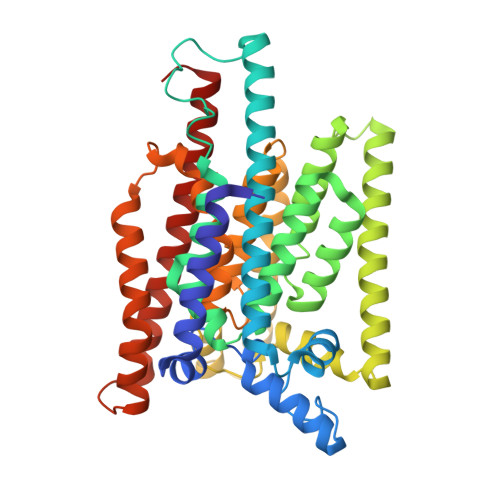
Phosphatidylinositol glycan anchor biosynthesis class U proteinA [auth U]420Homo sapiensMutation(s): 0 
Gene Names: PIGU
Membrane Entity: Yes 
UniProt & NIH Common Fund Data Resources
Find proteins for Q9H490 (Homo sapiens)
Explore Q9H490 
Go to UniProtKB:  Q9H490
PHAROS:  Q9H490
GTEx:  ENSG00000101464 
Entity Groups
Sequence Clusters30% Identity50% Identity70% Identity90% Identity95% Identity100% Identity
UniProt GroupQ9H490
Sequence Annotations
Expand
Reference Sequence
Find similar proteins by:|  3D Structure
Entity ID: 2
MoleculeChains  Sequence LengthOrganismDetailsImage
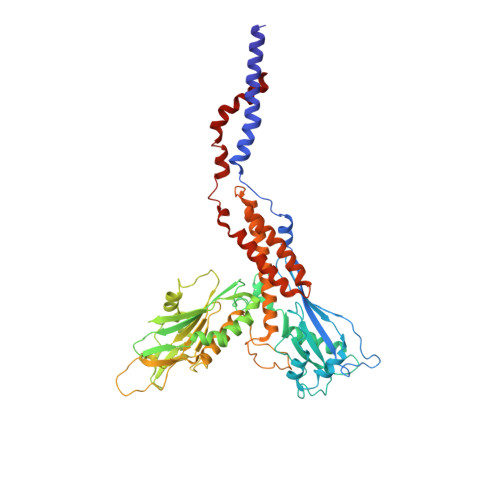
GPI transamidase component PIG-SB [auth S]533Homo sapiensMutation(s): 0 
Gene Names: PIGS
Membrane Entity: Yes 
UniProt & NIH Common Fund Data Resources
Find proteins for Q96S52 (Homo sapiens)
Explore Q96S52 
Go to UniProtKB:  Q96S52
PHAROS:  Q96S52
GTEx:  ENSG00000087111 
Entity Groups
Sequence Clusters30% Identity50% Identity70% Identity90% Identity95% Identity100% Identity
UniProt GroupQ96S52
Glycosylation
Glycosylation Sites: 1Go to GlyGen: Q96S52-1
Sequence Annotations
Expand
Reference Sequence
Find similar proteins by:|  3D Structure
Entity ID: 3
MoleculeChains  Sequence LengthOrganismDetailsImage
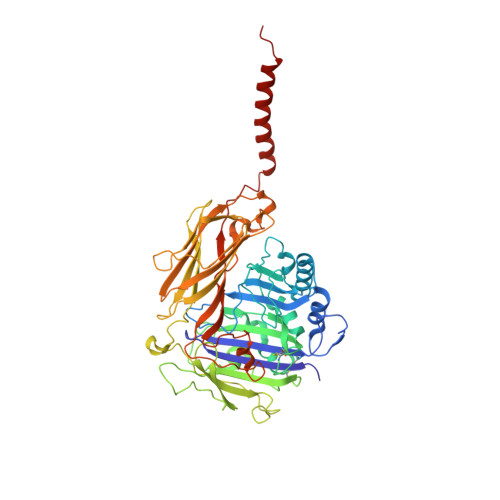
GPI transamidase component PIG-TC [auth T]527Homo sapiensMutation(s): 0 
Gene Names: PIGT
Membrane Entity: Yes 
UniProt & NIH Common Fund Data Resources
Find proteins for Q969N2 (Homo sapiens)
Explore Q969N2 
Go to UniProtKB:  Q969N2
PHAROS:  Q969N2
GTEx:  ENSG00000124155 
Entity Groups
Sequence Clusters30% Identity50% Identity70% Identity90% Identity95% Identity100% Identity
UniProt GroupQ969N2
Glycosylation
Glycosylation Sites: 1Go to GlyGen: Q969N2-1
Sequence Annotations
Expand
Reference Sequence
Find similar proteins by:|  3D Structure
Entity ID: 4
MoleculeChains  Sequence LengthOrganismDetailsImage
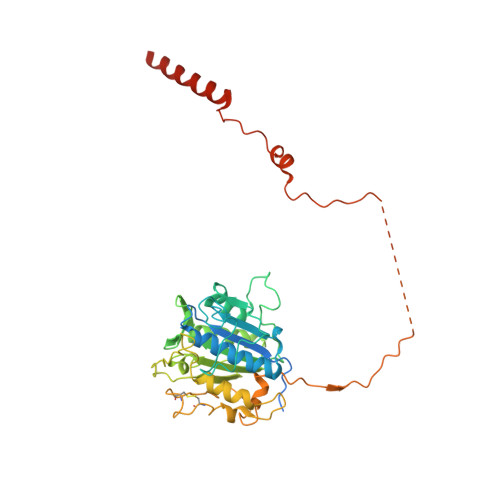
GPI-anchor transamidaseD [auth K]395Homo sapiensMutation(s): 0 
Gene Names: PIGK
EC: 3 (PDB Primary Data), 2.6.1 (UniProt)
Membrane Entity: Yes 
UniProt & NIH Common Fund Data Resources
Find proteins for Q92643 (Homo sapiens)
Explore Q92643 
Go to UniProtKB:  Q92643
PHAROS:  Q92643
GTEx:  ENSG00000142892 
Entity Groups
Sequence Clusters30% Identity50% Identity70% Identity90% Identity95% Identity100% Identity
UniProt GroupQ92643
Sequence Annotations
Expand
Reference Sequence
Find similar proteins by:|  3D Structure
Entity ID: 5
MoleculeChains  Sequence LengthOrganismDetailsImage
Glycosylphosphatidylinositol anchor attachment 1 proteinE [auth A]621Homo sapiensMutation(s): 0 
Gene Names: GPAA1GAA1
Membrane Entity: Yes 
UniProt & NIH Common Fund Data Resources
Find proteins for O43292 (Homo sapiens)
Explore O43292 
Go to UniProtKB:  O43292
PHAROS:  O43292
GTEx:  ENSG00000197858 
Entity Groups
Sequence Clusters30% Identity50% Identity70% Identity90% Identity95% Identity100% Identity
UniProt GroupO43292
Glycosylation
Glycosylation Sites: 1Go to GlyGen: O43292-1
Sequence Annotations
Expand
Reference Sequence

Oligosaccharides

Help  
Entity ID: 6
MoleculeChains Length2D Diagram GlycosylationD Interactions
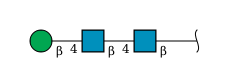
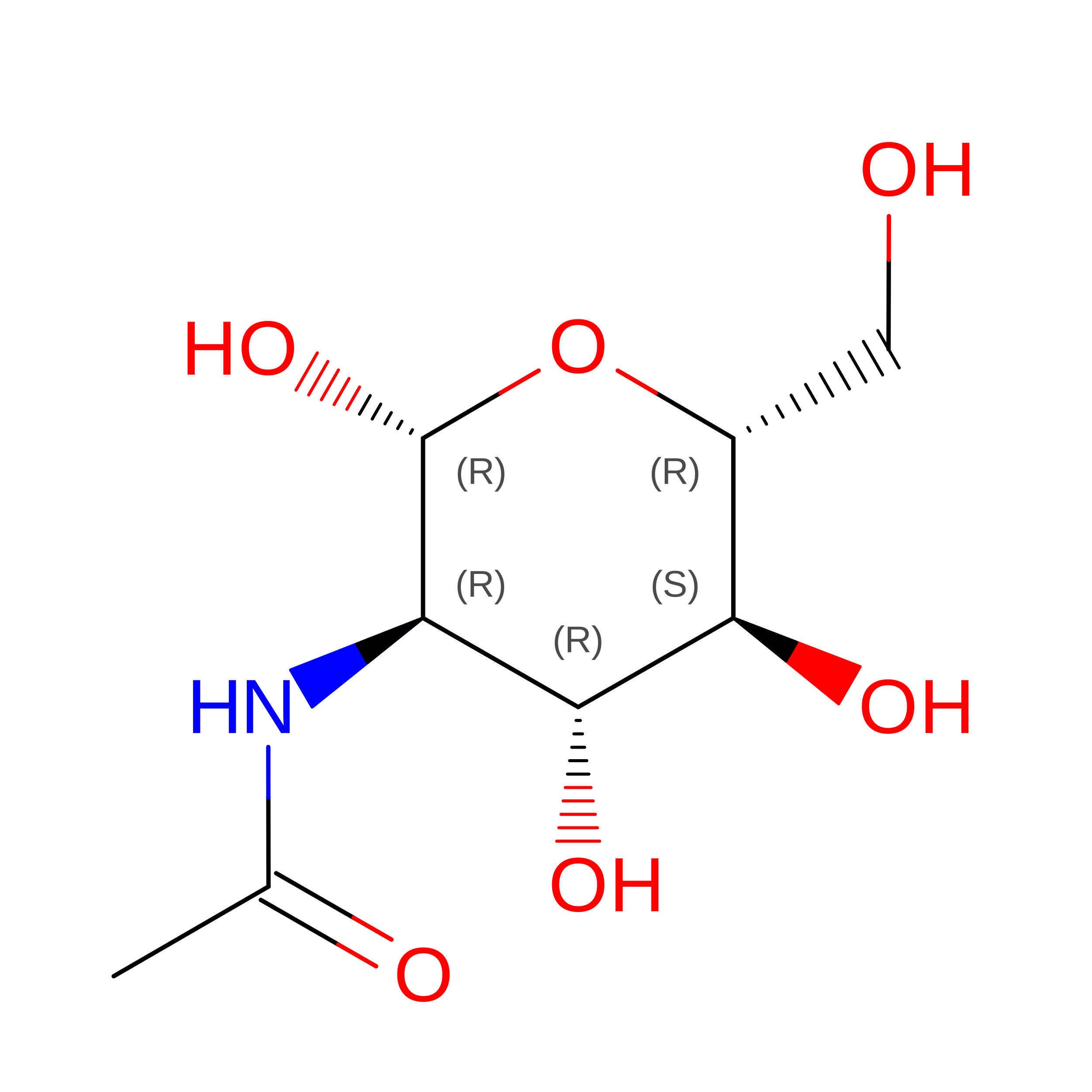
beta-D-mannopyranose-(1-4)-2-acetamido-2-deoxy-beta-D-glucopyranose-(1-4)-2-acetamido-2-deoxy-beta-D-glucopyranoseF [auth N]3N-Glycosylation
Glycosylation Resources
GlyTouCan: G15407YE
GlyCosmos: G15407YE
GlyGen: G15407YE

Small Molecules

Experimental Data & Validation

Experimental Data

  • Method: ELECTRON MICROSCOPY
  • Resolution: 3.10 Å
  • Aggregation State: PARTICLE 
  • Reconstruction Method: SINGLE PARTICLE 
EM Software:
TaskSoftware PackageVersion
MODEL REFINEMENTPHENIX

Structure Validation

View Full Validation Report


Entry History 

& Funding Information

Deposition Data


Funding OrganizationLocationGrant Number
Chinese Academy of SciencesChinaXDB37030304
Chinese Academy of SciencesChinaXDB37030301

Revision History  (Full details and data files)

  • Version 1.0: 2022-02-16
    Type: Initial release
  • Version 1.1: 2022-03-02
    Changes: Database references
  • Version 1.2: 2022-03-30
    Changes: Database references
  • Version 1.3: 2024-11-20
    Changes: Data collection, Structure summary
  • Version 1.4: 2025-06-25
    Changes: Data collection