Download Mendeley
Effects of altered backbone composition on the folding kinetics and mechanism of an ultrafast-folding protein.
Santhouse, J.R., Leung, J.M.G., Chong, L.T., Horne, W.S.(2024) Chem Sci 15: 675-682
- PubMed: 38179541 Search on PubMedSearch on PubMed Central
- DOI: https://doi.org/10.1039/d3sc03976e
- Primary Citation Related Structures:
7URJ - PubMed Abstract:
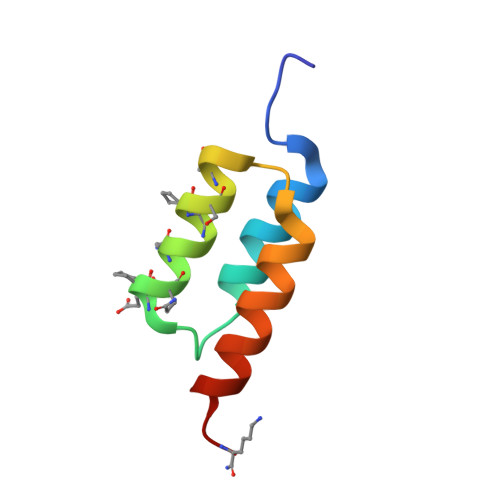
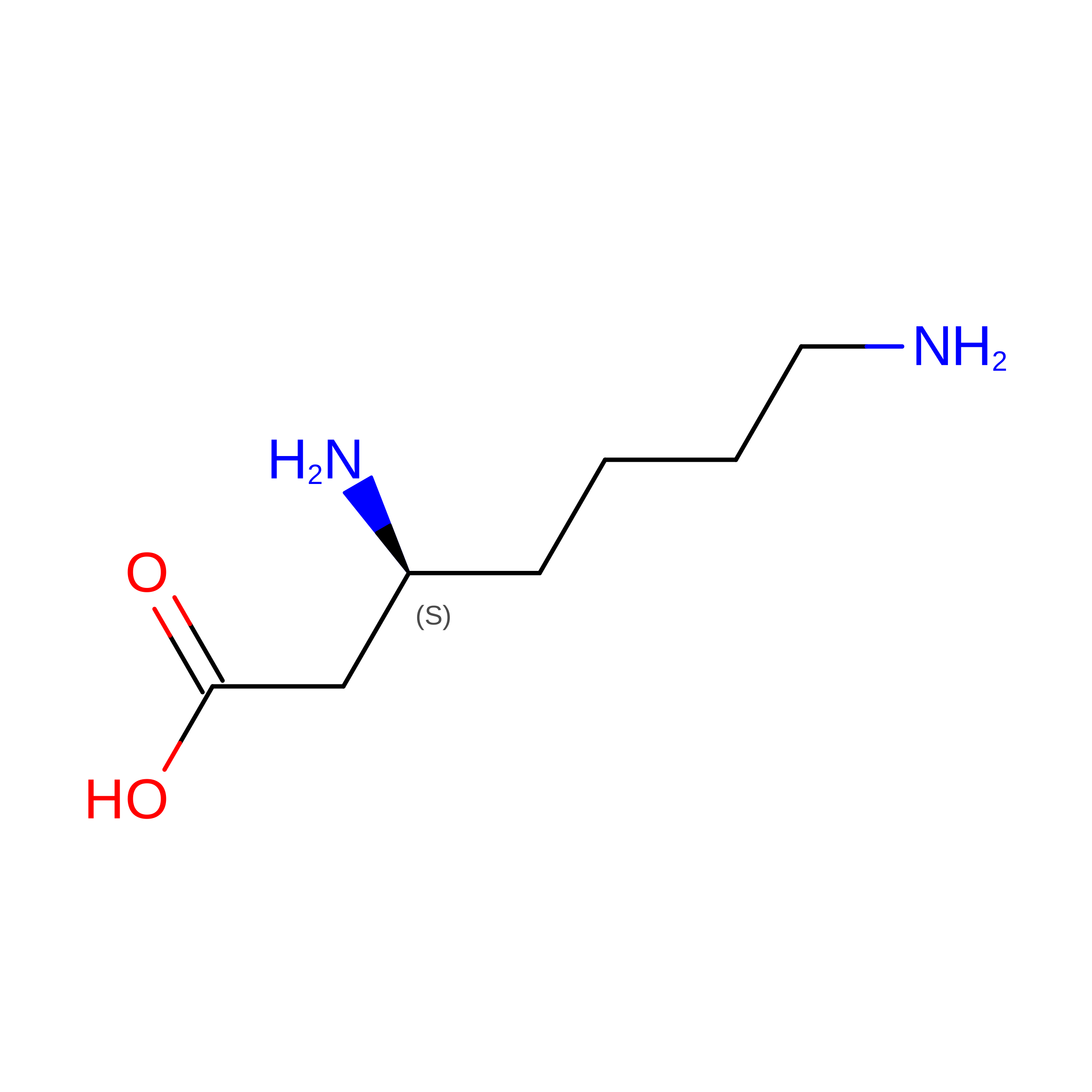
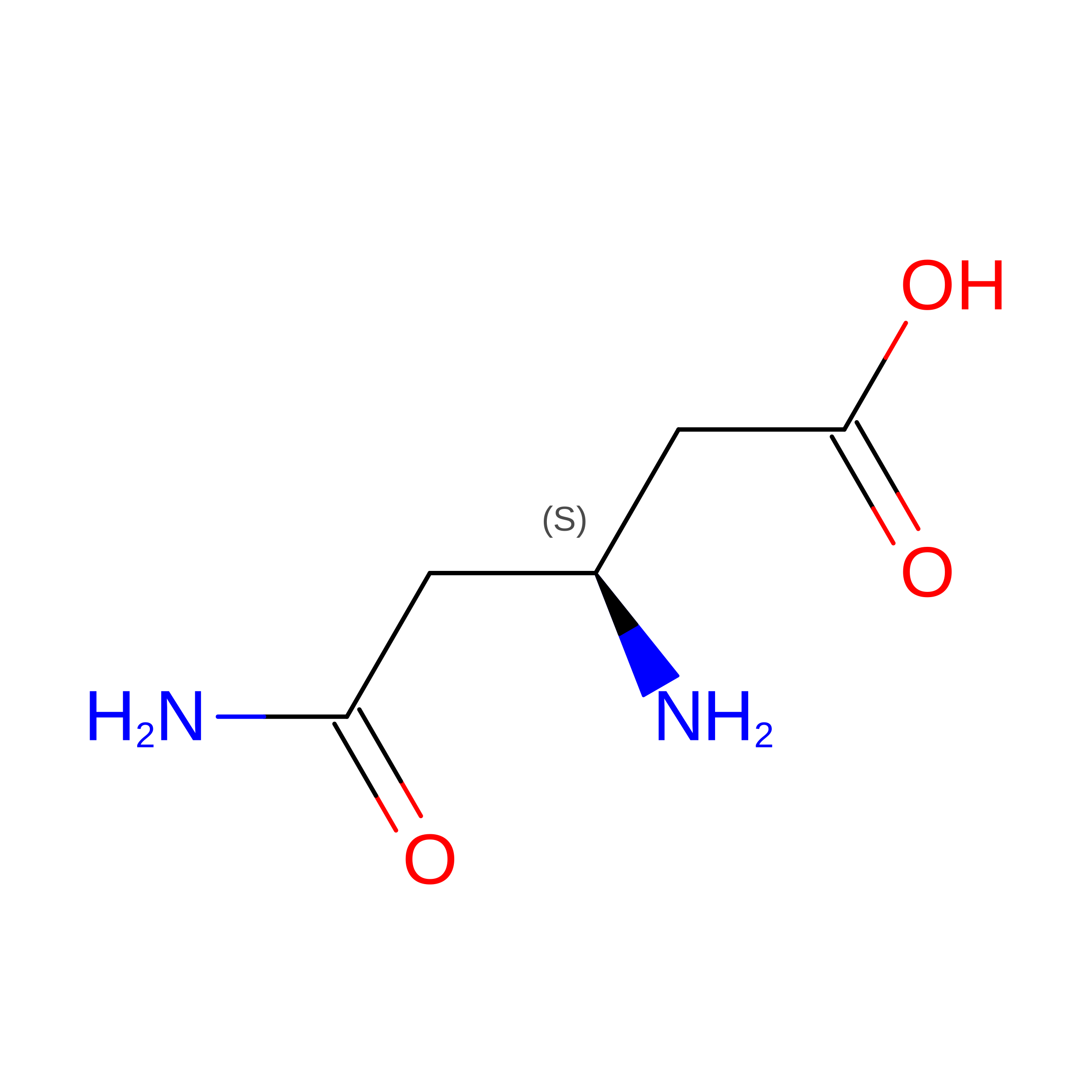
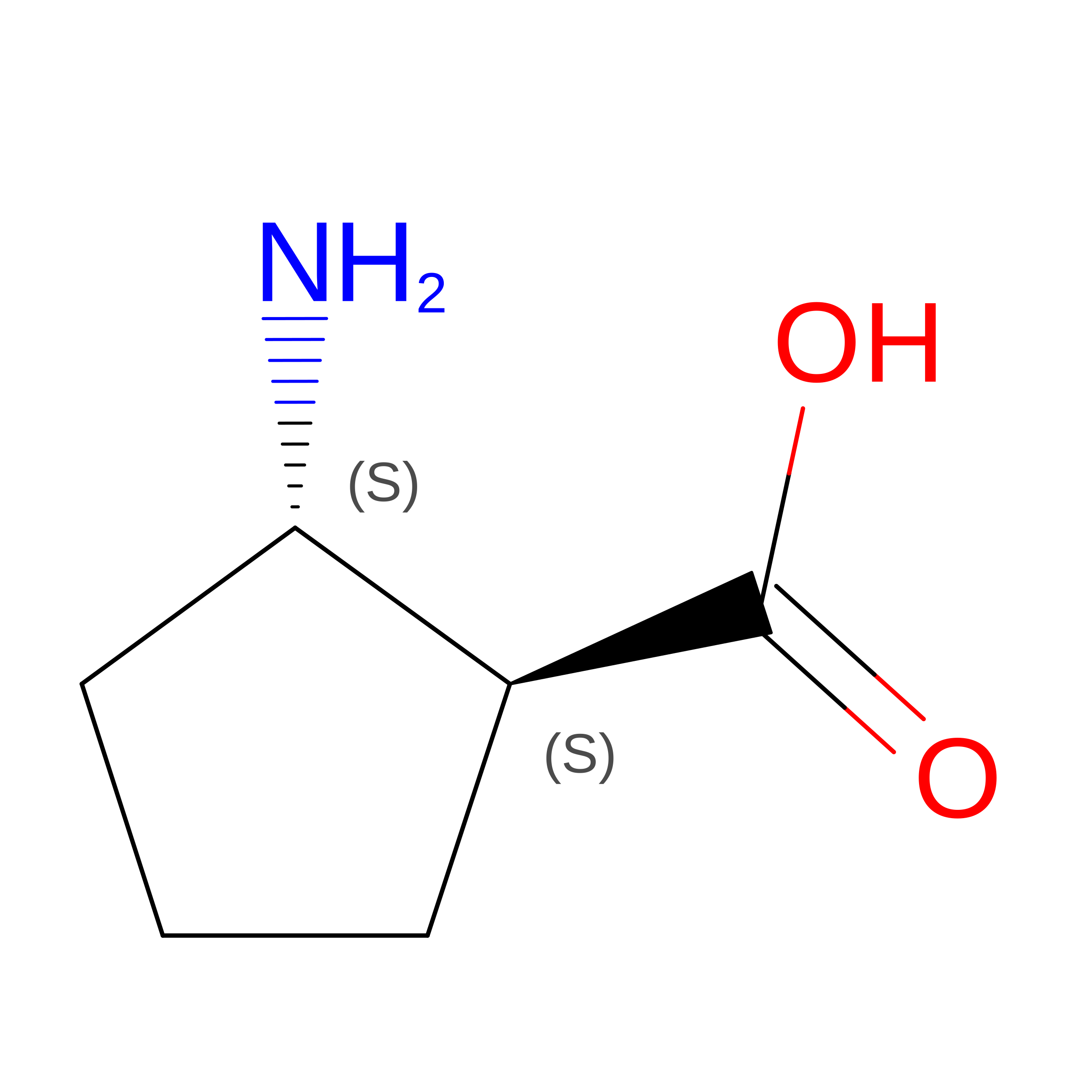
Sequence-encoded protein folding is a ubiquitous biological process that has been successfully engineered in a range of oligomeric molecules with artificial backbone chemical connectivity. A remarkable aspect of protein folding is the contrast between the rapid rates at which most sequences in nature fold and the vast number of conformational states possible in an unfolded chain with hundreds of rotatable bonds. Research efforts spanning several decades have sought to elucidate the fundamental chemical principles that dictate the speed and mechanism of natural protein folding. In contrast, little is known about how protein mimetic entities transition between an unfolded and folded state. Here, we report effects of altered backbone connectivity on the folding kinetics and mechanism of the B domain of Staphylococcal protein A (BdpA), an ultrafast-folding sequence. A combination of experimental biophysical analysis and atomistic molecular dynamics simulations performed on the prototype protein and several heterogeneous-backbone variants reveal the interplay among backbone flexibility, folding rates, and structural details of the transition state ensemble. Collectively, these findings suggest a significant degree of plasticity in the mechanisms that can give rise to ultrafast folding in the BdpA sequence and provide atomic level insights into how protein mimetic chains adopt an ordered folded state.
- Department of Chemistry, University of Pittsburgh Pittsburgh PA 15260 USA ltchong@pitt.edu horne@pitt.edu.
Organizational Affiliation: