7UMM | pdb_00007umm

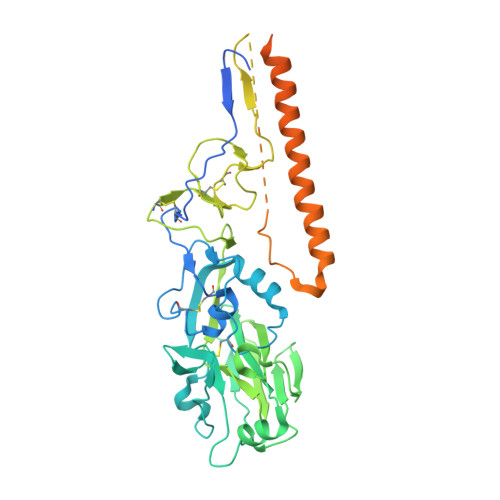
H1 Solomon Islands 2006 hemagglutinin in complex with Ab109


Experimental Data Snapshot

  • Method: ELECTRON MICROSCOPY
  • Resolution: 3.36 Å
  • Aggregation State: PARTICLE 
  • Reconstruction Method: SINGLE PARTICLE 

wwPDB Validation 3D Report Full Report

Validation slider image for 7UMM

This is version 1.2 of the entry. See complete history

Literature

An epitope-enriched immunogen expands responses to a conserved viral site.

Caradonna, T.M.Ronsard, L.Yousif, A.S.Windsor, I.W.Hecht, R.Bracamonte-Moreno, T.Roffler, A.A.Maron, M.J.Maurer, D.P.Feldman, J.Marchiori, E.Barnes, R.M.Rohrer, D.Lonberg, N.Oguin 3rd, T.H.Sempowski, G.D.Kepler, T.B.Kuraoka, M.Lingwood, D.Schmidt, A.G.

(2022) Cell Rep 41: 111628-111628

  • DOI: https://doi.org/10.1016/j.celrep.2022.111628
  • Primary Citation Related Structures: 
    7UMM

  • PubMed Abstract: 

    Pathogens evade host humoral responses by accumulating mutations in surface antigens. While variable, there are conserved regions that cannot mutate without compromising fitness. Antibodies targeting these conserved epitopes are often broadly protective but remain minor components of the repertoire. Rational immunogen design leverages a structural understanding of viral antigens to modulate humoral responses to favor these responses. Here, we report an epitope-enriched immunogen presenting a higher copy number of the influenza hemagglutinin (HA) receptor-binding site (RBS) epitope relative to other B cell epitopes. Immunization in a partially humanized murine model imprinted with an H1 influenza shows H1-specific serum and >99% H1-specific B cells being RBS-directed. Single B cell analyses show a genetically restricted response that structural analysis defines as RBS-directed antibodies engaging the RBS with germline-encoded contacts. These data show how epitope enrichment expands B cell responses toward conserved epitopes and advances immunogen design approaches for next-generation viral vaccines.


  • Organizational Affiliation
    • Ragon Institute of MGH, MIT and Harvard, Cambridge, MA 02139, USA.

Macromolecule Content 

  • Total Structure Weight: 319.65 kDa 
  • Atom Count: 18,147 
  • Modeled Residue Count: 2,322 
  • Deposited Residue Count: 2,877 
  • Unique protein chains: 3

Macromolecules

Find similar proteins by:|  3D Structure
Entity ID: 1
MoleculeChains  Sequence LengthOrganismDetailsImage
Hemagglutinin
A, B, C
523Influenza A virus (A/Solomon Islands/3/2006(H1N1))Mutation(s): 0 
Gene Names: HA
UniProt
Find proteins for A7Y8I1 (Influenza A virus)
Explore A7Y8I1 
Go to UniProtKB:  A7Y8I1
Entity Groups
Sequence Clusters30% Identity50% Identity70% Identity90% Identity95% Identity100% Identity
UniProt GroupA7Y8I1
Glycosylation
Glycosylation Sites: 3
Sequence Annotations
Expand
Reference Sequence
Find similar proteins by:|  3D Structure
Entity ID: 2
MoleculeChains  Sequence LengthOrganismDetailsImage
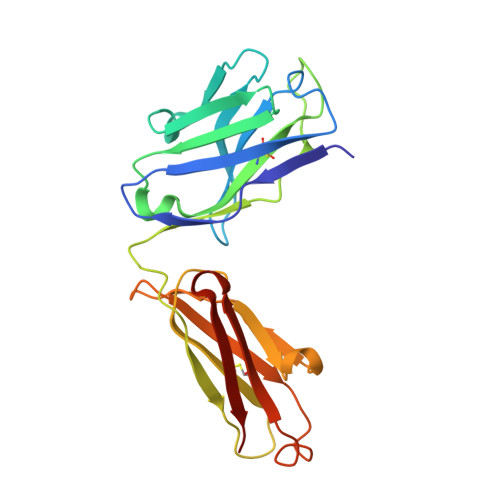
ab109 Fab heavy chainD [auth H],
E [auth I],
F [auth J]
218Mus musculusMutation(s): 0 
Find similar proteins by:|  3D Structure
Entity ID: 3
MoleculeChains  Sequence LengthOrganismDetailsImage
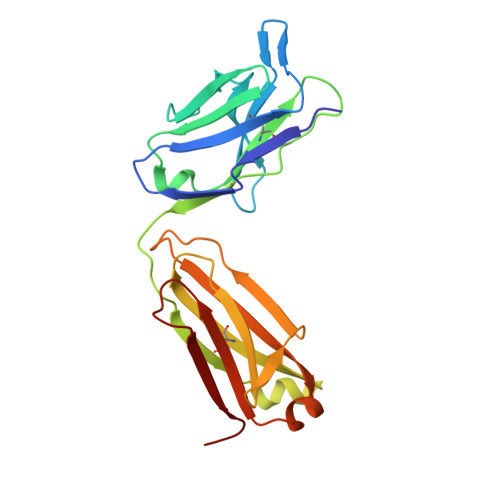
ab109 Fab light chainG [auth L],
H [auth M],
I [auth N]
218Mus musculusMutation(s): 0 

Oligosaccharides

Help  
Entity ID: 4
MoleculeChains Length2D Diagram GlycosylationD Interactions
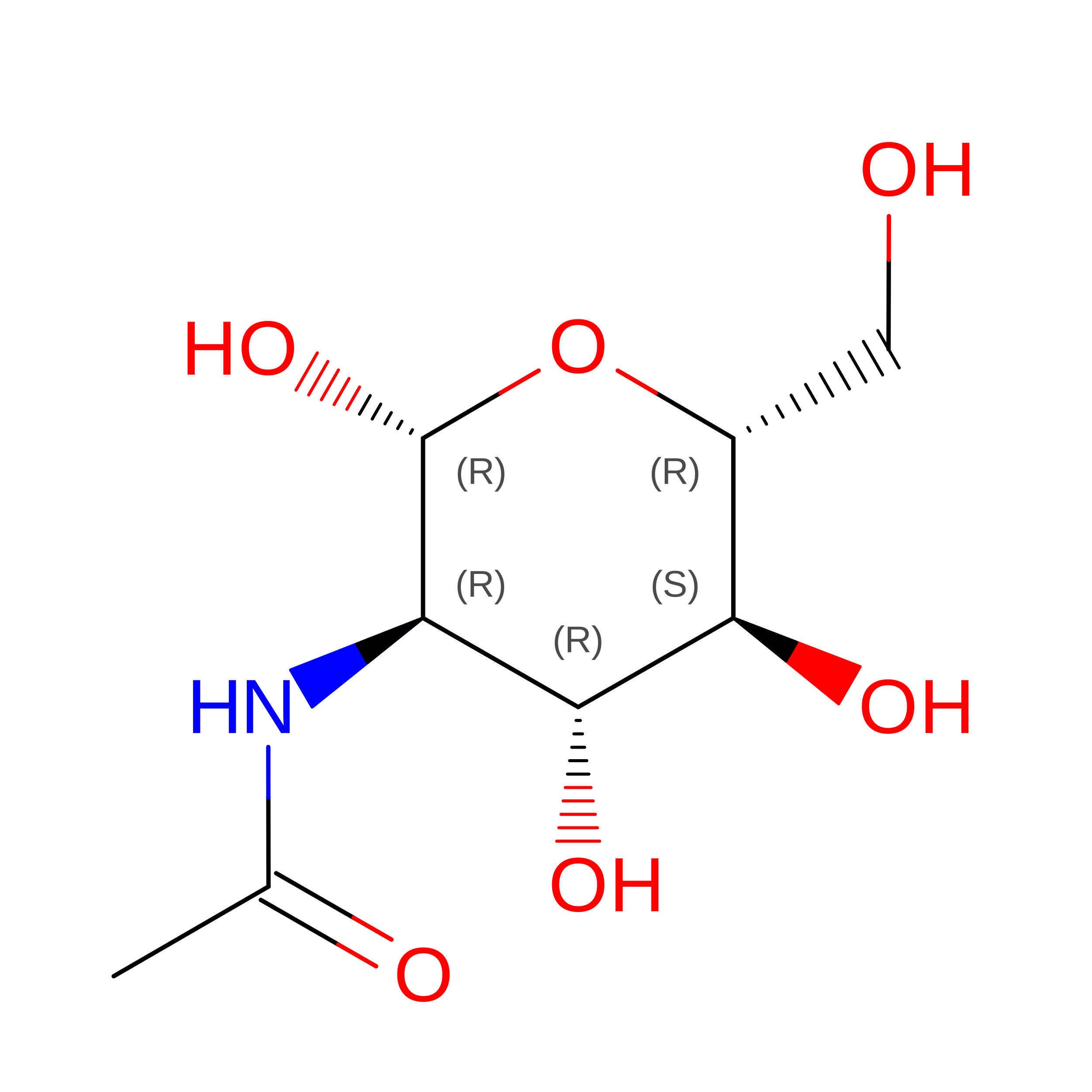
2-acetamido-2-deoxy-beta-D-glucopyranose-(1-4)-2-acetamido-2-deoxy-beta-D-glucopyranoseJ [auth D],
K [auth E],
L [auth F]
2N-Glycosylation
Glycosylation Resources
GlyTouCan: G42666HT
GlyCosmos: G42666HT
GlyGen: G42666HT

Experimental Data & Validation

Experimental Data

  • Method: ELECTRON MICROSCOPY
  • Resolution: 3.36 Å
  • Aggregation State: PARTICLE 
  • Reconstruction Method: SINGLE PARTICLE 
EM Software:
TaskSoftware PackageVersion
MODEL REFINEMENTPHENIX
RECONSTRUCTIONRELION3.1.2

Structure Validation

View Full Validation Report


Entry History 

& Funding Information

Deposition Data


Funding OrganizationLocationGrant Number
National Institutes of Health/National Institute Of Allergy and Infectious Diseases (NIH/NIAID)United StatesR01AI146779
National Institutes of Health/National Institute Of Allergy and Infectious Diseases (NIH/NIAID)United StatesP01AI089618

Revision History  (Full details and data files)

  • Version 1.0: 2022-11-23
    Type: Initial release
  • Version 1.1: 2024-10-23
    Changes: Data collection, Structure summary
  • Version 1.2: 2025-05-28
    Changes: Data collection