7RZL | pdb_00007rzl

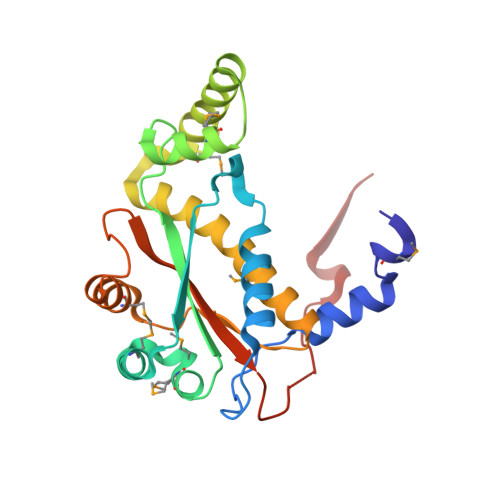
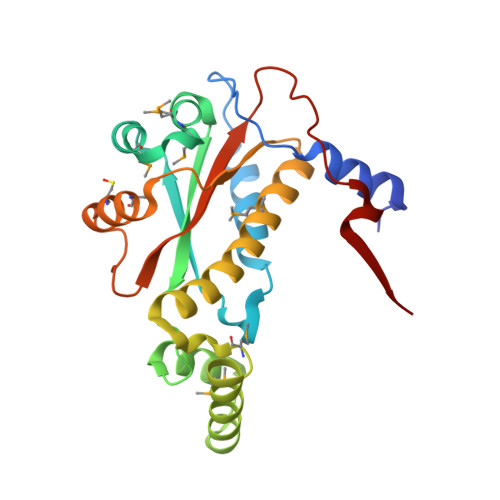
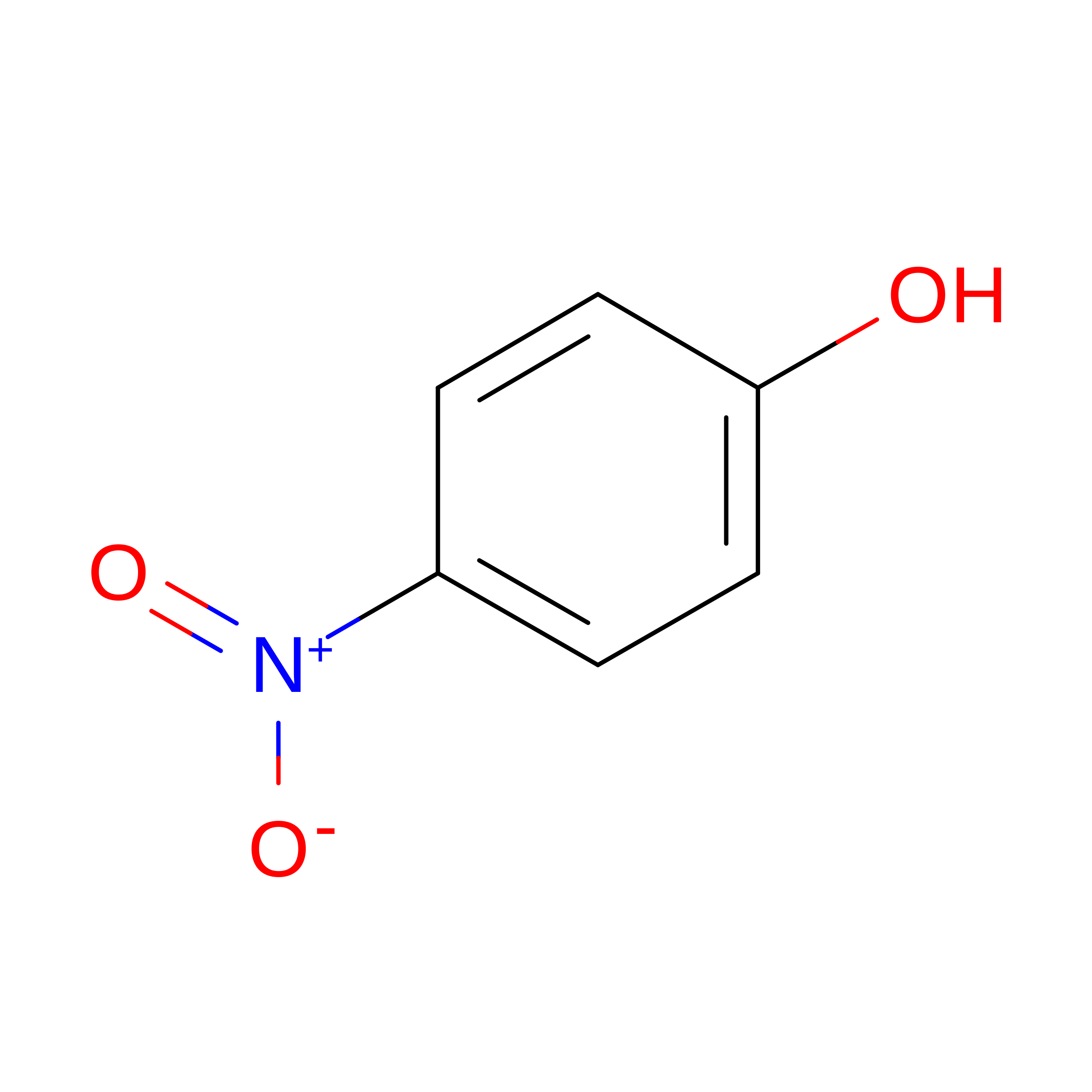
Crystal structure of putative NAD(P)H-flavin oxidoreductase from Haemophilus influenzae R2846 in complex with 4-nitrophenol


Experimental Data Snapshot

  • Method: X-RAY DIFFRACTION
  • Resolution: 1.45 Å
  • R-Value Free: 
    0.190 (Depositor), 0.190 (DCC) 
  • R-Value Work: 
    0.147 (Depositor), 0.147 (DCC) 
  • R-Value Observed: 
    0.150 (Depositor) 

wwPDB Validation 3D Report Full Report

Validation slider image for 7RZL

Ligand Structure Quality Assessment 


This is version 1.1 of the entry. See complete history

Literature

Functional and Structural Characterization of Diverse NfsB Chloramphenicol Reductase Enzymes from Human Pathogens.

Mullowney, M.W.Maltseva, N.I.Endres, M.Kim, Y.Joachimiak, A.Crofts, T.S.

(2022) Microbiol Spectr 10: e0013922-e0013922

  • DOI: https://doi.org/10.1128/spectrum.00139-22
  • Primary Citation Related Structures: 
    6WT2, 7LDQ, 7RZL, 7RZP, 7S14, 7S1A

  • PubMed Abstract: 

    Phylogenetically diverse bacteria can carry out chloramphenicol reduction, but only a single enzyme has been described that efficiently catalyzes this reaction, the NfsB nitroreductase from Haemophilus influenzae strain KW20. Here, we tested the hypothesis that some NfsB homologs function as housekeeping enzymes with the potential to become chloramphenicol resistance enzymes. We found that expression of H. influenzae and Neisseria spp. nfsB genes, but not Pasteurella multocida nfsB , allows Escherichia coli to resist chloramphenicol by nitroreduction. Mass spectrometric analysis confirmed that purified H. influenzae and N. meningitides NfsB enzymes reduce chloramphenicol to amino-chloramphenicol, while kinetics analyses supported the hypothesis that chloramphenicol reduction is a secondary activity. We combined these findings with atomic resolution structures of multiple chloramphenicol-reducing NfsB enzymes to identify potential key substrate-binding pocket residues. Our work expands the chloramphenicol reductase family and provides mechanistic insights into how a housekeeping enzyme might confer antibiotic resistance. IMPORTANCE The question of how new enzyme activities evolve is of great biological interest and, in the context of antibiotic resistance, of great medical importance. Here, we have tested the hypothesis that new antibiotic resistance mechanisms may evolve from promiscuous housekeeping enzymes that have antibiotic modification side activities. Previous work identified a Haemophilus influenzae nitroreductase housekeeping enzyme that has the ability to give Escherichia coli resistance to the antibiotic chloramphenicol by nitroreduction. Herein, we extend this work to enzymes from other Haemophilus and Neisseria strains to discover that expression of chloramphenicol reductases is sufficient to confer chloramphenicol resistance to Es. coli, confirming that chloramphenicol reductase activity is widespread across this nitroreductase family. By solving the high-resolution crystal structures of active chloramphenicol reductases, we identified residues important for this activity. Our work supports the hypothesis that housekeeping proteins possessing multiple activities can evolve into antibiotic resistance enzymes.


  • Organizational Affiliation
    • Department of Chemistry, Northwestern Universitygrid.16753.36, Evanston, Illinois, USA.

Macromolecule Content 

  • Total Structure Weight: 53.51 kDa 
  • Atom Count: 4,263 
  • Modeled Residue Count: 440 
  • Deposited Residue Count: 446 
  • Unique protein chains: 2

Macromolecules

Find similar proteins by:|  3D Structure
Entity ID: 1
MoleculeChains  Sequence LengthOrganismDetailsImage
NAD(P)H-dependent oxidoreductase223Haemophilus influenzae R2846Mutation(s): 0 
Gene Names: CH638_05260
EC: 1.6.5.2
Find similar proteins by:|  3D Structure
Entity ID: 2
MoleculeChains  Sequence LengthOrganismDetailsImage
NAD(P)H-dependent oxidoreductase223Haemophilus influenzae R2846Mutation(s): 0 
Gene Names: CH638_05260
EC: 1.6.5.2

Small Molecules

Ligands 5 Unique
IDChains Name / Formula / InChI Key2D Diagram3D Interactions
FMN
(Subject of Investigation/LOI)

Query on FMN


Download:Ideal Coordinates CCD File
F [auth A],
H [auth B]
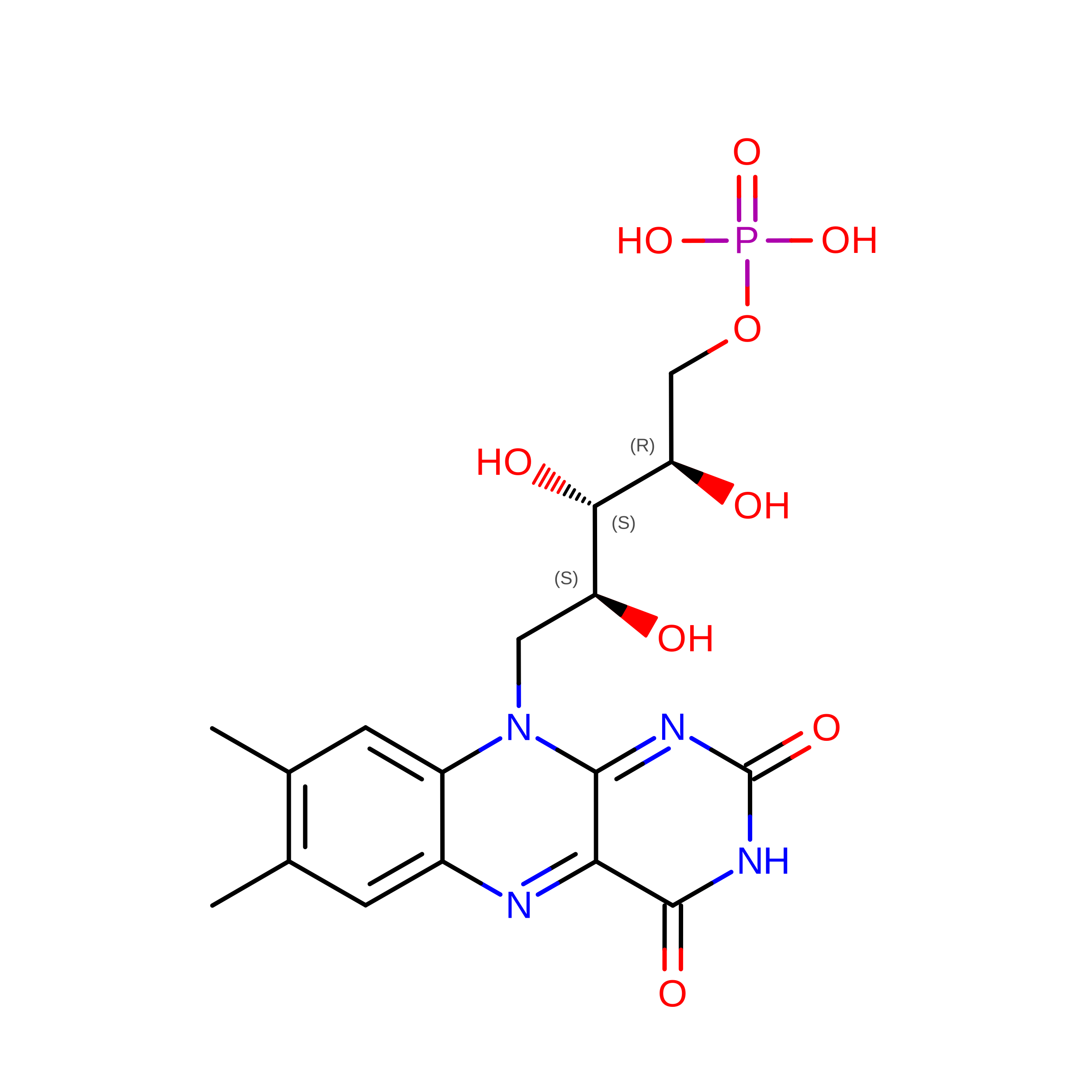
FLAVIN MONONUCLEOTIDE
C17 H21 N4 O9 P
FVTCRASFADXXNN-SCRDCRAPSA-N
EPE

Query on EPE


Download:Ideal Coordinates CCD File
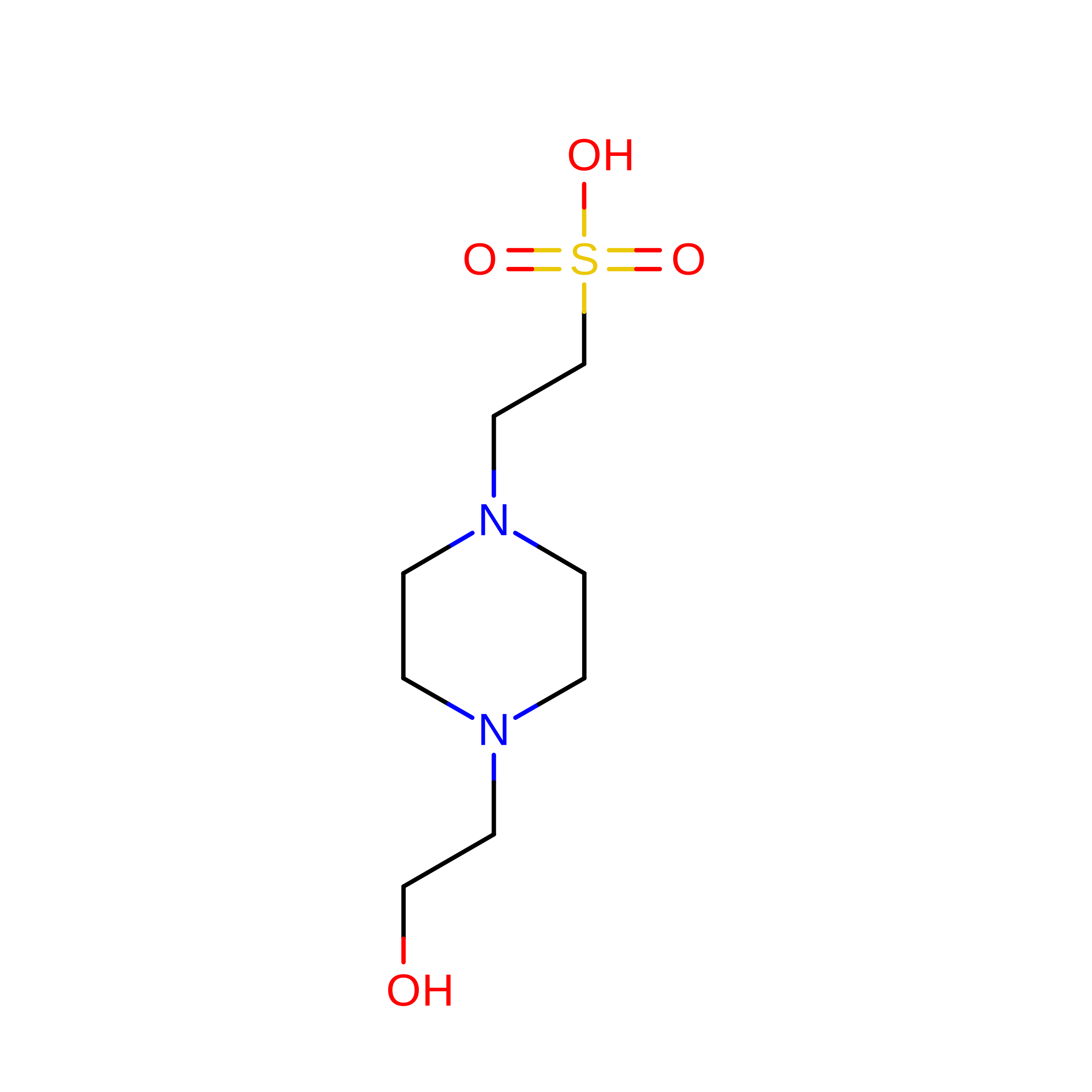
J [auth B]4-(2-HYDROXYETHYL)-1-PIPERAZINE ETHANESULFONIC ACID
C8 H18 N2 O4 S
JKMHFZQWWAIEOD-UHFFFAOYSA-N
NPO
(Subject of Investigation/LOI)

Query on NPO


Download:Ideal Coordinates CCD File
C [auth A],
I [auth B]
P-NITROPHENOL
C6 H5 N O3
BTJIUGUIPKRLHP-UHFFFAOYSA-N
EDO

Query on EDO


Download:Ideal Coordinates CCD File
D [auth A],
G [auth A]
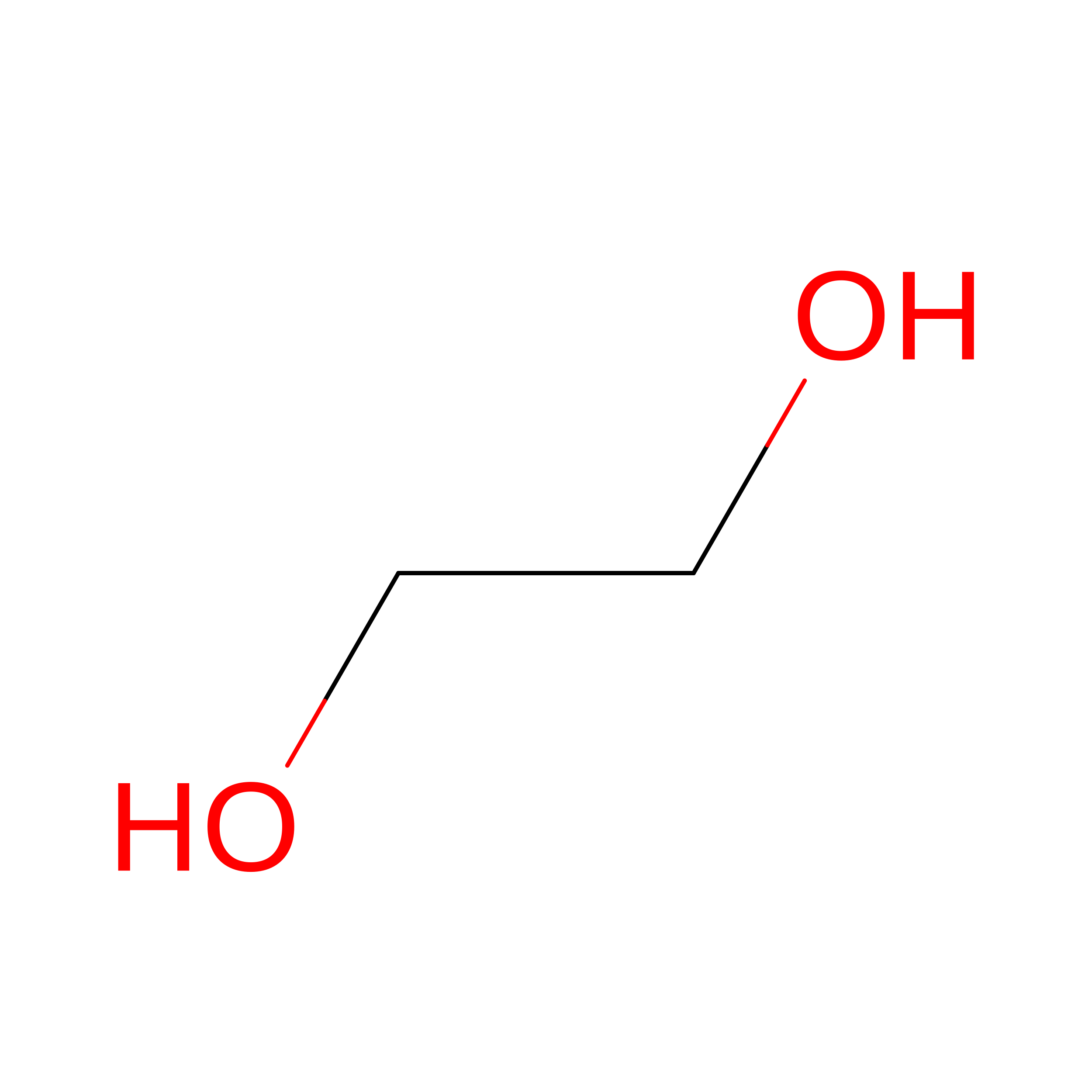
1,2-ETHANEDIOL
C2 H6 O2
LYCAIKOWRPUZTN-UHFFFAOYSA-N
FMT

Query on FMT


Download:Ideal Coordinates CCD File
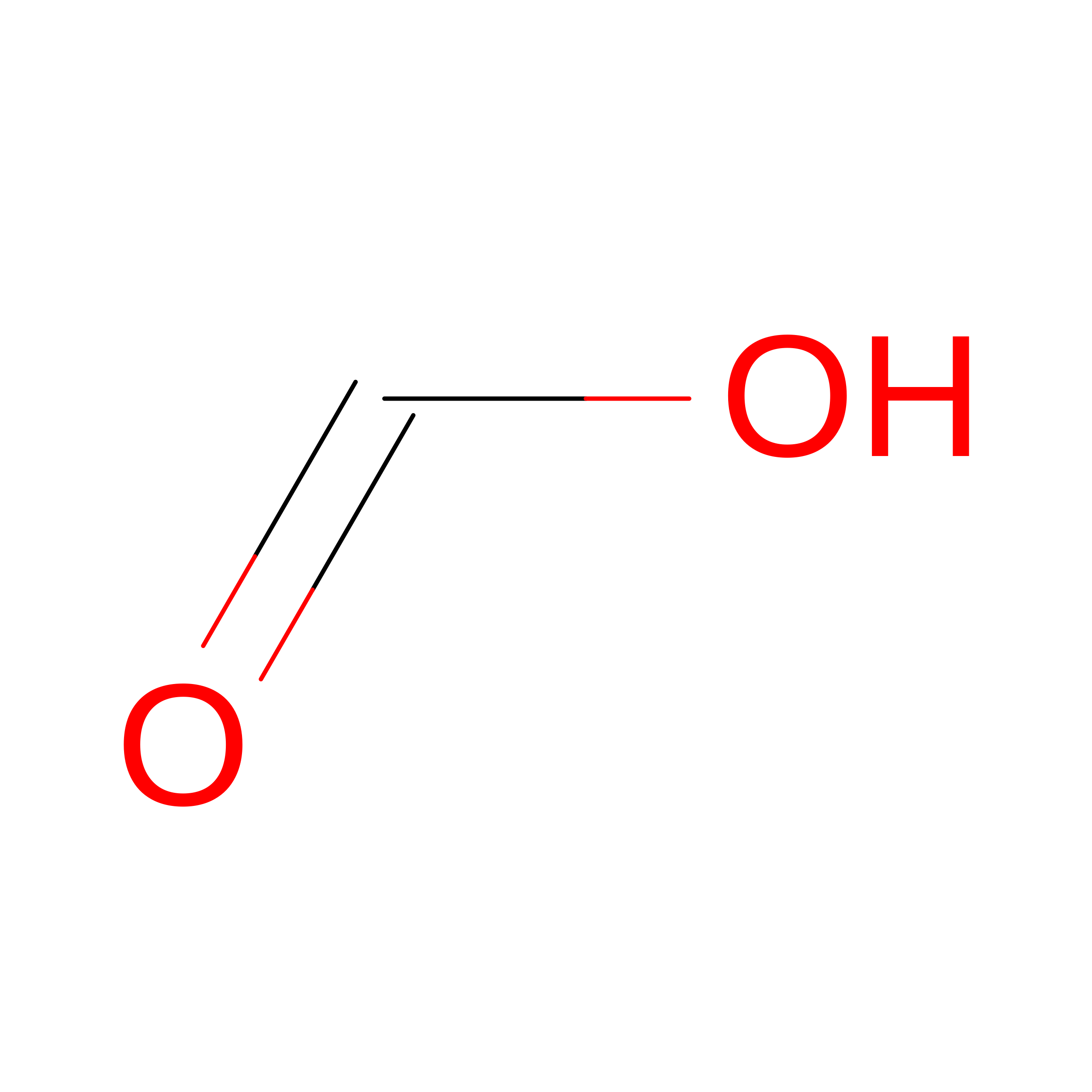
E [auth A]FORMIC ACID
C H2 O2
BDAGIHXWWSANSR-UHFFFAOYSA-N
Modified Residues  2 Unique
IDChains TypeFormula2D DiagramParent
MSE
Query on MSE
A
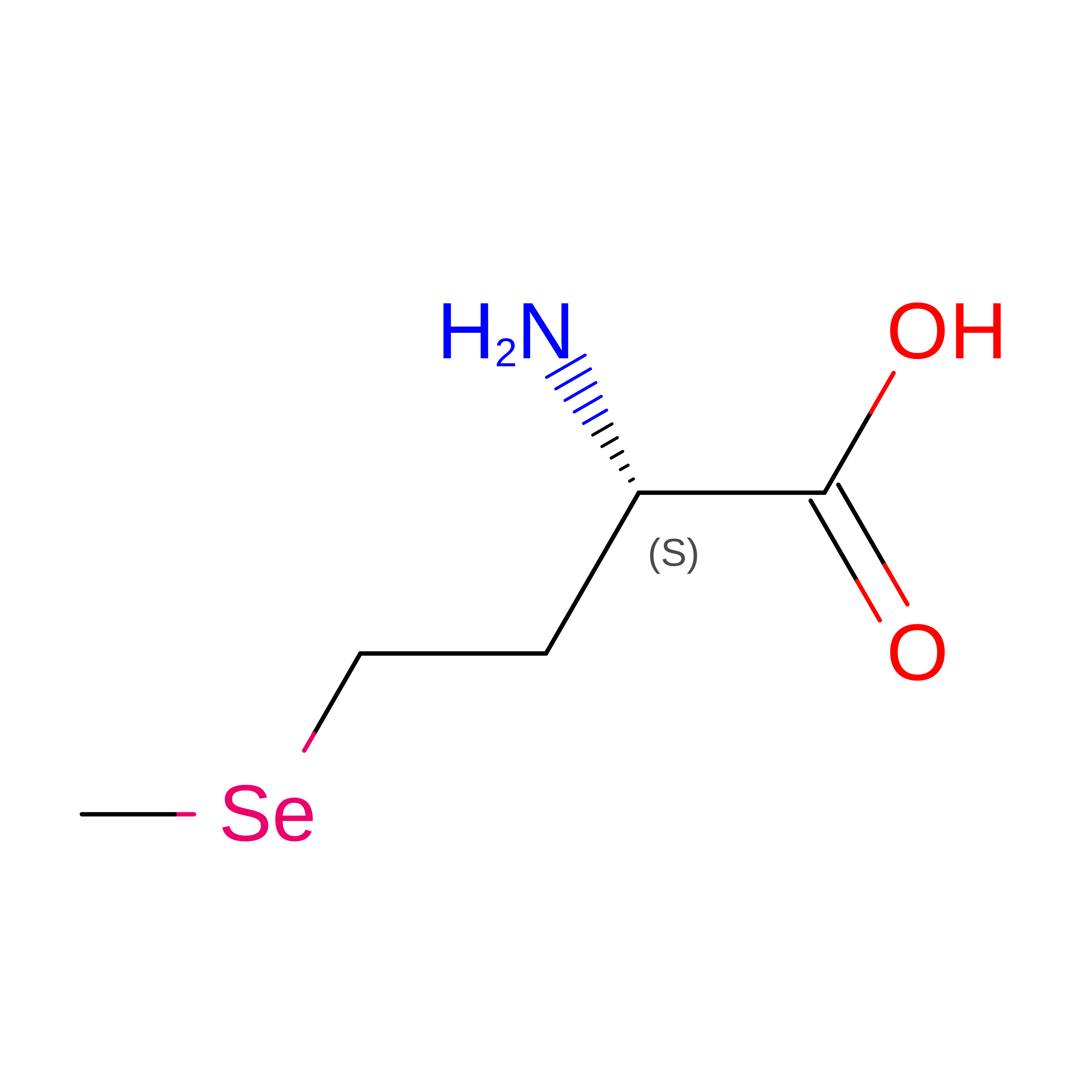
L-PEPTIDE LINKINGC5 H11 N O2 SeMET
CSX
Query on CSX
B
L-PEPTIDE LINKINGC3 H7 N O3 SCYS

Experimental Data & Validation

Experimental Data

  • Method: X-RAY DIFFRACTION
  • Resolution: 1.45 Å
  • R-Value Free:  0.190 (Depositor), 0.190 (DCC) 
  • R-Value Work:  0.147 (Depositor), 0.147 (DCC) 
  • R-Value Observed: 0.150 (Depositor) 
Space Group: P 21 21 21
Unit Cell:
Length ( Å )Angle ( ˚ )
a = 54.712α = 90
b = 77.7β = 90
c = 90.621γ = 90
Software Package:
Software NamePurpose
PHENIXrefinement
PHENIXrefinement
HKL-3000data reduction
HKL-3000data scaling
HKL-3000phasing

Structure Validation

View Full Validation Report


Ligand Structure Quality Assessment 


Entry History 

& Funding Information

Deposition Data


Funding OrganizationLocationGrant Number
National Institutes of Health/National Human Genome Research Institute (NIH/NHGRI)United States--

Revision History  (Full details and data files)

  • Version 1.0: 2021-09-29
    Type: Initial release
  • Version 1.1: 2024-07-17
    Changes: Data collection, Database references