Download Mendeley
Delineation of the complete reaction cycle of a natural Diels-Alderase.
Maschio, L., Back, C.R., Alnawah, J., Bowen, J.I., Johns, S.T., Mbatha, S.Z., Han, L.C., Lees, N.R., Zorn, K., Stach, J.E.M., Hayes, M.A., van der Kamp, M.W., Pudney, C.R., Burston, S.G., Willis, C.L., Race, P.R.(2024) Chem Sci 15: 11572-11583
- PubMed: 39055018 Search on PubMedSearch on PubMed Central
- DOI: https://doi.org/10.1039/d4sc02908a
- Primary Citation Related Structures:
7PXO - PubMed Abstract:
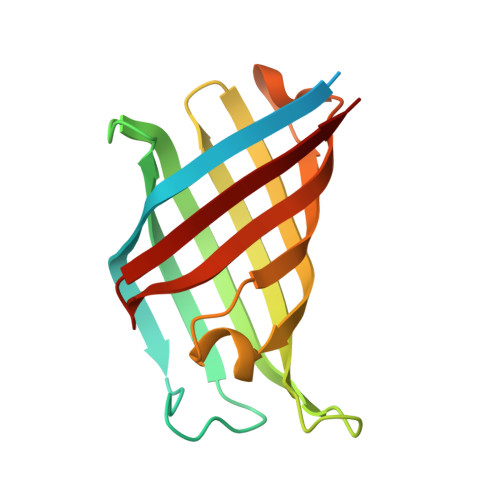
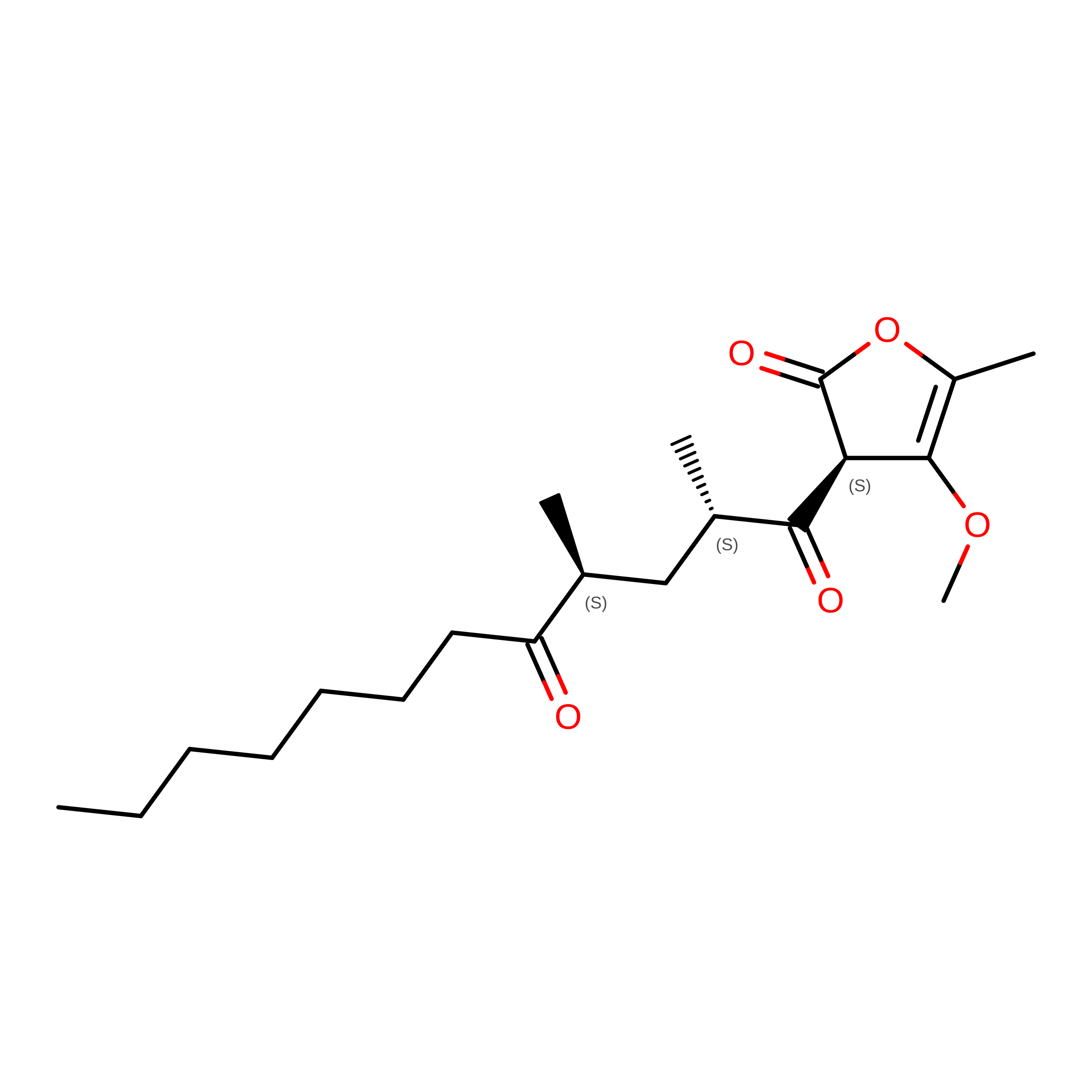
The Diels-Alder reaction is one of the most effective methods for the synthesis of substituted cyclohexenes. The development of protein catalysts for this reaction remains a major priority, affording new sustainable routes to high value target molecules. Whilst a small number of natural enzymes have been shown capable of catalysing [4 + 2] cycloadditions, there is a need for significant mechanistic understanding of how these prospective Diels-Alderases promote catalysis to underpin their development as biocatalysts for use in synthesis. Here we present a molecular description of the complete reaction cycle of the bona fide natural Diels-Alderase AbyU, which catalyses formation of the spirotetronate skeleton of the antibiotic abyssomicin C. This description is derived from X-ray crystallographic studies of AbyU in complex with a non-transformable synthetic substrate analogue, together with transient kinetic analyses of the AbyU catalysed reaction and computational reaction simulations. These studies reveal the mechanistic intricacies of this enzyme system and establish a foundation for the informed reengineering of AbyU and related biocatalysts.
- School of Biochemistry, University Walk, University of Bristol BS8 1TD UK.
Organizational Affiliation: