7PNL | pdb_00007pnl

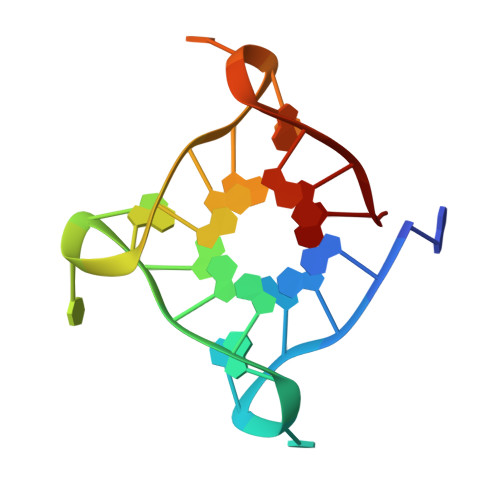
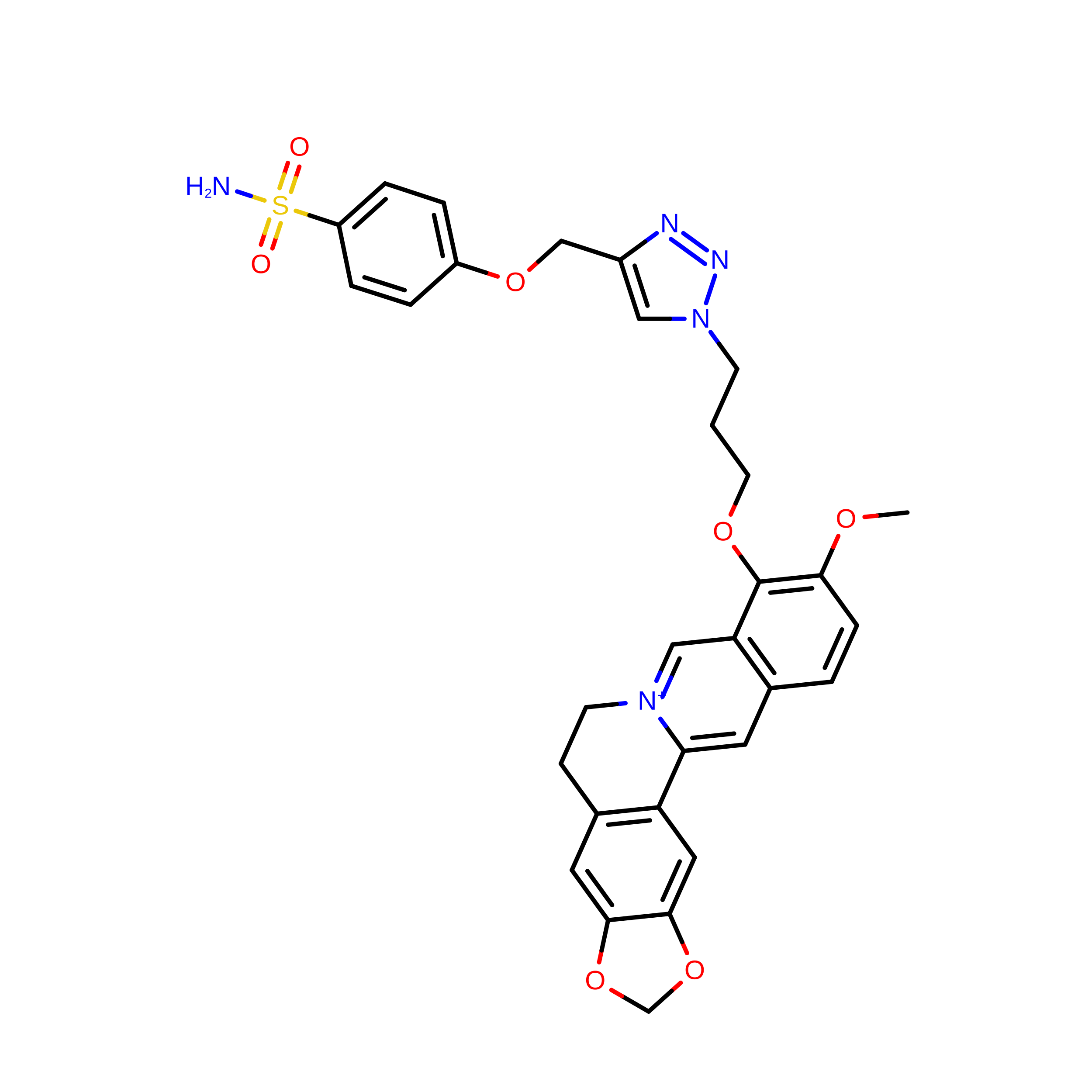
Complex between monomolecular human telomeric G-quadruplex and a sulfonamide derivative of the natural alkaloid Berberine


Experimental Data Snapshot

  • Method: X-RAY DIFFRACTION
  • Resolution: 1.83 Å
  • R-Value Free: 
    0.321 (Depositor) 
  • R-Value Work: 
    0.204 (Depositor) 
  • R-Value Observed: 
    0.209 (Depositor) 

Starting Model: experimental
View more details

wwPDB Validation 3D Report Full Report

Currently 7PNL does not have a validation slider image.


This is version 1.2 of the entry. See complete history

Literature

Development of a multi-targeted chemotherapeutic approach based on G-quadruplex stabilisation and carbonic anhydrase inhibition.

Nocentini, A.Di Porzio, A.Bonardi, A.Bazzicalupi, C.Petreni, A.Biver, T.Bua, S.Marzano, S.Amato, J.Pagano, B.Iaccarino, N.De Tito, S.Amente, S.Supuran, C.T.Randazzo, A.Gratteri, P.

(2024) J Enzyme Inhib Med Chem 39: 2366236-2366236

  • DOI: https://doi.org/10.1080/14756366.2024.2366236
  • Primary Citation Related Structures: 
    7PNL

  • PubMed Abstract: 

    A novel class of compounds designed to hit two anti-tumour targets, G-quadruplex structures and human carbonic anhydrases (hCAs) IX and XII is proposed. The induction/stabilisation of G-quadruplex structures by small molecules has emerged as an anticancer strategy, disrupting telomere maintenance and reducing oncogene expression. hCAs IX and XII are well-established anti-tumour targets, upregulated in many hypoxic tumours and contributing to metastasis. The ligands reported feature a berberine G-quadruplex stabiliser scaffold connected to a moiety inhibiting hCAs IX and XII. In vitro experiments showed that our compounds selectively stabilise G-quadruplex structures and inhibit hCAs IX and XII. The crystal structure of a telomeric G-quadruplex in complex with one of these ligands was obtained, shedding light on the ligand/target interaction mode. The most promising ligands showed significant cytotoxicity against CA IX-positive HeLa cancer cells in hypoxia, and the ability to stabilise G-quadruplexes within tumour cells.


  • Organizational Affiliation
    • NEUROFARBA Department, Pharmaceutical and Nutraceutical Section and Laboratory of Molecular Modeling Cheminformatics & QSAR, University of Florence, Sesto Fiorentino, Florence, Italy.

Macromolecule Content 

  • Total Structure Weight: 8.64 kDa 
  • Atom Count: 598 
  • Modeled Residue Count: 23 
  • Deposited Residue Count: 23 
  • Unique nucleic acid chains: 1

Macromolecules

Find similar nucleic acids by:  Sequence
Entity ID: 1
MoleculeChains LengthOrganismImage
G-guadruplex DNA (23-mer)23Homo sapiens
Sequence Annotations
Expand
Reference Sequence

Small Molecules

Ligands 2 Unique
IDChains Name / Formula / InChI Key2D Diagram3D Interactions
7VE
(Subject of Investigation/LOI)

Query on 7VE


Download:Ideal Coordinates CCD File
E [auth A],
F [auth A]
4-[[1-[3-[(17-methoxy-5,7-dioxa-13-azoniapentacyclo[11.8.0.0^{2,10}.0^{4,8}.0^{15,20}]henicosa-1(21),2(10),3,8,13,15,17,19-octaen-16-yl)oxy]propyl]triazol-4-yl]methoxy]benzenesulfonamide
C31 H30 N5 O7 S
ZPZQYKHNQSCVCG-UHFFFAOYSA-N
K

Query on K


Download:Ideal Coordinates CCD File
B [auth A],
C [auth A],
D [auth A]
POTASSIUM ION
K
NPYPAHLBTDXSSS-UHFFFAOYSA-N

Experimental Data & Validation

Experimental Data

  • Method: X-RAY DIFFRACTION
  • Resolution: 1.83 Å
  • R-Value Free:  0.321 (Depositor) 
  • R-Value Work:  0.204 (Depositor) 
  • R-Value Observed: 0.209 (Depositor) 
Space Group: C 1 2 1
Unit Cell:
Length ( Å )Angle ( ˚ )
a = 36.842α = 90
b = 72.717β = 90.1
c = 27.028γ = 90
Software Package:
Software NamePurpose
REFMACrefinement
PDB_EXTRACTdata extraction
XDSdata reduction
XSCALEdata scaling
MOLREPphasing

Structure Validation

View Full Validation Report

Currently 7PNL does not have a validation slider image.


Entry History 

& Funding Information

Deposition Data


Funding OrganizationLocationGrant Number
Other governmentFFARB2018
Other governmentCARLABAZZICALUPIRICATEN2020

Revision History  (Full details and data files)

  • Version 1.0: 2022-09-21
    Type: Initial release
  • Version 1.1: 2024-01-31
    Changes: Data collection, Refinement description
  • Version 1.2: 2024-07-24
    Changes: Database references