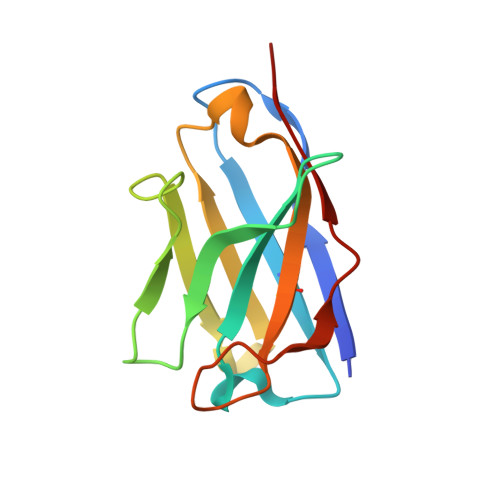
7PIJ | pdb_00007pij

Structure of Staphylococcus capitis divalent metal ion transporter (DMT) by NabFab-fiducial assisted cryo-EM


Experimental Data Snapshot

  • Method: ELECTRON MICROSCOPY
  • Resolution: 3.78 Å
  • Aggregation State: PARTICLE 
  • Reconstruction Method: SINGLE PARTICLE 

wwPDB Validation 3D Report Full Report

Validation slider image for 7PIJ

This is version 1.3 of the entry. See complete history

Literature

Development of a universal nanobody-binding Fab module for fiducial-assisted cryo-EM studies of membrane proteins.

Bloch, J.S.Mukherjee, S.Kowal, J.Filippova, E.V.Niederer, M.Pardon, E.Steyaert, J.Kossiakoff, A.A.Locher, K.P.

(2021) Proc Natl Acad Sci U S A 118

  • DOI: https://doi.org/10.1073/pnas.2115435118
  • Primary Citation Related Structures: 
    7PHP, 7PHQ, 7PIJ, 7RTH

  • PubMed Abstract: 

    With conformation-specific nanobodies being used for a wide range of structural, biochemical, and cell biological applications, there is a demand for antigen-binding fragments (Fabs) that specifically and tightly bind these nanobodies without disturbing the nanobody-target protein interaction. Here, we describe the development of a synthetic Fab (termed NabFab) that binds the scaffold of an alpaca-derived nanobody with picomolar affinity. We demonstrate that upon complementary-determining region grafting onto this parent nanobody scaffold, nanobodies recognizing diverse target proteins and derived from llama or camel can cross-react with NabFab without loss of affinity. Using NabFab as a fiducial and size enhancer (50 kDa), we determined the high-resolution cryogenic electron microscopy (cryo-EM) structures of nanobody-bound VcNorM and ScaDMT, both small membrane proteins of ∼50 kDa. Using an additional anti-Fab nanobody further facilitated reliable initial three-dimensional structure determination from small cryo-EM test datasets. Given that NabFab is of synthetic origin, is humanized, and can be conveniently expressed in Escherichia coli in large amounts, it may be useful not only for structural biology but also for biomedical applications.


  • Organizational Affiliation
    • Institute of Molecular Biology and Biophysics, ETH Zürich, 8093 Zürich, Switzerland.

Macromolecule Content 

  • Total Structure Weight: 123.81 kDa 
  • Atom Count: 8,194 
  • Modeled Residue Count: 1,068 
  • Deposited Residue Count: 1,135 
  • Unique protein chains: 5

Macromolecules

Find similar proteins by:|  3D Structure
Entity ID: 1
MoleculeChains  Sequence LengthOrganismDetailsImage
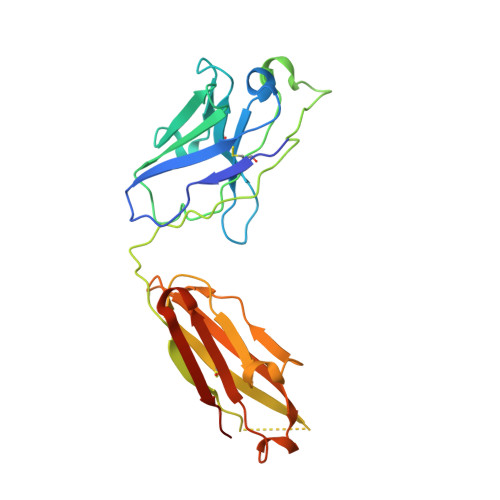
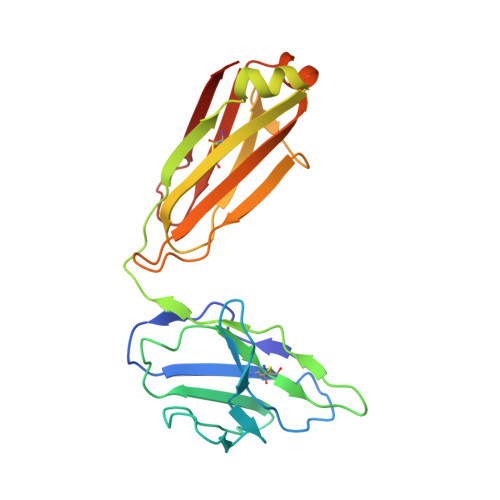
NabFab HCA [auth H]239synthetic constructMutation(s): 0 
Find similar proteins by:|  3D Structure
Entity ID: 2
MoleculeChains  Sequence LengthOrganismDetailsImage
NabFab LCB [auth L]215synthetic constructMutation(s): 0 
Find similar proteins by:|  3D Structure
Entity ID: 3
MoleculeChains  Sequence LengthOrganismDetailsImage
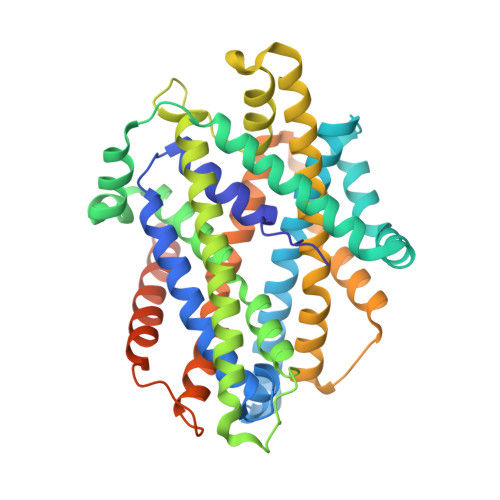
Divalent metal cation transporter MntHC [auth B]427Staphylococcus capitisMutation(s): 0 
Gene Names: mntHNCTC11045_01736
Find similar proteins by:|  3D Structure
Entity ID: 4
MoleculeChains  Sequence LengthOrganismDetailsImage
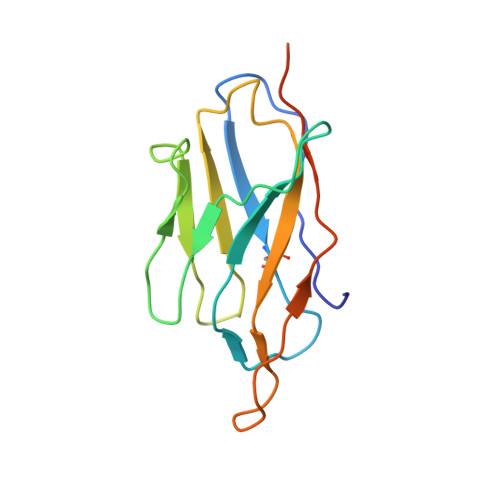
DMTNb16_4D [auth N]131synthetic constructMutation(s): 0 
Find similar proteins by:|  3D Structure
Entity ID: 5
MoleculeChains  Sequence LengthOrganismDetailsImage
Anti-Fab nanobodyE [auth K]123Lama glamaMutation(s): 0 

Experimental Data & Validation

Experimental Data

  • Method: ELECTRON MICROSCOPY
  • Resolution: 3.78 Å
  • Aggregation State: PARTICLE 
  • Reconstruction Method: SINGLE PARTICLE 

Structure Validation

View Full Validation Report


Entry History 

& Funding Information

Deposition Data


Funding OrganizationLocationGrant Number
Swiss National Science FoundationSwitzerland--

Revision History  (Full details and data files)

  • Version 1.0: 2021-09-01
    Type: Initial release
  • Version 1.1: 2021-10-13
    Changes: Data collection, Data processing, Source and taxonomy, Structure summary
  • Version 1.2: 2021-12-01
    Changes: Database references
  • Version 1.3: 2024-11-13
    Changes: Data collection, Database references, Structure summary