Download Mendeley
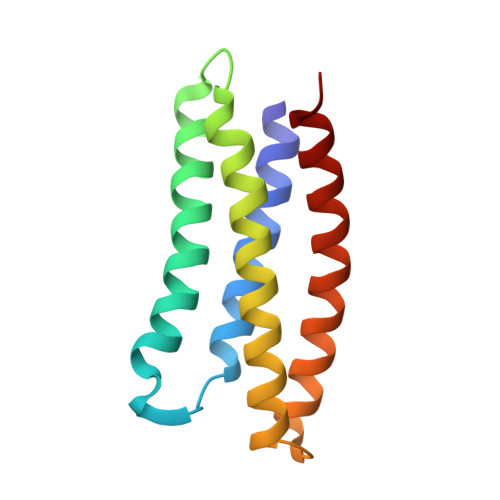
A topological refactoring design strategy yields highly stable granulopoietic proteins.
Skokowa, J., Hernandez Alvarez, B., Coles, M., Ritter, M., Nasri, M., Haaf, J., Aghaallaei, N., Xu, Y., Mir, P., Krahl, A.C., Rogers, K.W., Maksymenko, K., Bajoghli, B., Welte, K., Lupas, A.N., Muller, P., ElGamacy, M.(2022) Nat Commun 13: 2948-2948
- PubMed: 35618709 Search on PubMedSearch on PubMed Central
- DOI: https://doi.org/10.1038/s41467-022-30157-2
- Primary Citation Related Structures:
7NY0 - PubMed Abstract:
Protein therapeutics frequently face major challenges, including complicated production, instability, poor solubility, and aggregation. De novo protein design can readily address these challenges. Here, we demonstrate the utility of a topological refactoring strategy to design novel granulopoietic proteins starting from the granulocyte-colony stimulating factor (G-CSF) structure. We change a protein fold by rearranging the sequence and optimising it towards the new fold. Testing four designs, we obtain two that possess nanomolar activity, the most active of which is highly thermostable and protease-resistant, and matches its designed structure to atomic accuracy. While the designs possess starkly different sequence and structure from the native G-CSF, they show specific activity in differentiating primary human haematopoietic stem cells into mature neutrophils. The designs also show significant and specific activity in vivo. Our topological refactoring approach is largely independent of sequence or structural context, and is therefore applicable to a wide range of protein targets.
- Division of Translational Oncology, Department of Hematology, Oncology, Clinical Immunology and Rheumatology, University Hospital Tübingen, 72076, Tübingen, Germany. julia.skokowa@med.uni-tuebingen.de.
Organizational Affiliation: