7D76 | pdb_00007d76

Cryo-EM structure of the beclomethasone-bound adhesion receptor GPR97-Go complex


Experimental Data Snapshot

  • Method: ELECTRON MICROSCOPY
  • Resolution: 3.10 Å
  • Aggregation State: PARTICLE 
  • Reconstruction Method: SINGLE PARTICLE 

Starting Model: experimental
View more details

wwPDB Validation   3D Report Full Report


This is version 1.2 of the entry. See complete history


Literature

Structures of the glucocorticoid-bound adhesion receptor GPR97-G o complex.

Ping, Y.Q.Mao, C.Xiao, P.Zhao, R.J.Jiang, Y.Yang, Z.An, W.T.Shen, D.D.Yang, F.Zhang, H.Qu, C.Shen, Q.Tian, C.Li, Z.J.Li, S.Wang, G.Y.Tao, X.Wen, X.Zhong, Y.N.Yang, J.Yi, F.Yu, X.Xu, H.E.Zhang, Y.Sun, J.P.

(2021) Nature 589: 620-626

  • DOI: https://doi.org/10.1038/s41586-020-03083-w
  • Primary Citation of Related Structures:  
    7D76, 7D77

  • PubMed Abstract: 

    Adhesion G-protein-coupled receptors (GPCRs) are a major family of GPCRs, but limited knowledge of their ligand regulation or structure is available 1-3 . Here we report that glucocorticoid stress hormones activate adhesion G-protein-coupled receptor G3 (ADGRG3; also known as GPR97) 4-6 , a prototypical adhesion GPCR. The cryo-electron microscopy structures of GPR97-G o complexes bound to the anti-inflammatory drug beclomethasone or the steroid hormone cortisol revealed that glucocorticoids bind to a pocket within the transmembrane domain. The steroidal core of glucocorticoids is packed against the 'toggle switch' residue W 6.53 , which senses the binding of a ligand and induces activation of the receptor. Active GPR97 uses a quaternary core and HLY motif to fasten the seven-transmembrane bundle and to mediate G protein coupling. The cytoplasmic side of GPR97 has an open cavity, where all three intracellular loops interact with the G o protein, contributing to the high basal activity of GRP97. Palmitoylation at the cytosolic tail of the G o protein was found to be essential for efficient engagement with GPR97 but is not observed in other solved GPCR complex structures. Our work provides a structural basis for ligand binding to the seven-transmembrane domain of an adhesion GPCR and subsequent G protein coupling.


  • Organizational Affiliation
    • CAS Key Laboratory of Receptor Research, Center for Structure and Function of Drug Targets, Shanghai Institute of Materia Medica, Chinese Academy of Sciences, Shanghai, China.

Macromolecules
Find similar proteins by:  (by identity cutoff)  |  3D Structure
Entity ID: 1
MoleculeChains Sequence LengthOrganismDetailsImage
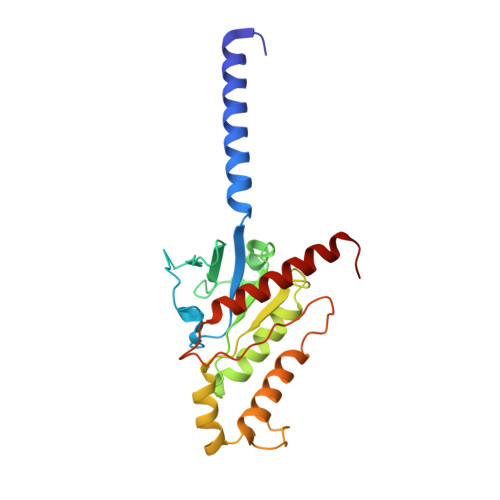
Guanine nucleotide-binding protein G(o) subunit alpha226Homo sapiensMutation(s): 0 
Gene Names: GNAO1
EC: 3.6.5
Membrane Entity: Yes 
UniProt & NIH Common Fund Data Resources
Find proteins for P09471 (Homo sapiens)
Explore P09471 
Go to UniProtKB:  P09471
PHAROS:  P09471
GTEx:  ENSG00000087258 
Entity Groups  
Sequence Clusters30% Identity50% Identity70% Identity90% Identity95% Identity100% Identity
UniProt GroupP09471
Sequence Annotations
Expand
  • Reference Sequence
Find similar proteins by:  (by identity cutoff)  |  3D Structure
Entity ID: 2
MoleculeChains Sequence LengthOrganismDetailsImage
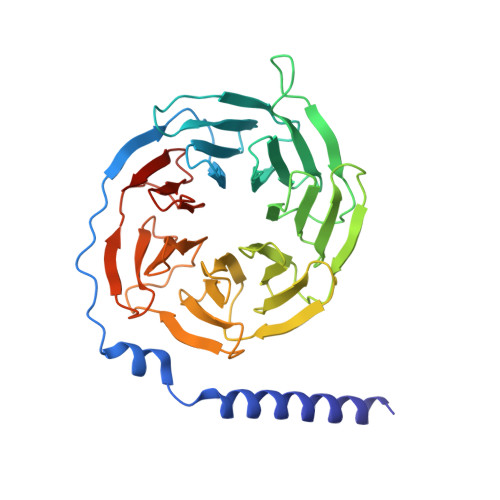
Guanine nucleotide-binding protein G(I)/G(S)/G(T) subunit beta-1346Homo sapiensMutation(s): 0 
Gene Names: GNB1
UniProt & NIH Common Fund Data Resources
Find proteins for P62873 (Homo sapiens)
Explore P62873 
Go to UniProtKB:  P62873
PHAROS:  P62873
GTEx:  ENSG00000078369 
Entity Groups  
Sequence Clusters30% Identity50% Identity70% Identity90% Identity95% Identity100% Identity
UniProt GroupP62873
Sequence Annotations
Expand
  • Reference Sequence
Find similar proteins by:  (by identity cutoff)  |  3D Structure
Entity ID: 3
MoleculeChains Sequence LengthOrganismDetailsImage
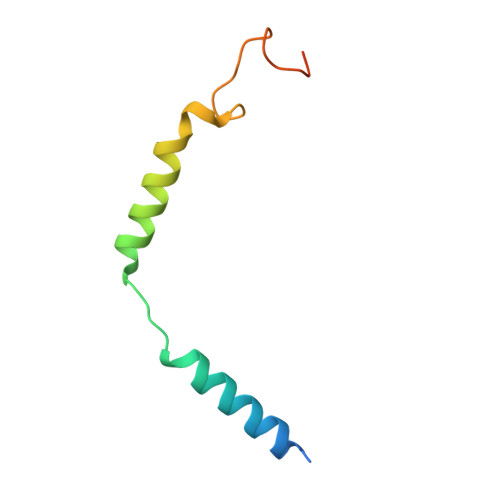
Guanine nucleotide-binding protein G(I)/G(S)/G(O) subunit gamma-2C [auth G]71Homo sapiensMutation(s): 0 
Gene Names: GNG2
Membrane Entity: Yes 
UniProt & NIH Common Fund Data Resources
Find proteins for P59768 (Homo sapiens)
Explore P59768 
Go to UniProtKB:  P59768
PHAROS:  P59768
GTEx:  ENSG00000186469 
Entity Groups  
Sequence Clusters30% Identity50% Identity70% Identity90% Identity95% Identity100% Identity
UniProt GroupP59768
Sequence Annotations
Expand
  • Reference Sequence
Find similar proteins by:  (by identity cutoff)  |  3D Structure
Entity ID: 4
MoleculeChains Sequence LengthOrganismDetailsImage
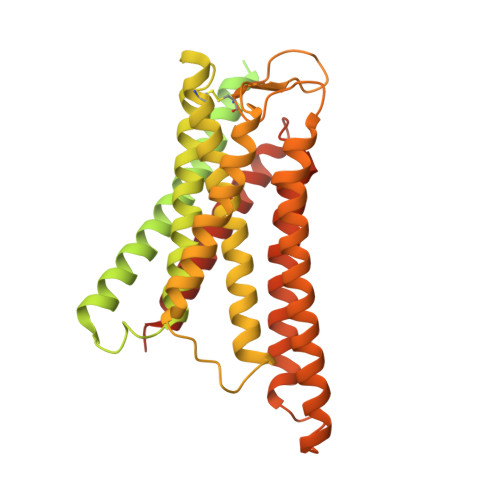
Adhesion G protein-coupled receptor G3; GPR97D [auth R]561Homo sapiensMutation(s): 0 
Gene Names: ADGRG3
Membrane Entity: Yes 
UniProt & NIH Common Fund Data Resources
Find proteins for Q86Y34 (Homo sapiens)
Explore Q86Y34 
Go to UniProtKB:  Q86Y34
PHAROS:  Q86Y34
GTEx:  ENSG00000182885 
Entity Groups  
Sequence Clusters30% Identity50% Identity70% Identity90% Identity95% Identity100% Identity
UniProt GroupQ86Y34
Sequence Annotations
Expand
  • Reference Sequence
Small Molecules
Ligands 4 Unique
IDChains Name / Formula / InChI Key2D Diagram3D Interactions
Y01
Query on Y01

Download Ideal Coordinates CCD File 
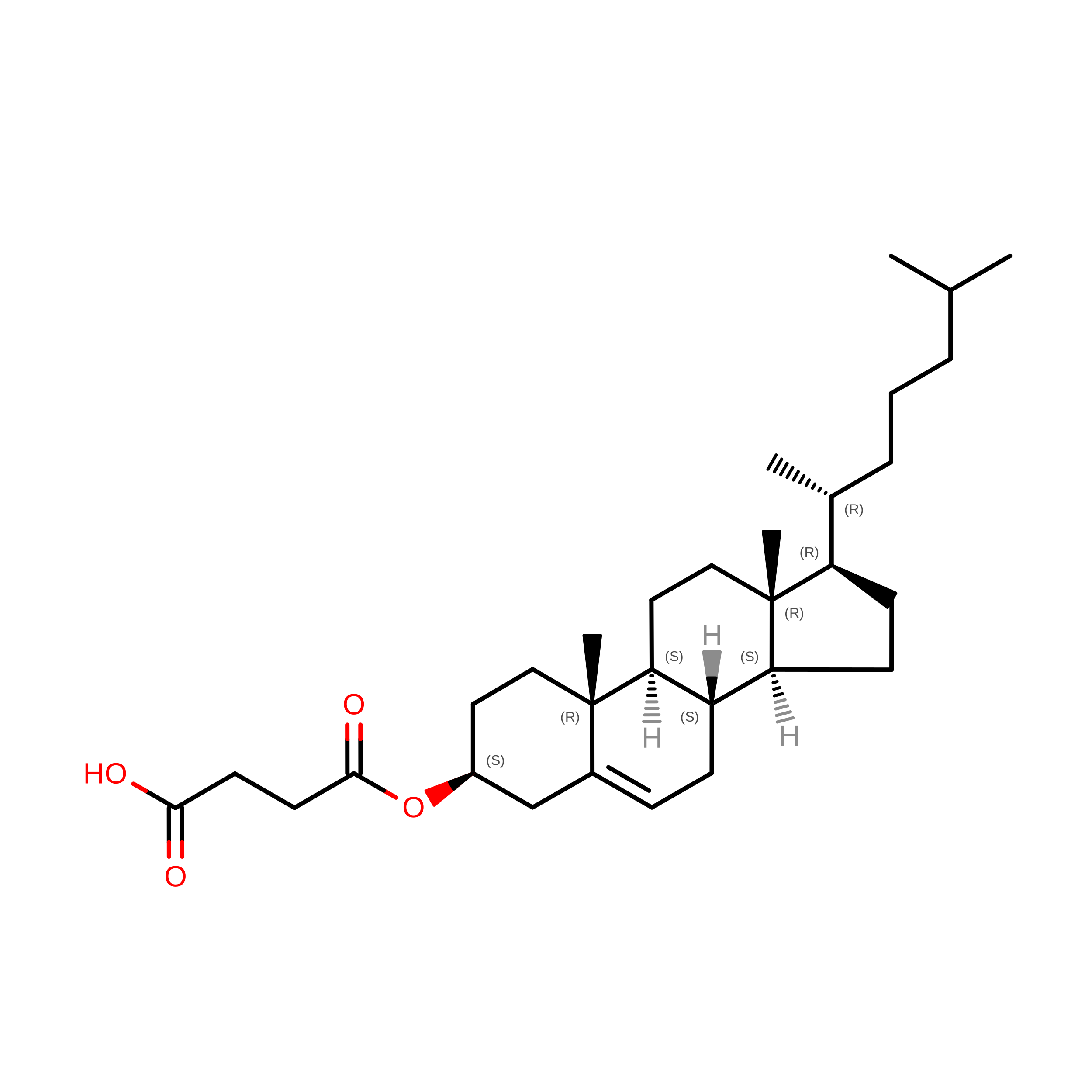
F [auth R]CHOLESTEROL HEMISUCCINATE
C31 H50 O4
WLNARFZDISHUGS-MIXBDBMTSA-N
GXR (Subject of Investigation/LOI)
Query on GXR

Download Ideal Coordinates CCD File 
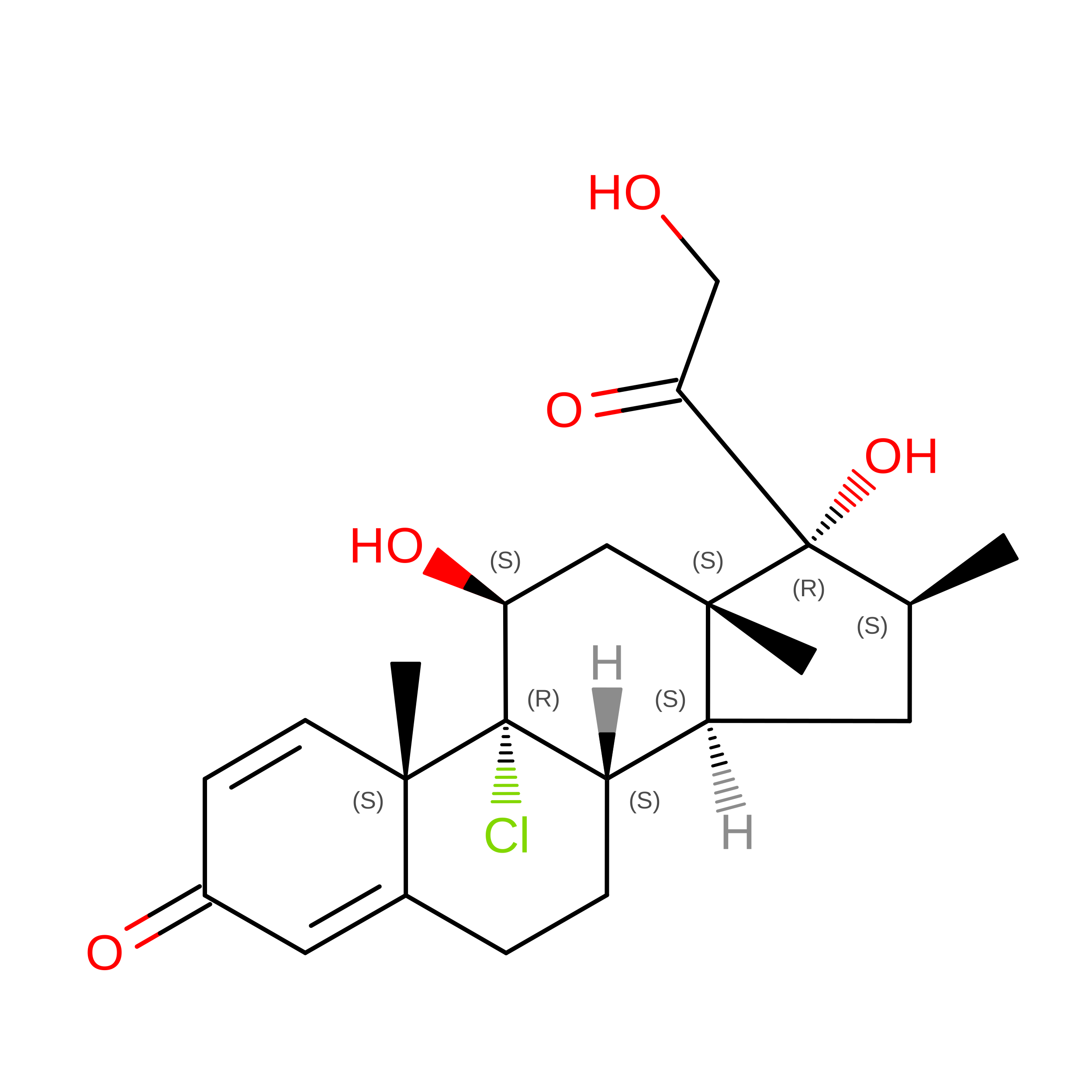
I [auth R](8~{S},9~{R},10~{S},11~{S},13~{S},14~{S},16~{S},17~{R})-9-chloranyl-10,13,16-trimethyl-11,17-bis(oxidanyl)-17-(2-oxidanylethanoyl)-6,7,8,11,12,14,15,16-octahydrocyclopenta[a]phenanthren-3-one
C22 H29 Cl O5
NBMKJKDGKREAPL-DVTGEIKXSA-N
CLR
Query on CLR

Download Ideal Coordinates CCD File 
J [auth R],
K [auth R]
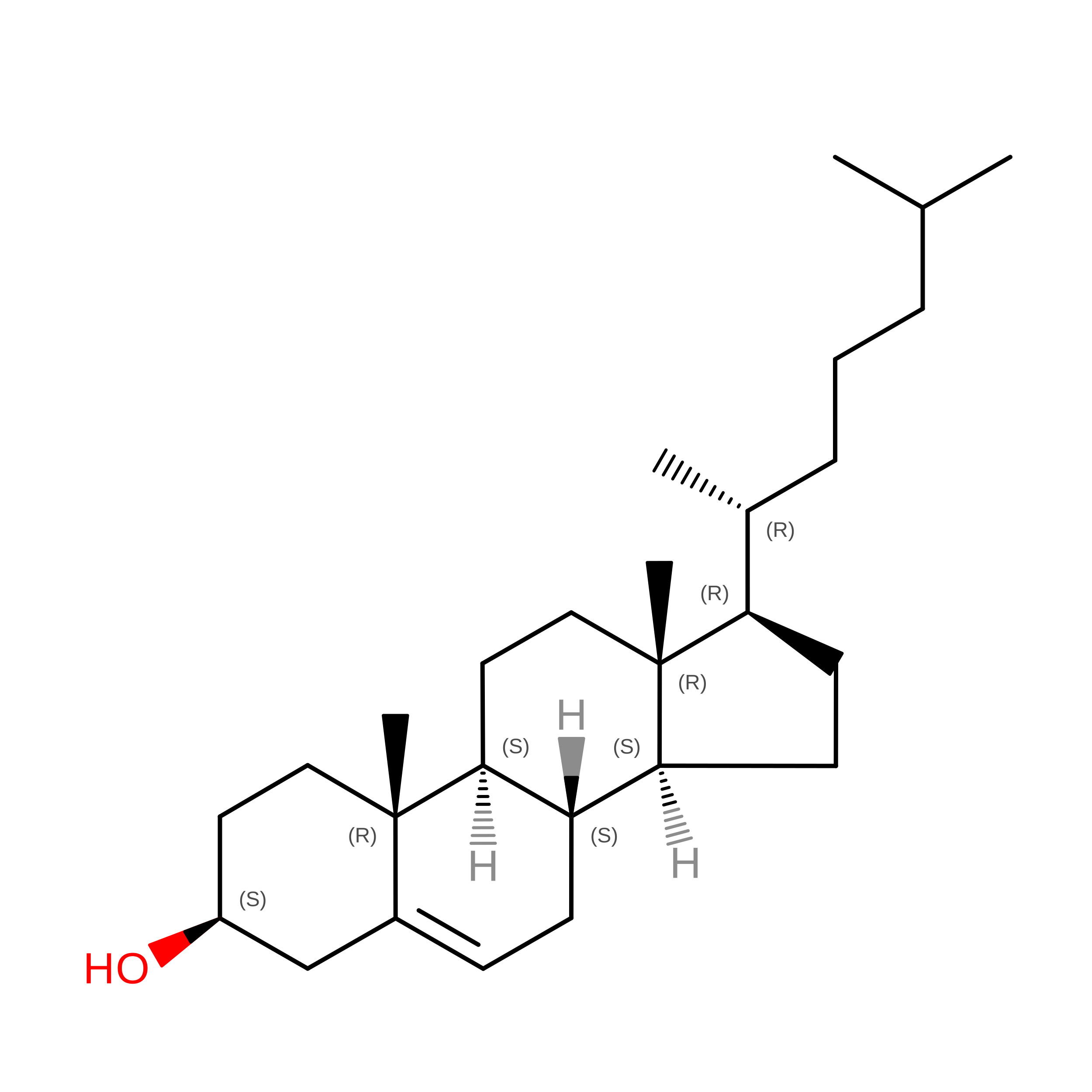
CHOLESTEROL
C27 H46 O
HVYWMOMLDIMFJA-DPAQBDIFSA-N
PLM
Query on PLM

Download Ideal Coordinates CCD File 
E [auth A],
G [auth R],
H [auth R]
PALMITIC ACID
C16 H32 O2
IPCSVZSSVZVIGE-UHFFFAOYSA-N
Experimental Data & Validation

Experimental Data

  • Method: ELECTRON MICROSCOPY
  • Resolution: 3.10 Å
  • Aggregation State: PARTICLE 
  • Reconstruction Method: SINGLE PARTICLE 
EM Software:
TaskSoftware PackageVersion
RECONSTRUCTIONRELION3.0-beta2
MODEL REFINEMENTPHENIX1.16

Structure Validation

View Full Validation Report


Entry History 

Revision History  (Full details and data files)

  • Version 1.0: 2021-02-03
    Type: Initial release
  • Version 1.1: 2021-02-10
    Changes: Database references
  • Version 1.2: 2024-10-30
    Changes: Data collection, Database references, Refinement description, Structure summary